

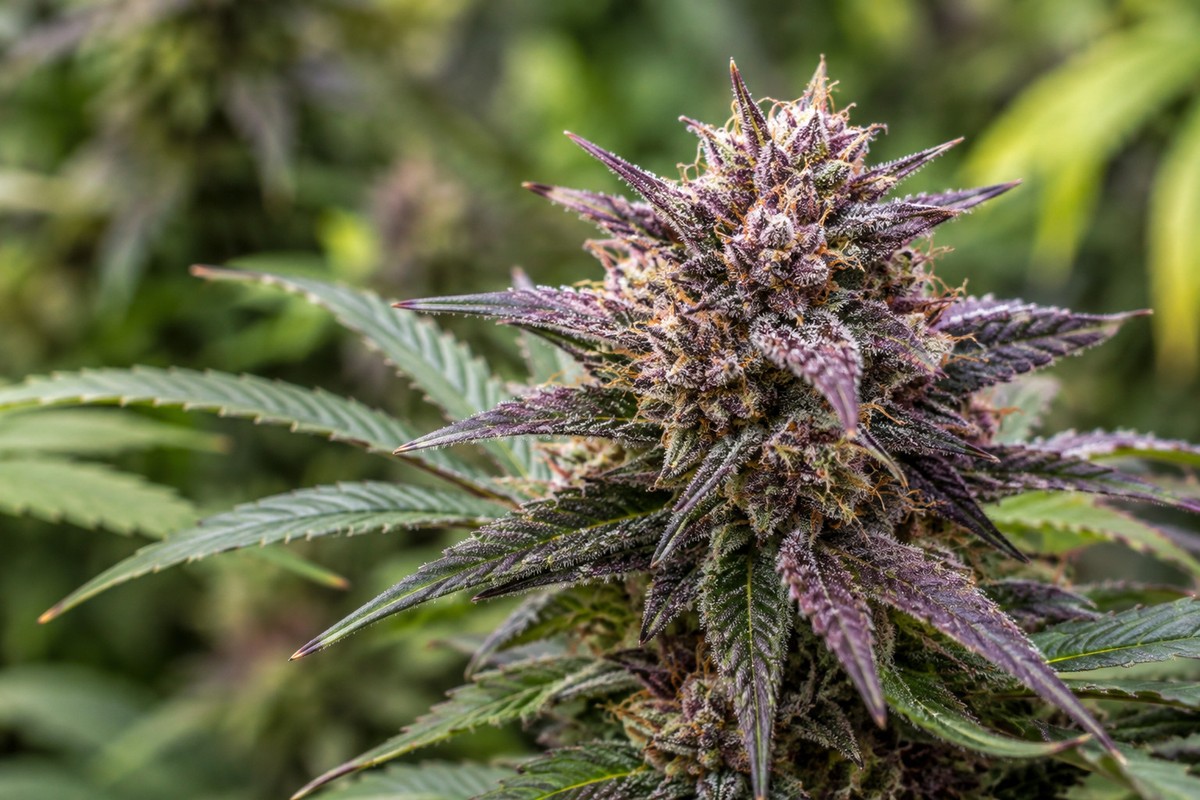
Some cannabis strains turn purple because they accumulate anthocyanins—natural plant pigments that produce red, violet, and purple coloration. Whether these pigments become visible depends primarily on genetics, but also on temperature, light exposure, plant maturity, and the specific tissues involved.
The most important anthocyanin identified in purple cannabis is cyanidin-3-O-rutinoside, also known as keracyanin. However, no single pigment or gene explains every purple cannabis phenotype.
Cool temperatures can intensify pigmentation in genetically responsive plants, but cold alone cannot turn every cannabis strain purple. And despite popular assumptions, purple buds are not inherently stronger, more aromatic, or higher in THC than green ones.
Recent research published between 2023 and 2026 has revealed why cannabis coloration is considerably more complex than it appears.
What Makes Cannabis Purple? The Science of Anthocyanins
Anthocyanins: The Pigments Behind Purple Cannabis
Anthocyanins are water-soluble pigments belonging to the flavonoid family. They occur throughout the plant kingdom and contribute to the colors of blueberries, blackberries, red cabbage, grapes, and numerous flowers.
In cannabis, these pigments can accumulate in leaves, stems, petioles, flowers, and certain specialized structures.
Unlike chlorophyll, which absorbs light for photosynthesis and gives plants their characteristic green appearance, anthocyanins serve several physiological functions, including roles in light-related responses and protection against environmental stress.
Their accumulation is highly regulated rather than simply occurring whenever a plant experiences cold weather.
A landmark study published in Antioxidants in 2023 identified cyanidin-3-O-rutinoside (C3R), or keracyanin, as the dominant anthocyanin in the cannabis tissues examined.
Laura Bassolino and her colleagues described it as:
"the major anthocyanin in C. sativa vegetative and floral tissues."
The researchers also identified other pigments, including peonidin derivatives.
This distinction matters because purple cannabis does not necessarily contain one universal combination of colored compounds. Different genotypes can produce different anthocyanin profiles.
What Chemical Compounds Produce Different Purple Shades?
Three particularly relevant compounds are:
- Cyanidin-3-O-rutinoside (keracyanin): The predominant anthocyanin identified in several studies of pigmented cannabis tissues.
- Peonidin-3-O-rutinoside: A chemically modified anthocyanin that contributes to the pigment profiles of certain cannabis varieties.
- Cyanidin sophoroside: A less commonly detected anthocyanin identified in the cannabis variety CA19210 in research published in 2024.
Their relative concentrations can influence pigmentation, but chemistry alone does not determine the final visual appearance.
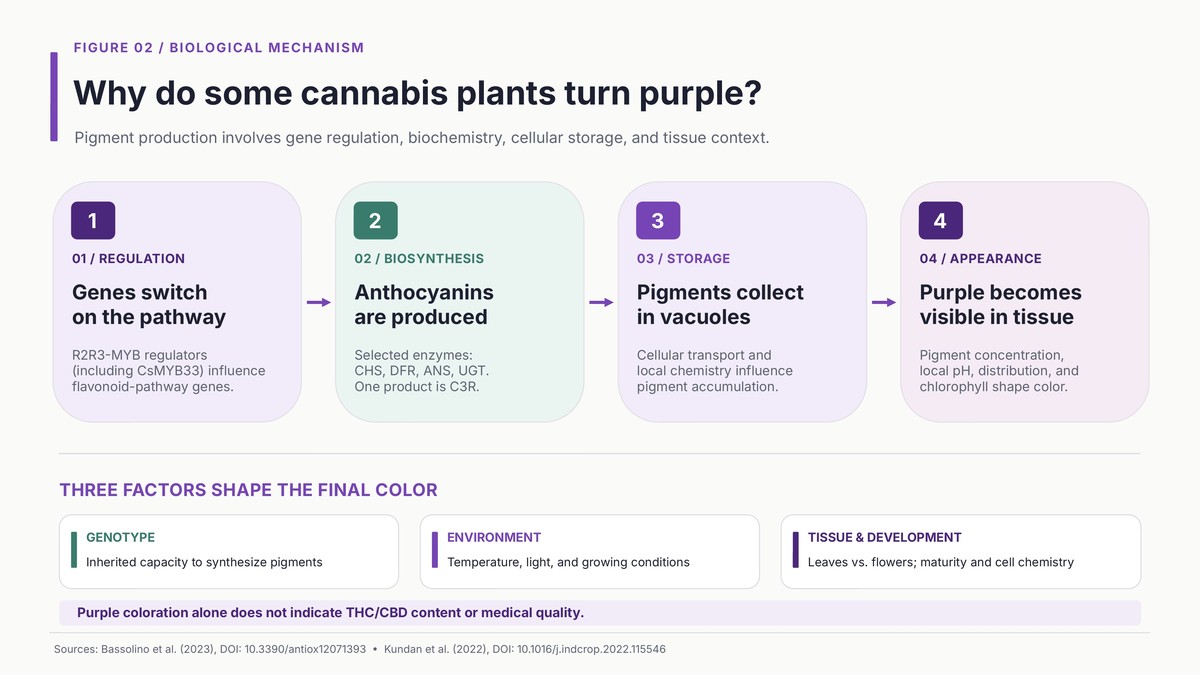
Anthocyanins are stored primarily inside cellular compartments called vacuoles. Their appearance can also be influenced by local acidity, interactions with other molecules, and the optical properties of surrounding tissues.
Meanwhile, chlorophyll can partially mask existing anthocyanins. As the balance between green and colored pigments changes, purple tones may become more noticeable.
This explains why some cannabis plants display subtle violet veins while others develop striking purple leaves or flowers.
How Much Anthocyanin Can Purple Cannabis Contain?
The differences can be remarkable.
In the 2023 study by Bassolino and colleagues, researchers measured the following anthocyanin concentrations in samples from cannabis genotype S1750:
| Analyzed tissue | Total anthocyanins | Measurement basis |
|---|---|---|
| Purple leaves | 1,187.27 mg | Per 100 g fresh weight |
| Green leaves | 3.00 mg | Per 100 g fresh weight |
| Purple flowers | 360.13 mg | Per 100 g fresh weight |
The purple leaves contained almost 400 times as much measured anthocyanin as the green leaves in this particular comparison.
Keracyanin accounted for 885.58 mg per 100 g of fresh purple leaves.
These results demonstrate that cannabis pigmentation can be quantified chemically rather than judged only by appearance.
However, the figures represent specific experimental samples, not average concentrations for all purple cannabis strains. Differences in genotype, tissue, maturity, and analytical methods prevent straightforward comparisons between unrelated studies.
The Genetics Behind Purple Cannabis Strains
Is There a Specific Purple Cannabis Gene?
Not one that universally determines the coloration of every cannabis strain.
Purple pigmentation is a genetically regulated trait involving multiple genes and biochemical processes.
Cannabis plants contain genes responsible for producing the enzymes needed to synthesize anthocyanins. However, possessing these genes does not guarantee that the plant will produce enough pigment to appear purple.
Gene activity must also be regulated.
Several important regulatory proteins belong to the MYB, bHLH, and WD40 families. Together, they can form regulatory complexes that influence the expression of anthocyanin biosynthesis genes.
These regulators affect a biochemical pathway involving enzymes such as chalcone synthase (CHS), dihydroflavonol reductase (DFR), and anthocyanidin synthase (ANS).
Subsequent chemical modifications, including glycosylation and methylation, help generate the diverse anthocyanins found in plant tissues.
The resulting pigments must then be transported and stored within cells.
For this reason, the presence of pigment-producing genes is only part of the explanation.
The distinction between genetic potential and visible expression is explored further in our article on genotype vs. phenotype in cannabis.
CsMYB33 and CsMYB78: Two Important Genetic Regulators
In 2022, Maridul Kundan, Prashant Misra, and their colleagues identified 99 genes encoding R2R3-MYB transcription factors in a reference cannabis genome.
Two candidates attracted particular attention: CsMYB33 and CsMYB78.
Initial experiments using tobacco as a model plant suggested that both could influence anthocyanin biosynthesis, although their effects differed.
More direct evidence appeared in Carter Prillaman's 2025 master's thesis at the University of Wisconsin–Madison.
Researchers introduced these candidate genes into cannabis plants.
The results were particularly interesting:
CsMYB33 produced strong visible purple pigmentation in the experimental transgenic plants, while CsMYB78 did not produce a comparable visible effect.
This does not establish that CsMYB78 is biologically irrelevant. Its function may depend on genetic background, expression conditions, or interactions with other regulatory proteins.
The experiment also involved a limited number of chemically analyzed transformed plants, so its findings should be regarded as preliminary.
Nevertheless, it illustrates an important principle: identifying a gene associated with pigmentation is not the same as demonstrating exactly how it controls coloration.
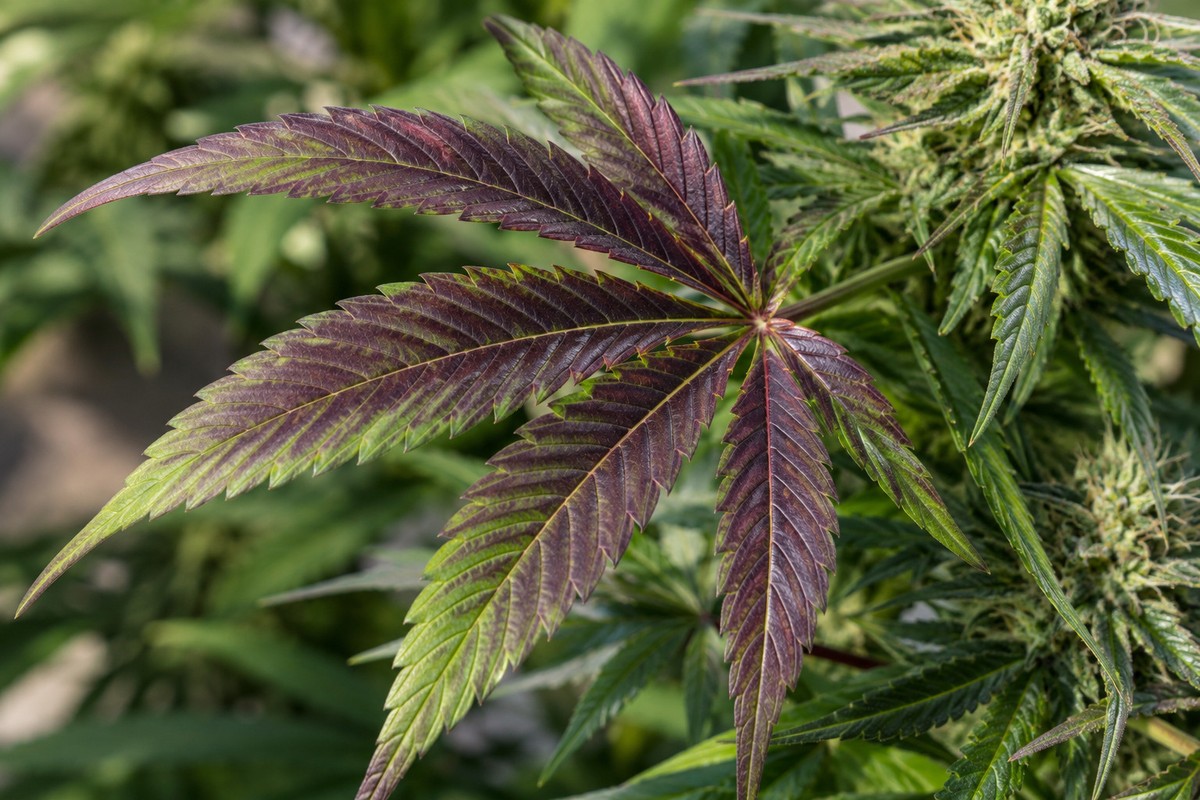
Why Can Cannabis Have Purple Buds but Green Leaves?
A cannabis plant does not necessarily regulate pigmentation identically in every organ.
Prillaman's 2025 genomic analysis identified different DNA regions associated with anthocyanin expression:
- Chromosome 6: A region approximately 66.75–75.77 Mb associated with flower pigmentation.
- Chromosome 1: A region approximately 85.08–87.92 Mb associated with leaf and stem pigmentation.
These associations were identified in particular research populations and should not be interpreted as universal genetic coordinates for every purple strain.
Still, they help explain why a cannabis phenotype can feature purple flowers, green fan leaves, and reddish stems simultaneously.
For breeders, such observations reinforce the importance of evaluating individual traits instead of treating purple coloration as a single characteristic affecting the entire plant.
Maintaining desirable inherited traits across generations also requires careful breeding and selection. Our guide to backcrossing in cannabis breeding explains how genetic traits can be retained or become more consistent in breeding lines.
Recommended seeds:


Does Cold Temperature Make Cannabis Turn Purple?
Temperature can strongly influence cannabis anthocyanins, but the relationship is not as simple as the familiar claim that colder temperatures always produce deeper purple colors.
What a 2025 Temperature Experiment Revealed
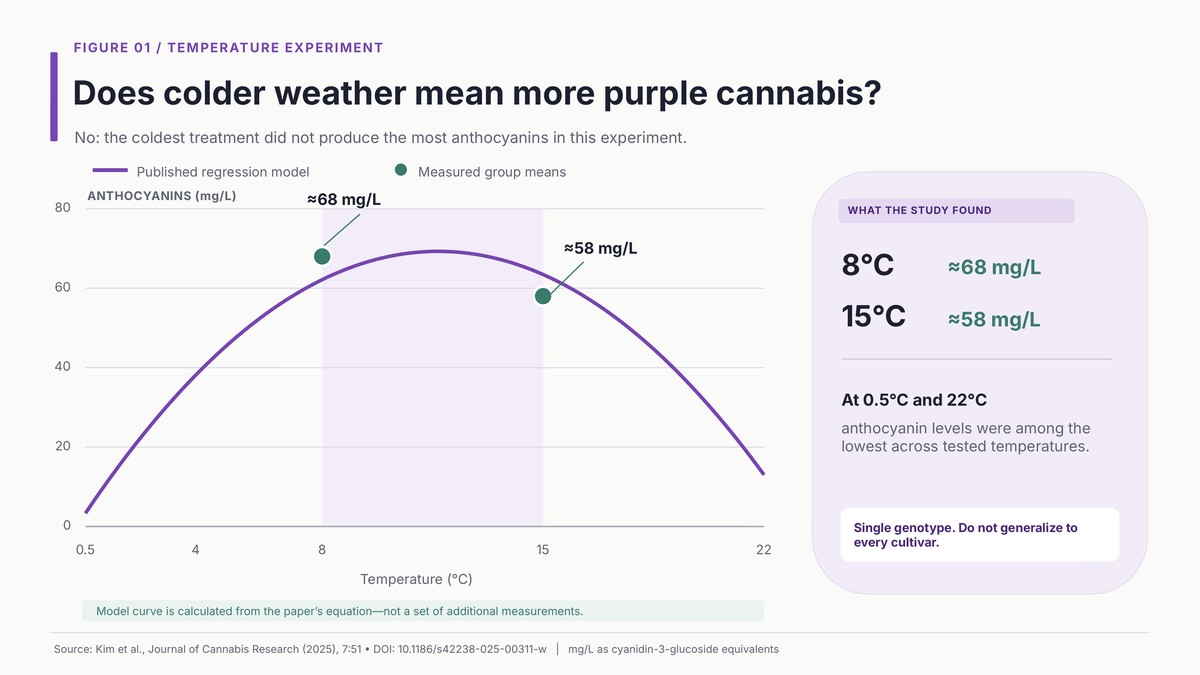
A study published in the Journal of Cannabis Research in July 2025 examined the relationship between temperature, anthocyanin accumulation, inflorescence dry weight, and cannabidiol content.
Sean R. Kim and colleagues investigated a genetically purple, day-neutral cannabis population under controlled temperature conditions.
The study included temperatures ranging from approximately 0.5°C to 22°C.
The researchers reported that the highest average anthocyanin concentrations occurred under constant temperatures of:
- 8°C: Approximately 68 mg/L of measured anthocyanins in the analyzed extracts.
- 15°C: Approximately 58 mg/L.
Surprisingly, the plants exposed to approximately 0.5°C accumulated substantially less pigment.
The same was true at the warmest treatment, 22°C.
The results contradict the assumption that continuously lowering the temperature will always intensify purple cannabis coloration.
As Kim and his colleagues concluded:
"anthocyanin accumulation is responsive to variations in environmental temperature".
Importantly, the study also found differences between constant and fluctuating temperature conditions.
Therefore, even two environments with similar average temperatures can produce different pigmentation responses.
These results describe a specific experimental population under controlled conditions—not universal temperature recommendations for other cannabis genetics.
Why Extreme Cold Is Not a Reliable Shortcut
Plants must maintain normal metabolic processes to synthesize and accumulate pigments.
At sufficiently low temperatures, physiological activity can become restricted. Extreme cold may also reduce growth, development, or overall plant performance.
The 2025 experiment demonstrated that the temperature conditions associated with greater anthocyanin accumulation were not identical to those associated with greater flower dry weight or CBD concentration.
The observed yield and CBD responses were also influenced by differences in plant maturity.
In other words, maximizing visible pigmentation is not necessarily equivalent to maximizing other important characteristics.
Attempts to induce purple coloration through excessive environmental stress are therefore not supported as a universally beneficial approach.
Other Factors That Influence Purple Cannabis Coloration
Temperature is only one component of a larger biological system.
Light Exposure and UV Radiation
Light influences flavonoid metabolism, including the pathways responsible for anthocyanin production.
Different wavelengths can stimulate different molecular responses, depending on genotype and tissue.
A study published in Metabolomics in July 2026 by Willy Contreras-Avilés and colleagues at Wageningen University & Research examined supplemental UVB, UVA, and blue light.
The researchers found that UVB produced particularly strong changes in the floral flavonoid profile of the studied cannabis genotype.
They also observed an unusual phenomenon: magenta pigmentation in glandular trichomes on floral bracts following UVB exposure.
This finding is significant because purple coloration is commonly discussed in relation to leaves and flower surfaces rather than specialized glandular structures.
However, the experiment investigated a particular genotype and controlled lighting treatments. It does not demonstrate that UVB will reliably make other cannabis varieties purple.
Plant Age and Development
Cannabis pigmentation can change as plants develop.
Some genotypes express anthocyanins relatively early, whereas others become visibly colored later in their life cycle.
The 2023 research by Bassolino and colleagues documented differences in pigmentation across developmental stages and organs.
Moreover, certain plants can develop purple coloration without exposure to unusually low temperatures.
This confirms that cold is not a necessary condition for every purple cannabis phenotype.
Stress, Nutrient Availability, and Cellular pH
Anthocyanin production can be associated with environmental stress responses, but purple coloration alone does not establish that a cannabis plant is unhealthy.
Naturally pigmented varieties may display purple tissue without accompanying signs of damage.
Conversely, discoloration associated with nutrient imbalances or other physiological problems may require a different interpretation.
One commonly repeated misconception concerns pH.
Anthocyanin color is sensitive to its local chemical environment, including pH inside plant cells. However, vacuolar pH is not the same as soil or growing-medium pH.
Changing the pH of the growing medium does not provide a scientifically validated, predictable method of turning cannabis flowers purple.
For a separate explanation of how pH relates to plant nutrition, see our guide to measuring soil pH in cannabis.
What Determines Whether Cannabis Turns Purple?
| Factor | Influence on purple coloration | Important limitation |
|---|---|---|
| Genetics | Determines the inherited potential for anthocyanin accumulation | A particular phenotype is not guaranteed in every plant |
| Temperature | Can influence pigment biosynthesis and accumulation | Colder does not always mean more purple |
| Light spectrum | May change flavonoid metabolism and pigment-related responses | Results depend on the genotype and experimental conditions |
| Plant maturity | Can influence when pigmentation becomes visible | The timing differs among genetic lines |
| Tissue type | Leaves, stems, and flowers can accumulate different amounts of pigment | One purple organ does not imply uniform coloration |
| Cellular pH and pigment chemistry | Can influence the final shade of anthocyanins | Soil pH cannot be equated with vacuolar pH |
| Plant stress | May trigger or accompany pigment-related responses | Purple coloration alone is not a diagnosis of stress |
Are Purple Cannabis Strains Stronger Than Green Strains?
No scientific evidence establishes that purple cannabis is inherently more potent than green cannabis.
The key distinction lies in the compounds responsible for each characteristic.
Anthocyanins influence pigmentation. Cannabinoids such as THC and CBD determine much of the plant's cannabinoid profile. Terpenes contribute substantially to aroma.
These compounds belong to different chemical groups and arise through different biosynthetic processes.
A strain may have intense purple coloration and relatively low THC content. Another may remain green while producing a substantially different cannabinoid profile.
The 2024 research by Kristina Gagalova and colleagues investigated four cannabis varieties that differed in pigmentation and chemical composition.
The results demonstrated variation in anthocyanin profiles, but did not establish that purple pigmentation itself causes higher cannabinoid production.
Similarly, the 2025 temperature study identified distinct responses for anthocyanins, CBD, and inflorescence dry weight.
These findings cannot automatically be extended to claims about THC.
Readers interested in the genetic basis of cannabinoid composition can explore our article on THCA and CBDA synthase genes.
The same caution applies to aroma.
A purple strain may have a grape-like or berry-like scent, but anthocyanins are not reliable predictors of its terpene profile. The association between a particular color and fragrance should not be mistaken for a universal biochemical rule.
Purple Cannabis Seeds: What Genetics Can—and Cannot—Guarantee
For anyone researching purple cannabis seeds, the most important distinction is between an advertised strain characteristic and a genetically guaranteed outcome.
Cannabis seeds carry inherited DNA that influences the plant's potential traits, including anthocyanin biosynthesis and its regulation.
However, seeds produced through sexual reproduction may contain different combinations of parental alleles.
Consequently, seedlings belonging to the same commercial strain can express different phenotypes, including different levels of purple pigmentation.
A seed marketed under a name containing Purple is therefore not a guarantee that every resulting plant will develop uniformly violet flowers.
How to Evaluate Purple Cannabis Genetics
When comparing cannabis seed varieties, it is useful to consider the breeder's documentation, reported parentage, genetic consistency, and whether purple pigmentation is described as a common characteristic or merely a possible phenotype.
The type of seed is also relevant to understanding a variety, although it does not independently establish pigmentation potential.
For example, feminized cannabis seeds are selected for female plant development, whereas autoflowering cannabis seeds carry flowering characteristics associated with age-dependent flowering.
Neither category automatically guarantees purple coloration.
Genetic provenance matters particularly because commercial strain names are not always genetically consistent.
A 2019 study by Anna L. Schwabe and Mitchell E. McGlaughlin demonstrated that samples sold under identical cannabis strain names could exhibit significant genetic differences.
This research did not specifically test purple pigmentation, but it highlights why a familiar strain name is not a substitute for documented genetic identity.
For those comparing established purple-associated cannabis families, Ganjafarmer.com offers a convenient catalog of genetics from different breeders. Its Purple Haze collection and Purple Punch varieties provide useful starting points for examining lineage, breeder descriptions, and seed characteristics.
The most informed approach is to treat color as an inherited potential influenced by multiple biological factors, rather than as a fixed promise based on a product name.
Recommended seeds:


Why the Most Purple-Looking Cannabis Does Not Always Contain the Most Anthocyanins
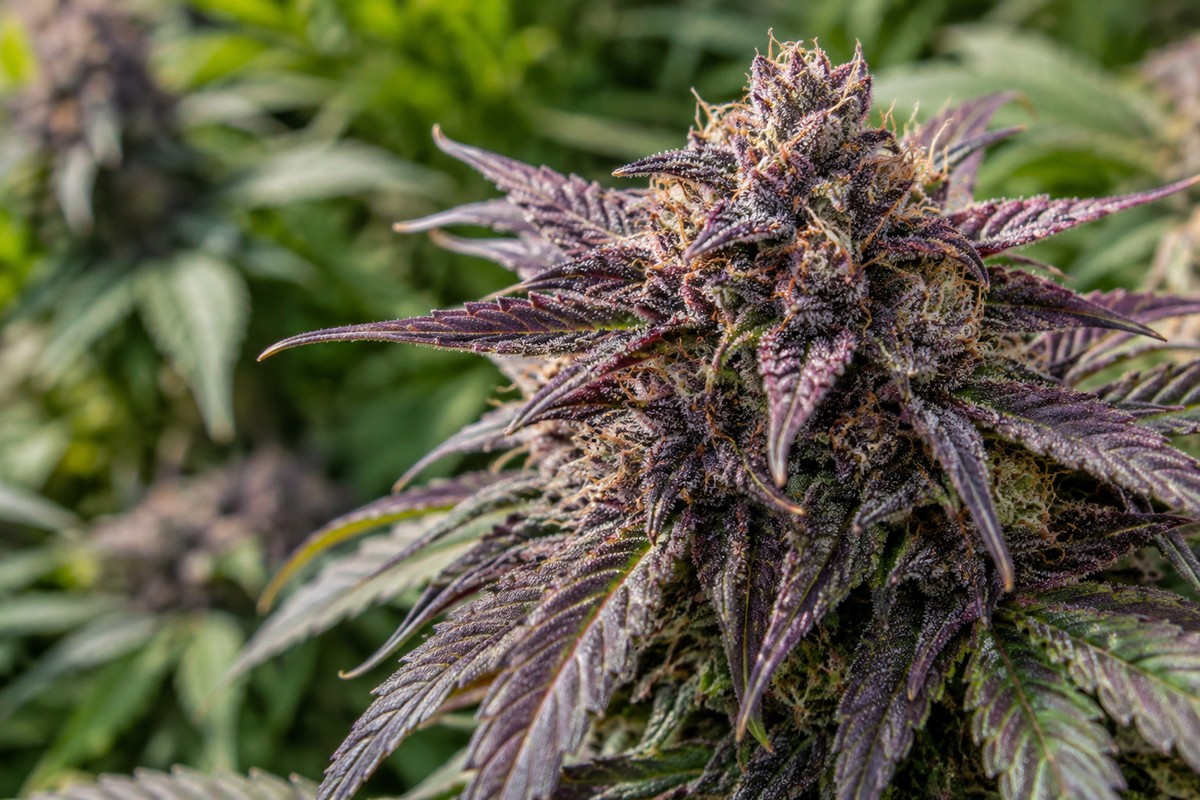
One of the most surprising findings in recent cannabis pigmentation research is that visible color intensity does not necessarily correspond directly to measured pigment concentration.
In the 2024 Plant Direct study, researchers examined four cannabis varieties with different leaf pigmentation phenotypes.
One variety, CA19210, displayed only moderate visible pigmentation compared with some of the other plants.
Nevertheless, its leaf extracts showed the highest anthocyanin accumulation among the four varieties examined.
CA19210 was also the only variety in this study in which the researchers identified cyanidin sophoroside.
This reveals two important limitations of visual assessment.
First, pigment concentration is not the only factor determining how purple a plant appears. The distribution of anthocyanins within tissues, chlorophyll content, and cellular optical properties can influence the visible result.
Second, two cannabis plants with similar coloration may contain different relative proportions of anthocyanin compounds.
For researchers and breeders, this means that visual selection alone cannot fully characterize the pigment chemistry of a cannabis variety.
How Scientists Measure Purple Pigmentation in Cannabis
Scientific evaluation of purple cannabis involves more than photographing plants or assigning visual color scores.
Researchers use complementary approaches to measure pigmentation and identify its underlying mechanisms.
Chemical Analysis: HPLC and LC-MS
High-performance liquid chromatography (HPLC) separates compounds within a plant extract, allowing scientists to measure specific pigments.
When combined with mass spectrometry, methods such as LC-MS/MS help identify anthocyanins through their molecular characteristics.
These techniques distinguish individual compounds, including keracyanin and peonidin derivatives.
However, results must be reported with appropriate units and analytical context.
For example, anthocyanin concentrations reported as milligrams per 100 grams of fresh tissue cannot be directly compared with concentrations reported in milligrams per liter of extract.
Gene Expression and Genomic Analysis
Techniques such as RT-qPCR and RNA sequencing help researchers determine which pigmentation-related genes are active in particular tissues.
Genome-wide association studies (GWAS) can identify DNA regions statistically associated with visible traits.
However, a genetic association does not automatically establish causation.
Functional experiments, ideally supported by independent replication, are needed to determine whether a candidate gene directly controls pigmentation.
Standardized Phenotype Assessment
Visible pigmentation also has formal relevance to cannabis variety descriptions.
The Community Plant Variety Office's 2026 technical protocol CPVO-TP/276/3 includes separate anthocyanin coloration assessments for petioles, male flowers, and female inflorescences.
This is part of the evaluation framework for distinctness, uniformity, and stability (DUS).
It reinforces the principle that cannabis color must be evaluated in specific tissues rather than summarized simply as purple or green.
Importantly, this type of classification does not establish cannabinoid concentration or legal THC status.
What Recent Research Reveals About Purple Cannabis Trichomes
The 2026 research from Wageningen University & Research adds another layer to the scientific understanding of cannabis coloration.
By combining advanced chromatography, mass spectrometry, and computational metabolomics, researchers investigated how different short wavelengths influenced the chemical composition of cannabis inflorescences.
The findings indicated that UVB exposure could alter the accumulation and structural modification of several flavonoid compounds.
One analytical feature, recorded at m/z 1177.396, was tentatively associated with a highly glycosylated anthocyanidin-related structure.
However, its precise chemical identity was not definitively established.
This distinction is crucial: detecting a mass-spectrometry signal consistent with a possible pigment does not mean that researchers have fully identified a new anthocyanin.
The study illustrates how much remains to be discovered about cannabis pigmentation, particularly within specialized structures such as glandular trichomes.
Future research may clarify whether different types of tissue possess distinct pigment-regulation mechanisms and whether particular anthocyanin derivatives influence color stability.
For now, the strongest conclusion is that purple cannabis pigmentation involves more chemical diversity than conventional strain descriptions suggest.
Frequently Asked Questions About Purple Cannabis
Why Does Weed Turn Purple During Flowering?
Cannabis may develop purple coloration during flowering because anthocyanin biosynthesis or accumulation increases as the plant matures.
In genetically responsive varieties, temperature and light conditions can also influence the expression of pigmentation-related pathways.
However, flowering does not automatically cause every cannabis strain to turn purple.
Can Any Cannabis Strain Turn Purple?
Not necessarily. Cannabis varieties differ in their genetic potential to accumulate anthocyanins and express visible pigmentation.
Environmental factors can modify this potential, but there is no scientifically established method that reliably makes every green cannabis strain develop intense purple coloration.
Why Are Some Cannabis Buds Purple Inside but Green Outside?
Uneven coloration can reflect differences in pigment concentration, tissue structure, light exposure, and the distribution of anthocyanins and chlorophyll.
Because pigment regulation can vary between tissues, the external appearance of a flower does not necessarily represent its internal pigmentation.
Do Purple Cannabis Seeds Produce Purple Plants Every Time?
No. Commercial strain names and seed descriptions cannot guarantee identical pigmentation in every individual plant.
Genetic variation, environmental conditions, and developmental differences can influence the final phenotype.
Even within a recognizable purple strain family, coloration may vary in intensity and distribution.
Are Purple Cannabis Strains Higher in THC?
No reliable general relationship has been established between purple coloration and THC concentration.
Anthocyanins and cannabinoids are different classes of compounds. Accurate cannabinoid content requires appropriate chemical analysis.
Can Changing Soil pH Make Cannabis Purple?
There is no convincing cannabis-specific experimental evidence that manipulating growing-medium pH predictably changes flower coloration by directly controlling anthocyanin color.
Although anthocyanin chemistry is sensitive to pH, the relevant cellular environment is not equivalent to the pH of the growing medium.
Conclusion: Why Purple Cannabis Is More Than Just a Color
Purple cannabis strains provide an excellent example of how genetics, biochemistry, and environmental physiology interact.
The visible coloration is largely associated with anthocyanins, especially keracyanin, but its expression depends on numerous factors: gene regulation, tissue type, developmental stage, temperature, light, and pigment chemistry.
Studies conducted between 2023 and 2026 have identified specific anthocyanins, investigated candidate regulatory genes, demonstrated the limitations of extreme cold, and revealed pigmentation in previously overlooked cannabis structures.
Yet researchers still cannot reliably predict the exact purple appearance of every cannabis variety from its strain name or genetic background alone.
For enthusiasts, collectors, and breeders, the practical lesson is straightforward: purple coloration is a real biological trait, not a reliable measure of potency, aroma, health benefits, or overall quality.
Understanding the genetics behind purple cannabis makes it easier to appreciate these distinctive varieties without confusing visual appeal with scientifically verified characteristics.
Legal note: Cannabis seed possession and cultivation regulations differ between jurisdictions. Always follow the laws applicable in your location.
Bibliography
- Bassolino, L., Fulvio, F., Pastore, C., Pasini, F., Gallina Toschi, T., Filippetti, I., & Paris, R. (2023). When Cannabis sativa L. Turns Purple: Biosynthesis and Accumulation of Anthocyanins. Antioxidants, 12(7), 1393.
- Kundan, M., Gani, U., Fayaz, M., Angmo, T., Kesari, R., Rahul, V. P., Gairola, S., & Misra, P. (2022). Two R2R3-MYB transcription factors, CsMYB33 and CsMYB78 are involved in the regulation of anthocyanin biosynthesis in Cannabis sativa L. Industrial Crops and Products, 188, 115546.
- Gagalova, K. K., Yan, Y., Wang, S., Matzat, T., Castellarin, S. D., Birol, I., Edwards, D., & Schuetz, M. (2024). Leaf pigmentation in Cannabis sativa: Characterization of anthocyanin biosynthesis in colorful Cannabis varieties. Plant Direct, 8(11), e70016.
- Prillaman, C. (2025). A Study in Purple: An Investigation into the Genetics of Anthocyanin Accumulation in Cannabis sativa. Master's thesis, University of Wisconsin–Madison.
- Kim, S. R., Basnet, P., Kovaleski, A. P., & Ellison, S. L. (2025). Anthocyanin accumulation, inflorescence dry weight and total cannabidiol content have different temperature optima in Cannabis sativa. Journal of Cannabis Research, 7, 51.
- Contreras-Avilés, W., Torres-Ortega, L. R., Heuvelink, E., Marcelis, L. F. M., van der Hooft, J. J. J., & Kappers, I. F. (2026). Characterizing the effect of short wavelengths on the floral flavonoid metabolome of medicinal cannabis using a comparative computational metabolomics workflow. Metabolomics, 22, 113.
- Schwabe, A. L., & McGlaughlin, M. E. (2019). Genetic tools weed out misconceptions of strain reliability in Cannabis sativa: implications for a budding industry. Journal of Cannabis Research, 1, 3.
- Community Plant Variety Office (CPVO). (2026). CPVO-TP/276/3: Protocol for Tests on Distinctness, Uniformity and Stability — Cannabis sativa L. Community Plant Variety Office.
 USA
 Česko
 Deutschland
 España
 France
 Italia
 Nederland
 Polska
 Europe