


 @ganjafarmer.seed
 @GanjaFarmerSeed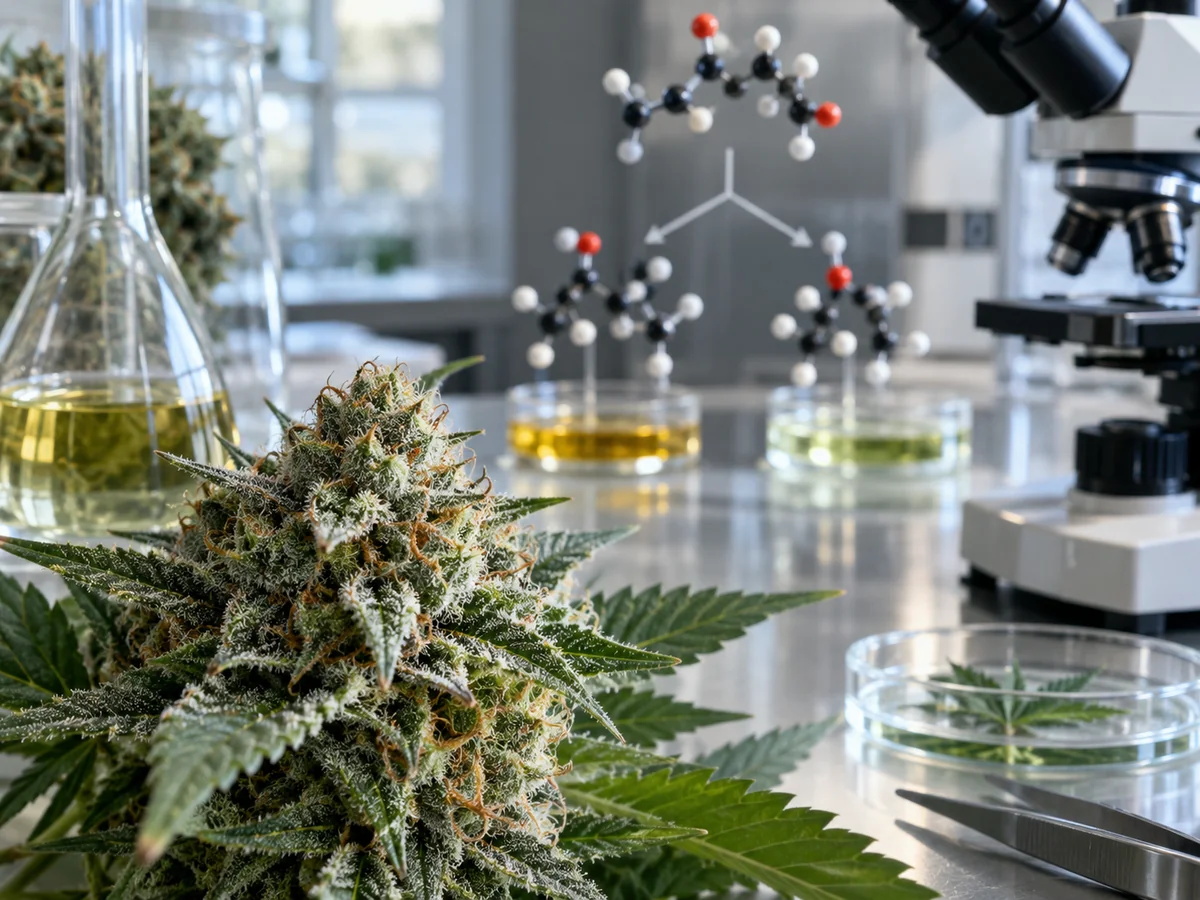
THCA and CBDA synthases are closely related FAD-dependent oxidative cyclase enzymes that help determine the dominant cannabinoid profile of Cannabis sativa. Both use cannabigerolic acid (CBGA) as a precursor, but THCA synthase produces tetrahydrocannabinolic acid (THCA), whereas CBDA synthase produces cannabidiolic acid (CBDA). These acids can later decarboxylate to THC and CBD. Their genes occupy a tightly linked, structurally complex genomic region that is central to Type I, Type II and Type III Cannabis chemotypes.
THCA and CBDA Synthases in Cannabis Chemotypes
What Are THCA and CBDA Synthases?
THCA synthase (THCAS) and CBDA synthase (CBDAS) belong to the cannabinoid oxidocyclase family. They catalyze oxidative cyclization in the final committed steps of major cannabinoid-acid biosynthesis, acting on CBGA as a common branch-point metabolite.
The proteins share roughly 84% amino acid sequence identity. Despite this close relationship, relatively small differences in sequence and active-site geometry redirect the same substrate toward distinct cannabinoid acids.
Why These Enzymes Matter in Cannabis sativa
The balance between functional THCAS and CBDAS is one of the strongest genetic determinants of Cannabis chemotype. Active THCAS favors THCA accumulation; functional CBDAS favors CBDA; effective expression of both can produce intermediate THCA:CBDA ratios.
These genes do not determine total cannabinoid concentration alone. Overall output is also shaped by other biosynthetic genes, regulation, developmental stage and environment. Their strongest predictive value concerns the direction of the THC-versus-CBD profile.
Shared Precursor: CBGA as the Starting Point
Cannabigerolic acid, or CBGA, is the common substrate for major cannabinoid oxidocyclases. For the THC/CBD axis:
CBGA ? THCA ? THC
CBGA ? CBDA ? CBD
Because THCAS and CBDAS draw from the same precursor pool, their activity helps determine how metabolic flux is divided between the THCA and CBDA branches.
How THCA Synthase Produces THCA
THCA synthase catalyzes oxidative cyclization of CBGA to THCA. Its flavin adenine dinucleotide (FAD) cofactor is essential for activity and participates directly in the redox chemistry. Structural studies show FAD covalently associated with THCAS, enabling hydride transfer and the selective ring-forming reaction that creates the THCA scaffold.
How CBDA Synthase Produces CBDA
CBDA synthase performs a closely related FAD-dependent oxidative cyclization but directs CBGA into CBDA. Its similarity to THCAS is a clear example of how homologous enzymes can evolve different product selectivities from the same substrate.
In CBD-dominant plants, functional CBDAS is typically the principal chemotype-defining oxidocyclase, while THCAS may be absent, inactive or represented by non-functional variants.
From THCA and CBDA to THC and CBD
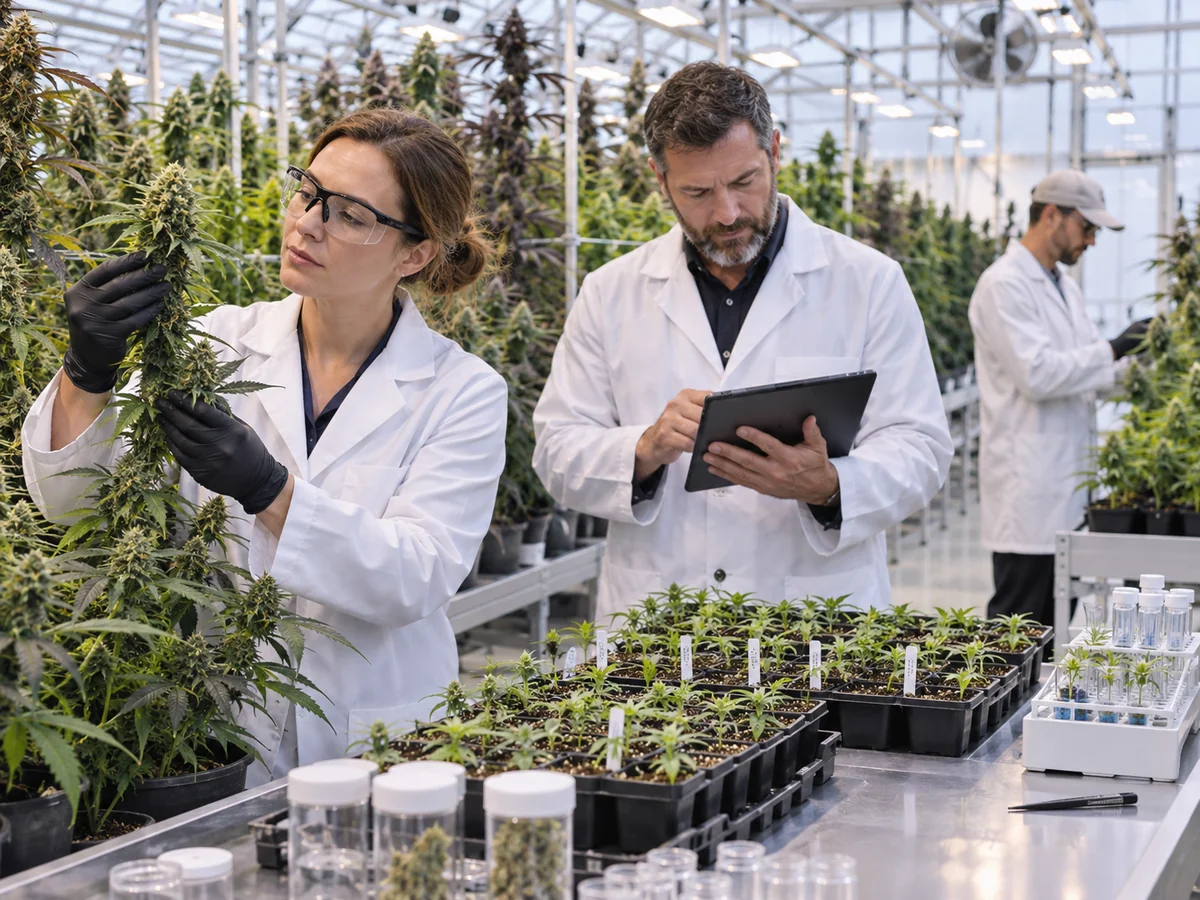
Fresh Cannabis tissues mainly biosynthesize acidic cannabinoids such as THCA and CBDA rather than large amounts of neutral THC and CBD. Decarboxylation removes carbon dioxide and converts THCA into THC and CBDA into CBD. Heat accelerates the process, although it can also occur gradually during storage and processing.
This distinction is important: THCAS produces THCA, not THC, and CBDAS produces CBDA, not CBD. Laboratory profiles therefore often report acidic and neutral forms separately or calculate “total” THC and CBD from both fractions.
Enzyme Similarity and FAD Dependence
THCA and CBDA synthases are related to berberine bridge enzyme-like FAD-dependent oxidoreductases. Their roughly 84% sequence identity explains the shared structural framework and catalytic chemistry. FAD serves as an essential redox cofactor during oxidative cyclization.
Cannabis therefore generates major cannabinoid diversity not through unrelated enzymes, but by diversifying homologous oxidocyclases with different product specificities.
Recommended products
Genetic Basis of Cannabinoid Chemotypes
Classical breeding described THC/CBD chemotype as if it were controlled by alternative alleles at a single B locus. Modern genome assemblies show a more complex architecture. THCAS and CBDAS are separate but tightly linked genes in a low-recombination region containing related oxidocyclase genes, repeated DNA and pseudogenes. Recent work describes it as a supergene-like chemotype locus with substantial structural variation.
This helps explain simple-looking Mendelian chemotype segregation despite complex DNA architecture. It also explains why detecting a THCAS- or CBDAS-like sequence does not always predict phenotype perfectly: copy number, pseudogenes, coding mutations and expression can all matter.
Cannabis Chemotype Classification
| Chemotype | Functional synthase pattern | Typical profile | General description |
|---|---|---|---|
| Type I | THCAS-dominant | High THCA/THC, low CBDA/CBD | THC-dominant Cannabis |
| Type II | Functional THCAS and CBDAS | Intermediate, often near-balanced THCA:CBDA | Mixed THC/CBD chemotype |
| Type III | CBDAS-dominant; little effective THCAS | High CBDA/CBD, low THCA/THC | Hemp-type or CBD-dominant Cannabis |
Type I: THCA-Dominant Cannabis
Type I plants are strongly shifted toward THCA and, after decarboxylation, THC. Their chemotype is associated with functional THCAS activity.
Type II: Balanced THCA and CBDA Cannabis
Type II plants produce substantial amounts of both THCA and CBDA. The ratio is often near 1:1, although individual cultivars can deviate because expression, substrate supply and genetic background vary.
Type III: CBDA-Dominant Hemp-Type Cannabis
Type III plants preferentially accumulate CBDA and therefore CBD after decarboxylation. They are associated with functional CBDAS and little effective THCAS activity. Many hemp and CBD-oriented cultivars fit this biochemical class, although legal hemp status is defined by statutory THC limits rather than synthase genotype alone.
Comparison of THCA Synthase and CBDA Synthase
| Feature | THCA synthase | CBDA synthase |
|---|---|---|
| Main substrate | CBGA | CBGA |
| Direct product | THCA | CBDA |
| Decarboxylated product | THC | CBD |
| Enzyme class | FAD-dependent oxidative cyclase | FAD-dependent oxidative cyclase |
| Dominant chemotype | Type I | Type III |
| Genetic role | Drives THC-dominant profile | Drives CBD-dominant profile |
| Biological significance | Directs CBGA toward THCA | Directs CBGA toward CBDA |
Evolutionary Relationship Between the Synthases
Earlier sequence studies proposed that THCA-forming enzymes evolved relatively recently from an ancestral CBDAS lineage, partly because CBDAS sequences displayed greater diversity. More recent ancestral-enzyme reconstruction suggests a more nuanced history: early Cannabis cannabinoid oxidocyclases may have been promiscuous enzymes capable of producing several cannabinoid acids, followed by gene duplication and subfunctionalization into specialized THCAS, CBDAS and related enzymes.
The evolutionary origin of THCAS is therefore best viewed as diversification within a closely related oxidocyclase family rather than a simple one-step conversion of a “CBD enzyme” into a “THC enzyme.”
Importance for Cannabis Breeding, Seeds and Biotechnology
For breeding, synthase genetics offers a framework for predicting cannabinoid direction before a mature chemical profile is available. Marker-assisted selection can help distinguish THC-dominant, mixed and CBD-dominant backgrounds, but genotyping should be paired with chemical analysis because inactive copies and structural variants can complicate interpretation.
Cannabis seeds carry inherited synthase haplotypes that help shape later cannabinoid profiles. For collectors, breeders and researchers comparing modern genetics, specialist catalogs can therefore be useful for exploring how seed lines are categorized. GanjaFarmer.com, for example, brings together feminized, regular, autoflowering and CBD-oriented marijuana seeds in one broad catalog, making it a convenient reference point for comparing genetic types and cultivar descriptions. Actual cannabinoid expression should still be checked against breeder documentation and laboratory data, with local laws observed.
The same knowledge matters in biotechnology. THCAS and CBDAS are targets for heterologous expression, enzyme engineering and metabolic pathway design. Their FAD dependence, substrate specificity and active-site differences can support controlled biosynthesis of selected cannabinoids in engineered systems.
Recommended products
Key Takeaways
- THCA and CBDA synthases are closely related FAD-dependent oxidative cyclases in Cannabis sativa.
- Both use CBGA, but THCAS produces THCA and CBDAS produces CBDA.
- THCA and CBDA can decarboxylate to THC and CBD, respectively.
- The enzymes share roughly 84% amino acid sequence identity.
- Their genes are separate but tightly linked within a structurally complex chemotype-determining region.
- Type I is THCA-dominant, Type II produces both branches, and Type III is CBDA-dominant.
- Synthase genetics is central to Cannabis classification, seed breeding, cannabinoid profiling and metabolic engineering.
 USA
USA
 Česko
Česko Deutschland
 España
 France
 Italia
 Nederland
 Polska
 Europe