


 @ganjafarmer.seed
 @GanjaFarmerSeed
True F1 cannabis hybrids are first-generation plants produced by crossing two genetically distinct, highly stabilized parent lines. Their main advantage is the combination of phenotype uniformity with heterosis, or hybrid vigor. With near-homozygous parents, each F1 seed receives a predictable genetic contribution, creating a crop that can be both consistent and vigorous.
What Are True F1 Cannabis Hybrids?
In plant breeding, a true F1 hybrid is more specific than any first cross between two cannabis plants. It is created from inbred parent lines whose key alleles have been fixed through repeated self-pollination or related breeding. Cannabis is naturally outcrossing and often highly heterozygous, so ordinary crosses between two named cultivars may still produce substantial variation among seedlings. This differs from hybrids made with stabilized, homozygous parents.
What Is Heterosis in Cannabis Breeding?
Heterosis is the performance boost that can occur when two genetically distinct inbred lines are crossed. In favorable cannabis crosses, it can restore vigor lost during inbreeding and improve growth, fertility or yield.
Genetic Stabilization of Parent Lines
Breeders first build inbred lines (IBLs) by repeated self-pollination and selection. With each selfed generation, residual heterozygosity is roughly halved. Programs may work through about five to eight generations, depending on the starting material. A 2026 cannabis study advanced several lines to S6 and obtained functionally homozygous parents with less than 3% residual heterozygosity.
Crossing Distinct Inbred Lines
Two stabilized lines are then crossed. The parents must be different enough to create useful heterozygosity, but greater distance does not automatically mean a better hybrid. Breeders still test which pairs show strong “combining ability.”
Why Heterozygosity Matters
Inbreeding can expose harmful recessive mutations, contributing to inbreeding depression. In an F1 hybrid, a healthy dominant allele from one parent may mask a deleterious recessive allele from the other. This dominance-complementation model is one major explanation for heterosis, alongside overdominance and epistatic gene interactions.
How Breeders Create True F1 Cannabis Hybrids
Developing Inbred Lines Through Self-Pollination
The process begins with repeated selfing, selection and strict pollination control. Breeders track vigor, fertility, flowering and chemical traits while increasing homozygosity generation by generation. Molecular markers can help measure residual heterozygosity rather than relying only on appearance.
Selecting Genetically Distinct Parent Lines
Stable parents are evaluated in test crosses. An IBL may be weak on its own yet valuable if it produces strong heterosis with the right partner. True F1 development requires more than crossing two popular cultivars.
Producing Uniform F1 Seeds
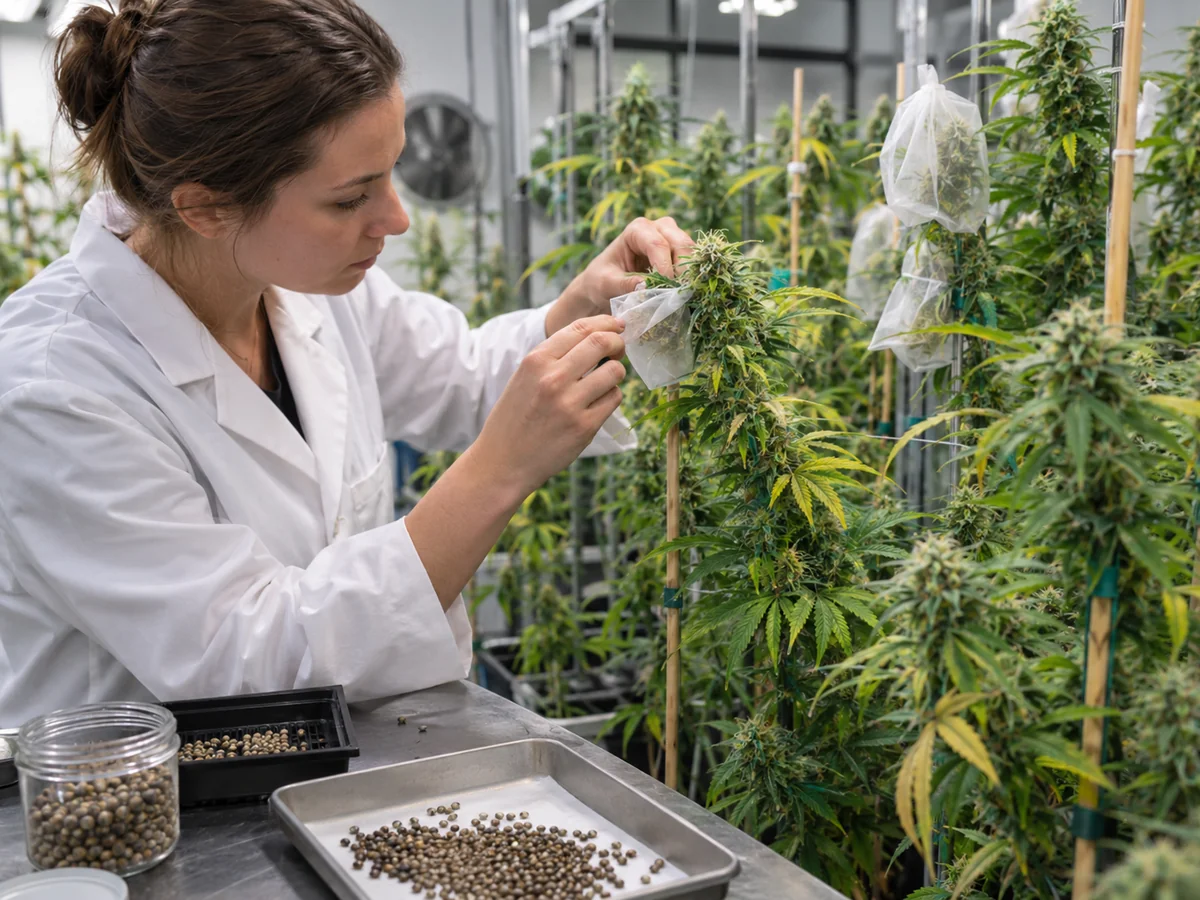
If the parent lines are fixed, each seed from the same cross receives essentially the same parental allele combination. At loci where the parents carry different fixed alleles, the F1 offspring are uniformly heterozygous—the basis of repeatable performance.
For buyers of marijuana seeds, this distinction is worth understanding. A seed pack described as “hybrid” or “F1” may contain excellent genetics without meeting the classical true-F1 definition. When exploring specialist catalogues such as Ganjafarmer.com, where permitted by local law, the meaningful question is whether the breeder has stabilized the parental lines and demonstrated consistent offspring—not simply whether the F1 label appears on the pack.
Why True F1 Hybrids Are More Vigorous
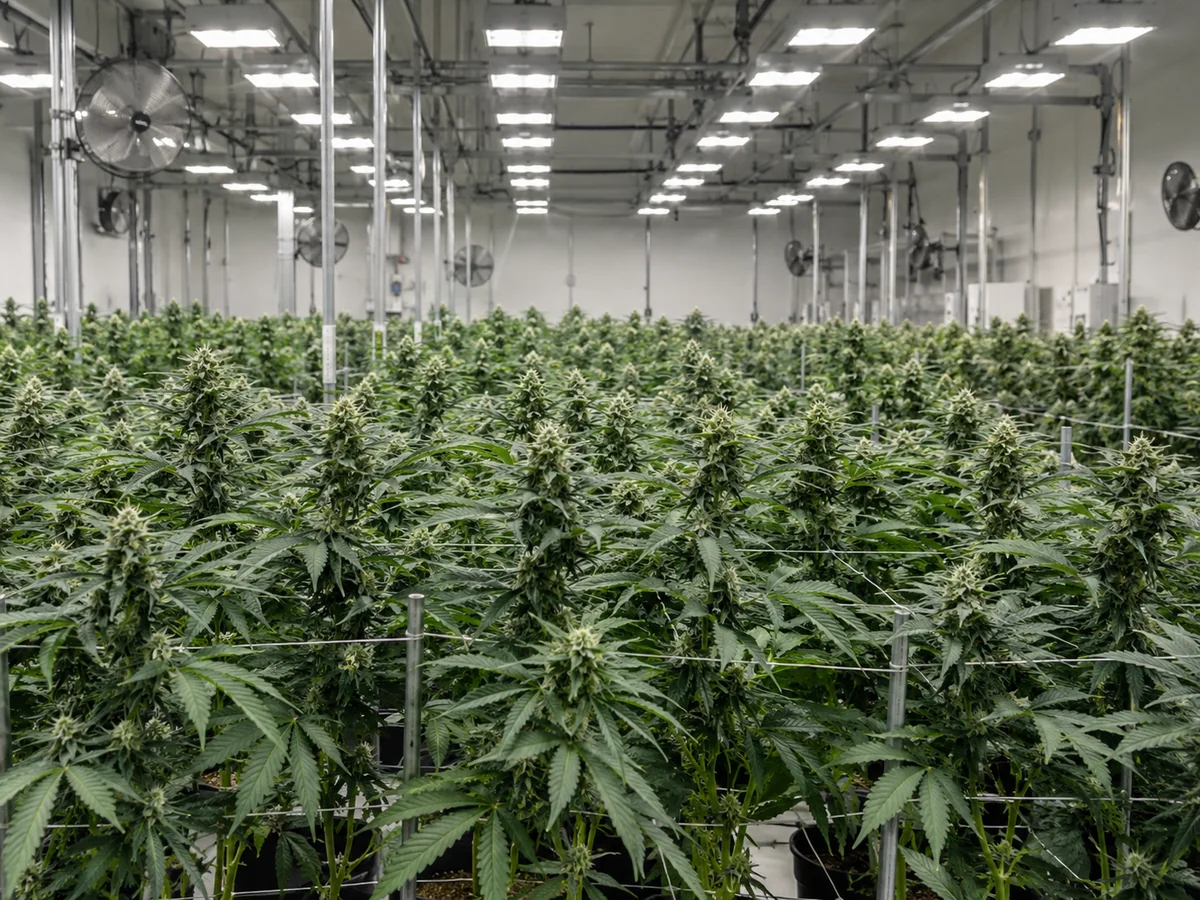
Enhanced Root and Vegetative Growth
Hybrid vigor can appear as faster establishment, stronger root development and more energetic vegetative growth. Restoring heterozygosity can reverse part of the fitness loss created by inbreeding.
Improved Metabolic Efficiency
Heterosis can involve changes in gene expression and metabolic regulation. In cannabis, its molecular basis is still less well characterized than the visible effects on vigor and uniformity.
Greater Stress and Pathogen Tolerance
Hybrid crops can sometimes buffer environmental variation better than inbred lines. In cannabis, greater stress tolerance is a potential outcome, not an automatic property of every F1. Resistance to temperature shifts or pathogens still depends on the alleles carried by the parents.
Higher Biomass and Flower Yield
Yield heterosis can be substantial, but it is not universal. In the 2026 proof-of-concept study, true F1 cannabis lines were generally more vigorous than their direct inbred parents, while seed yield increased by 3.9% to 155% over mid-parent values. Not every F1 exceeded the original heterozygous accessions for biomass, showing why parent choice and performance testing remain essential.
Recommended products


Why True F1 Hybrids Are More Uniform
Predictable Phenotypes
Fixed parents recreate the same genetic combination in each seed, reducing the segregation that normally produces multiple phenotypes in seed-grown cannabis.
Locked-in Growth Traits
Plant height, architecture, internode spacing and developmental rate can become more predictable when parental alleles are stabilized. Environment still matters, but plant-to-plant genetic variation is reduced.
Consistent Flowering Times
A narrow flowering window simplifies crop planning and quality control. Recent true-F1 cannabis work found more synchronized flowering in hybrid lines than in heterogeneous source material.
Stable Chemical Profiles
Cannabinoid and terpene expression is influenced by both genetics and environment. Stabilized parents make the genetic component more predictable, supporting greater chemical consistency. Yet the parent lines must first carry well-characterized chemotypes, and some cannabinoid traits may still show complex inheritance.
True F1 Hybrids vs Traditional Cannabis Seeds
| Feature | True F1 Hybrids | Traditional Cannabis Seed Crosses | Inbred Parent Lines |
|---|---|---|---|
| Genetic structure | Uniform heterozygous | Variable | Mostly homozygous |
| Parent stability | Highly stabilized | Often variable | Highly stabilized |
| Vigor | Often high through heterosis | Inconsistent | May be reduced |
| Uniformity | High | Low to moderate | High |
| Phenotype hunting | Usually reduced | Often required | Not normally the final crop |
| Yield potential | High but cross-dependent | Variable | Often lower |
| Chemical consistency | More predictable | Less predictable | Stable if traits are fixed |
Random Crosses and Phenotype Variation
Traditional crosses can produce outstanding individuals, but heterozygous parents generate segregation. Multiple phenotypes within one seed lot are therefore common—useful for selection, less useful for repeatable production.
Reduced Need for Phenotype Hunting
True F1 seed does not eliminate environmental effects or rare off-types, but it can reduce the need to search large populations for a desired phenotype. Much of that work is moved upstream into parent-line development.
Commercial Benefits of Uniform Crops
For commercial production, uniform plants simplify scheduling, sampling and harvest planning. More consistent genetics can also make cannabinoid and terpene specifications easier to reproduce at scale.
Recommended products


Key Advantages and Limitations of True F1 Hybrids
Advantages for Growers and Breeders
The principal advantages are repeatable genetics, strong phenotype uniformity, potential hybrid vigor, synchronized development and more predictable chemistry. Stable IBLs also become reusable breeding resources.
Challenges in Creating Stabilized Parent Lines
The difficult work occurs before commercial F1 seed exists. Producing near-homozygous parents takes generations of controlled pollination and selection. Because Cannabis sativa is predominantly outcrossing, inbreeding can reduce vigor, fertility or normal floral development.
Why Not Every “F1” Seed Is a True F1 Hybrid
A first-generation cultivar cross is technically F1, but it is not a true hybrid-seed system if the parents remain highly heterozygous. Without stabilized parents, different seeds can inherit different allele combinations, so significant segregation remains. A genuine true-F1 claim is strongest when backed by parent-line homozygosity, controlled crossing and repeatable progeny data.
Conclusion: Why True F1 Hybrids Matter in Cannabis Breeding
True F1 cannabis hybrids apply a proven crop-breeding principle to a species known for high seed-to-seed variability. Their value combines heterozygosity for vigor with uniformity through stabilized parents.
When the parental lines are well chosen, heterosis can mask harmful recessive effects, recover vigor lost during inbreeding and improve biological performance. At the same time, fixed parent genetics can narrow variation in height, flowering time, morphology and chemical profile. These benefits depend on rigorous parent-line stabilization, suitable genetic distance and tested crosses. True F1 is not simply a label, but a repeatable genetic system for predictable seed-grown cannabis.
 USA
USA
 Česko
Česko Deutschland
 España
 France
 Italia
 Nederland
 Polska
 Europe