


 @ganjafarmer.seed
 @GanjaFarmerSeed
When discussing cannabis genetics, two terms appear constantly: genotype and phenotype. They are closely related, but they describe different biological concepts. In simple terms, the cannabis genotype is the genetic blueprint stored in a plant’s DNA, while the cannabis phenotype is the set of visible and measurable traits that develops when that blueprint interacts with the environment.
The simplest way to remember the distinction is this: genotype defines what is biologically possible, while phenotype shows what actually develops. Genotype establishes a range of inherited traits. Phenotype is their real-world expression, shaped by factors such as light, temperature, nutrients, soil, climate, and general plant care.
Cannabis Genotype vs Phenotype: How Plant Traits Develop
Every cannabis plant begins with genetic information encoded in DNA. That information comes from its parent plants and is already present in the seed. It contains instructions that influence possible plant height, leaf morphology, growth pattern, pigmentation, bud structure, aroma profile, and other characteristics.
DNA is not a photograph of the final plant. It is a set of biological possibilities whose expression is influenced by the environment. This is why closely related plants can still differ in height, color, structure, or growth behavior.
What Is a Cannabis Genotype?
A cannabis genotype is the inherited genetic blueprint of a cannabis plant. It is encoded in DNA and passed down from the parent plants.
The genotype is fixed. Once a seed has formed, the genetic code inside it does not change during the plant’s life cycle. Environmental conditions can influence gene expression, but they do not rewrite the inherited DNA.
Genotype therefore defines the plant’s biological range of possibilities. It can influence tendencies related to growth pattern, morphology, cannabinoid and terpene potential, coloration, maturation behavior, stress response, and other inherited traits.
A genotype therefore sets limits and probabilities rather than guaranteeing one exact appearance.
What Is a Cannabis Phenotype?
A cannabis phenotype is the observable expression of the plant’s genotype after environmental influence.
Phenotype includes traits that can be seen, measured, or otherwise observed: plant height, leaf shape, color, branching style, internodal spacing, bud structure, aroma, resin appearance, and general growth behavior.
A useful simplified formula is:
Phenotype = Genotype + Environmental Influence
A plant may have the genetic potential for a certain characteristic, yet the final trait expression can depend strongly on external conditions.
Key Differences Between Genotype and Phenotype
The central difference is that genotype refers to inherited genetic information, whereas phenotype refers to the characteristics that actually appear in the plant.
Genotype is internal and DNA-based. Phenotype is observable. Genotype remains fixed, while phenotype expression can vary with environmental factors.
For example, a seed may carry genes associated with tall growth, but final plant height can still be influenced by light, temperature, root conditions, nutrition, and other variables. Likewise, inherited tendencies toward particular colors or aromas may be expressed differently in different environments.
How Environment Influences Cannabis Phenotypes
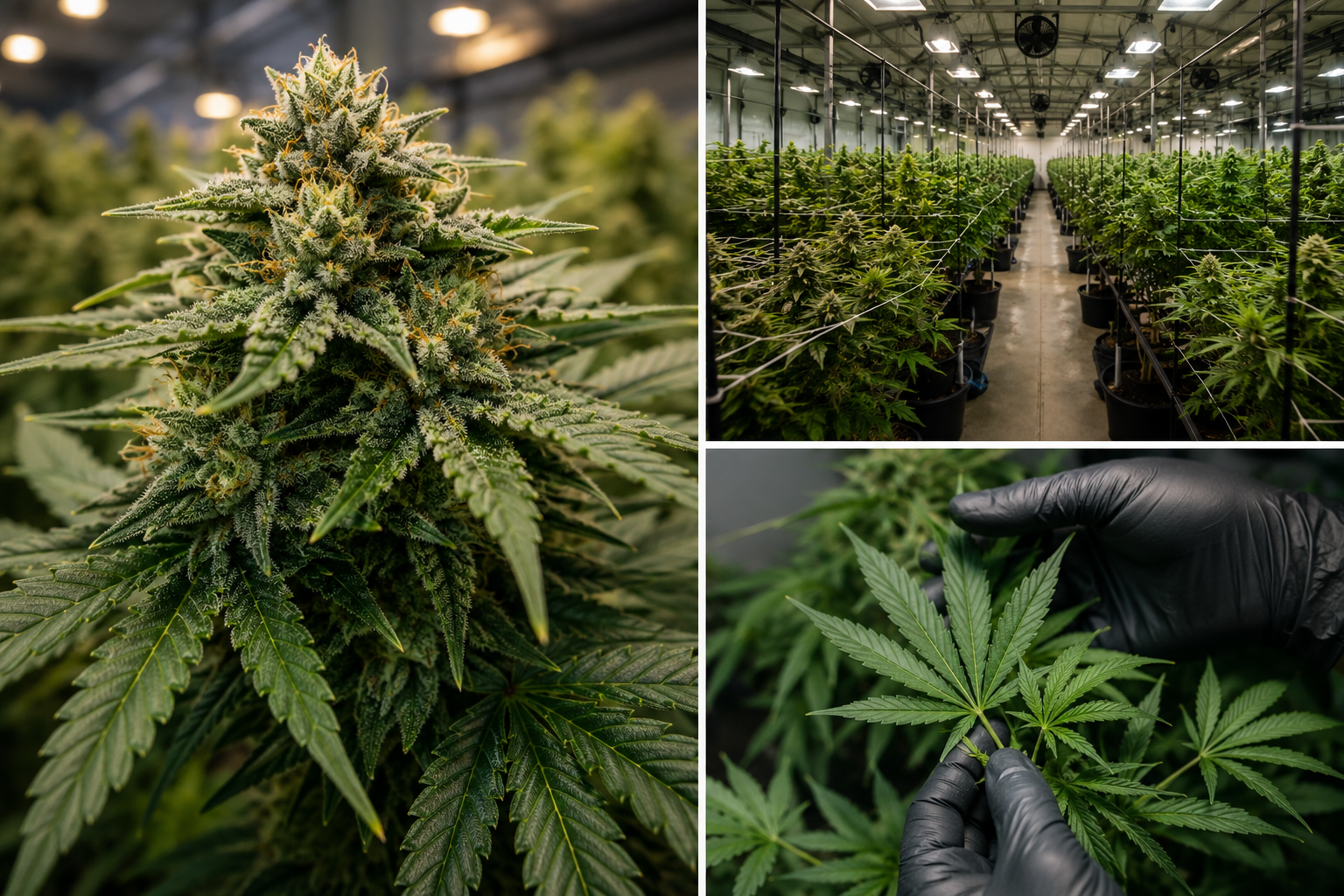
Environmental factors play a major role in shaping cannabis phenotype expression. Even genetically similar plants may develop differently under different conditions.
Light can affect plant structure and general morphology. Temperature may influence growth rate, pigmentation, and stress response. Nutrients support metabolism and can affect how fully inherited growth potential is expressed. Soil or growing medium influences root conditions and nutrient availability, while climate and feeding schedules can contribute to additional variation.
These factors do not create a new genotype. They change how existing genetic information is expressed.
Appearance alone therefore does not tell the whole genetic story.
Why Plants From the Same Strain Can Look Different
If two seeds carry the same strain name, why can the resulting plants look different? There are two main reasons.
First, seeds produced through sexual reproduction are not genetic photocopies. Each seed can inherit a slightly different combination of genes from the parent plants. This natural genetic variation means sibling plants can be similar without being identical.
Second, environmental differences influence phenotype expression. Plants with related inherited traits may develop differently when light, temperature, soil conditions, nutrient availability, or climate change.
One seed may therefore produce a taller plant with narrower leaves, while another from the same strain develops a different shape or aroma. Both can still fall within the expected genetic range.
This is also why breeders evaluate consistency across multiple plants. A more stable line generally produces a narrower range of phenotypes, while greater genetic diversity can lead to broader strain variation.
Recommended products
Examples of Cannabis Phenotype Traits
Common cannabis phenotype traits include:
- Plant height – short, medium, tall, compact, or strongly stretching.
- Leaf shape – broad, narrow, intermediate, or otherwise distinctive.
- Color – differences in green tone, purple coloration, and other pigmentation.
- Bud structure – differences in shape, density, and visual arrangement.
- Aroma – variation in smell linked to expressed aromatic chemistry.
- Growth style – upright, bushy, open, compact, or more lateral development.
- Internodal spacing – shorter or longer distances between growth points.
- General vigor – visible differences in growth speed and plant behavior.
These are phenotype characteristics because they describe what the plant actually expresses, not merely what its DNA could potentially produce.
Marijuana Seeds and the Importance of Seed Genetics
The seed is the starting point of cannabis genetics because it contains the inherited DNA that defines the genotype. The origin and breeding history of marijuana seeds therefore matter when evaluating the biological potential of a strain.
A seed cannot guarantee one perfectly uniform phenotype, but stable breeding and documented parentage can make expected traits more predictable. This is why seed descriptions often focus on lineage, morphology, aroma tendencies, flowering characteristics, and other inherited features.
When comparing cannabis seeds, it is more accurate to think in terms of genetic potential rather than guaranteed appearance. A reliable seed source should distinguish between an expected trait range and a fixed result. For readers researching different breeders and genetic lines, Ganjafarmer.com offers a convenient place to compare seed varieties and their stated characteristics without reducing genetics to a strain name alone.
Cannabis seed, cultivation, and possession laws differ by jurisdiction, so buyers should always check the rules that apply where they live.
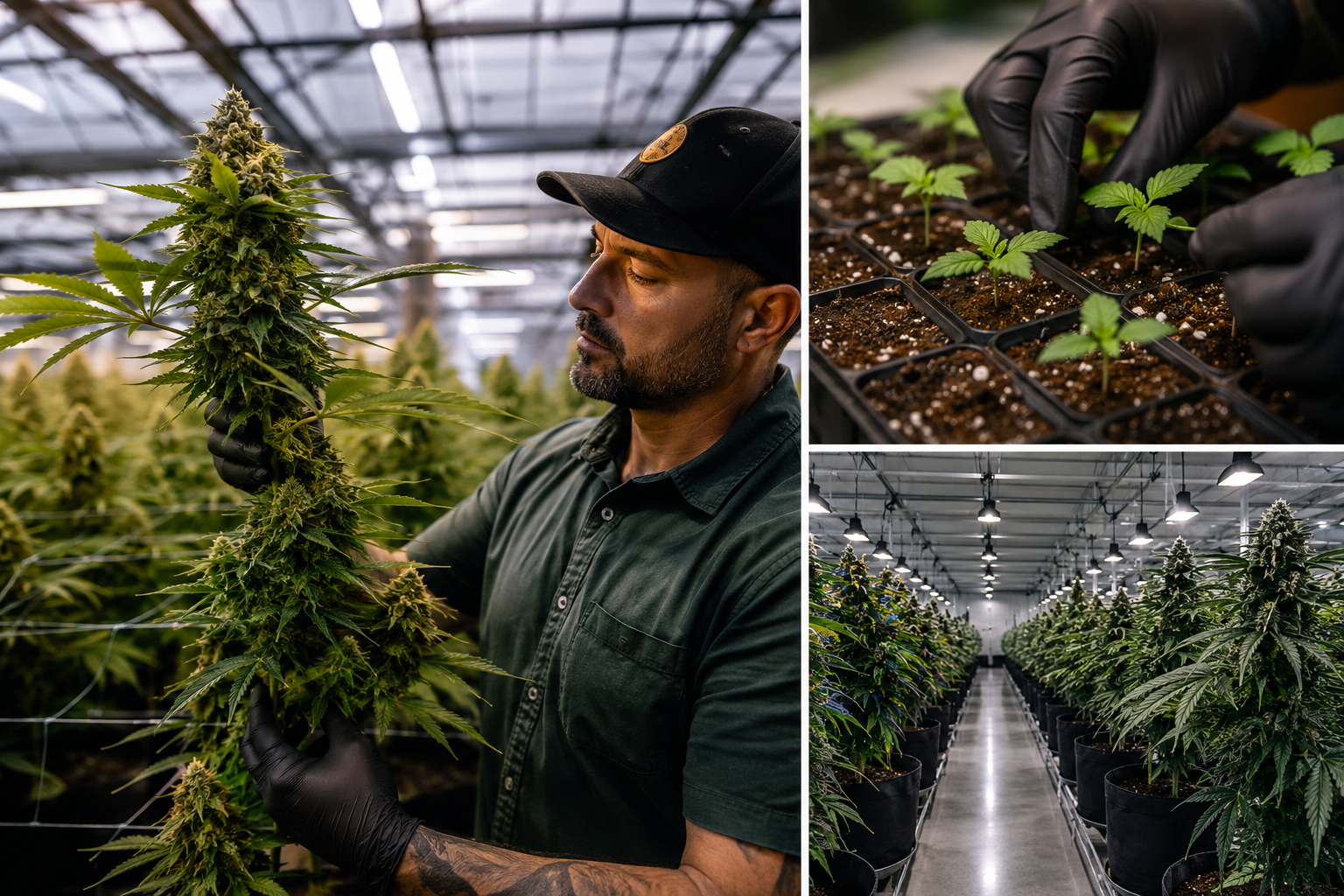
Why Genotype and Phenotype Matter for Growers
For growers, understanding genotype and phenotype helps separate inherited potential from environmental expression.
Genotype answers questions such as: What traits are biologically possible? What characteristics may have come from the parent plants? How much variation could appear among seeds from the same line?
Phenotype answers different questions: What traits actually developed? How tall did the plant become? What leaf shape, aroma, color, structure, or growth habit became visible?
For breeders, genetics provide the heritable foundation, while phenotype observation reveals which traits are actually expressed. For consumers, this helps explain variation in appearance, aroma, or chemical profile within a named strain.
Genotype vs Phenotype Comparison Table
| Feature | Genotype | Phenotype |
|---|---|---|
| Meaning | Genetic blueprint | Observable plant expression |
| Source | DNA inherited from parent plants | Genetics plus environment |
| Can it change? | No, inherited code is fixed | Expression can vary |
| Examples | Growth potential, inherited traits, genetic limits | Height, smell, color, leaf shape, bud structure |
| Main influence | Parent genetics | Light, temperature, nutrients, soil, climate |
| Grower relevance | Shows possible outcomes | Shows the actual plant result |
Recommended products

Final Takeaway: Genetics Set Potential, Environment Shapes Results
The difference between cannabis genotype and cannabis phenotype is fundamental to understanding how cannabis plants develop.
Genotype is the inherited genetic blueprint stored in DNA. It comes from the parent plants and remains fixed throughout the plant’s life. It sets the biological range of possible traits.
Phenotype is the observable expression of that blueprint. It includes plant height, leaf shape, color, bud structure, aroma, growth style, and other measurable characteristics. Phenotype is shaped by both genetics and environmental factors.
That is why seeds from the same strain can produce plants that are similar but not identical. Natural genetic variation creates differences between siblings, while environmental conditions influence how inherited traits are expressed.
The core idea is simple: genotype defines the potential; phenotype shows the result. Understanding both provides a more accurate way to interpret seed genetics, strain variation, and trait expression in cannabis.
 USA
USA
 Česko
Česko Deutschland
 España
 France
 Italia
 Nederland
 Polska
 Europe