


 @ganjafarmer.seed
 @GanjaFarmerSeed
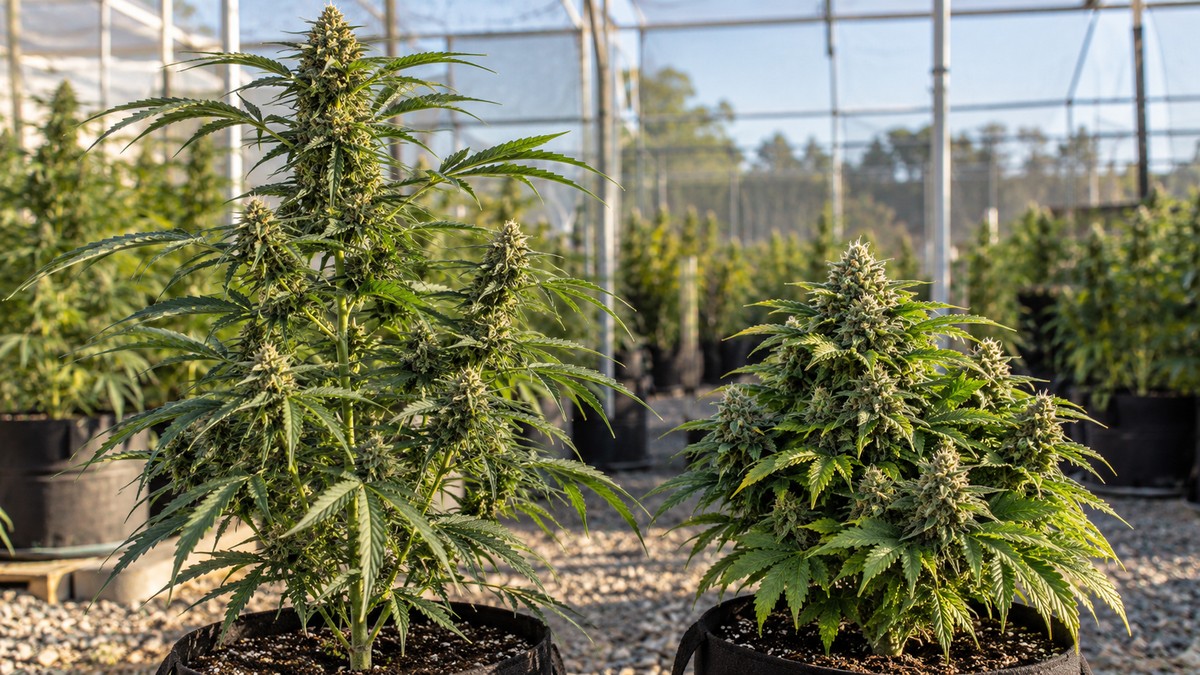
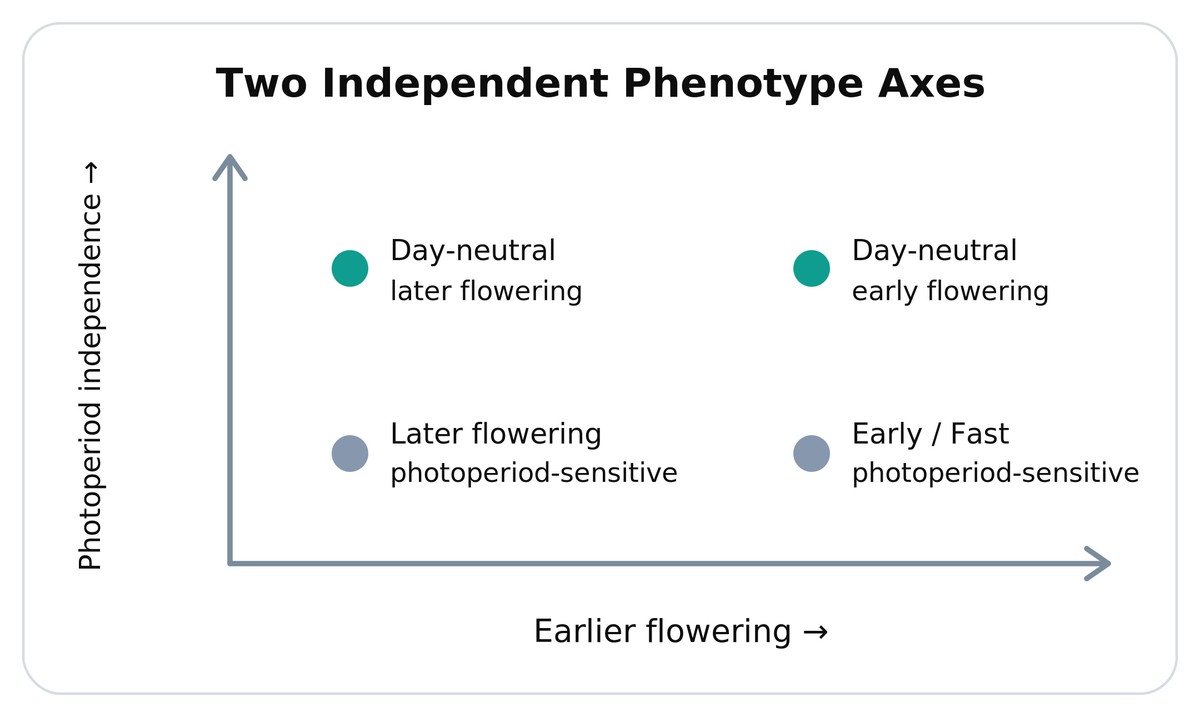
The main difference between fast-flowering and autoflowering cannabis seeds is how the resulting plants respond to day length. Fast-flowering varieties are generally photoperiod-sensitive cannabis plants bred to initiate or complete flowering earlier than comparable conventional strains. Autoflowering varieties, by contrast, can develop mature inflorescences without requiring a short-day signal.
In simple terms, fast flowering describes developmental timing, while autoflowering describes independence from the flowering-inducing photoperiod. These are different biological traits, and they can sometimes overlap.
Understanding this distinction is essential when comparing cannabis genetics, interpreting seed bank descriptions, or evaluating claims about flowering speed, maturity, and genetic stability.
Fast-Flowering vs. Autoflowering Cannabis Seeds: Comparison Table
| Feature | Fast-Flowering Seeds | Autoflowering Seeds |
|---|---|---|
| Main characteristic | Earlier flowering or maturity | Flowering without short-day induction |
| Flowering response | Usually photoperiod-sensitive | Day-neutral for inflorescence development |
| Flowering trigger | Appropriate day-length signal | Internal developmental regulation without a required short-day signal |
| Time to maturity | Often shorter than comparable conventional photoperiod varieties | Often marketed using a complete seed-to-harvest timeline |
| Genetic background | Selected early-flowering lines, sometimes involving autoflowering ancestry | Genetics associated with photoperiod-insensitive flowering |
| Breeding terminology | Primarily a commercial classification | Describes a recognizable physiological phenotype |
| Potential yield | Depends on cultivar and conditions | Depends on cultivar and conditions |
| Cannabinoid content | Not determined by the Fast label | Not determined by the Auto label |
| Genetic uniformity | Depends on breeding and stabilization | Depends on breeding and stabilization |
| Main consideration | How much earlier does the strain mature, and under which conditions? | Does the plant develop full inflorescences independently of short-day induction? |
Neither type is inherently superior. The most meaningful comparison concerns the specific genetics, their documented behavior, and the developmental milestones used to measure flowering.
What Are Fast-Flowering Cannabis Seeds?
Fast-flowering cannabis seeds, also marketed as Fast Version, Fast Flower, or Early Version seeds, generally produce photoperiod-sensitive plants with an accelerated flowering or maturation phenotype.
The key point is that a shorter flowering period does not necessarily mean the plant has become photoperiod-independent.
For example, a fast-flowering cultivar might develop its mature inflorescences earlier than a related conventional photoperiod line, while still requiring an appropriate seasonal day-length signal to initiate full flowering.
However, there is no single universally accepted scientific definition of Fast Flowering. Breeders may use the term to describe different characteristics.
Does Fast Flowering Mean a Shorter Flowering Stage?
Not always. The label can refer to three distinct measurements:
- Earlier flowering initiation: The plant begins developing reproductive structures earlier.
- Shorter flowering duration: Less time passes between a defined flowering stage and maturity.
- Earlier overall maturity: The plant reaches its final developmental endpoint sooner.
These characteristics can overlap, but they are not interchangeable.
A cultivar that begins flowering earlier does not necessarily complete flowering faster. Likewise, a shorter flowering stage does not automatically mean a shorter complete life cycle.
This distinction matters when evaluating commercial descriptions of fast-flowering cannabis seeds.
Are Fast-Flowering Strains Created From Autoflowering Genetics?
Some are, but not all.
One breeding approach involves combining photoperiod-sensitive genetics with autoflowering ancestry and selecting offspring that retain photoperiod sensitivity while showing earlier flowering characteristics.
Other fast-flowering lines can result from selection for naturally occurring early-flowering traits without relying on a particular autoflowering parent.
Importantly, finding autoflowering ancestry in a strain's pedigree does not prove that its offspring will autoflower.
As research into cannabis breeding continues, the distinction between a strain's ancestry and its actual flowering phenotype is becoming increasingly important.
What Are Autoflowering Cannabis Seeds?
Autoflowering cannabis seeds produce plants capable of developing complete reproductive inflorescences without the short-day induction required by conventional photoperiod-sensitive varieties.
The scientific terms photoperiod-insensitive and day-neutral are frequently used to describe this characteristic.
Autoflowering is commonly associated with an internally regulated developmental transition. However, the precise timing and expression of the trait can still vary among genotypes and environmental conditions.
Is Autoflowering the Same as Fast Growth?
No. An autoflowering plant does not necessarily grow faster at every developmental stage.
Autoflowering describes the absence of a required short-day signal for full flowering, not a guaranteed growth rate or maturity date.
Although many commercial autos are selected for relatively short life cycles, an individual autoflowering cultivar is not automatically faster than every fast-flowering photoperiod cultivar.
This is why listings for autoflowering cannabis seeds often emphasize an estimated seed-to-harvest period, whereas Fast Version descriptions commonly emphasize flowering-stage duration.
Those figures represent different measurements and should not be compared without understanding their starting and ending points.
Recommended products


The Genetics Behind Fast Flowering and Autoflowering
The most important recent discovery is that early flowering and photoperiod independence can have different genetic foundations.
Research published between 2022 and 2026 challenges several long-standing assumptions about how these traits are inherited.
Early1 and Autoflower1: Why Early Flowering Is Not the Same as Autoflowering
In 2022, Jacob A. Toth and colleagues at Cornell University published a study identifying two major flowering-related genetic loci in Cannabis sativa.
They described:
Early1: A genetic region associated with earlier flowering in a studied hemp population.
Autoflower1: A separate region associated with photoperiod-insensitive flowering.
The researchers investigated the cultivar Umpqua and observed distinct early- and late-flowering phenotypes. Under the tested field conditions, the difference was approximately two to four weeks.
Yet both phenotypes retained sensitivity to photoperiod.
As Toth and colleagues explained:
"Neither phenotype was induced to flower under continuous light."
This result demonstrates that a cannabis plant can possess a genetically influenced early-flowering phenotype without being an autoflower.
The distinction provides a scientific explanation for why the terms early flowering and autoflowering should never be used interchangeably.
The study also reported earlier field flowering in certain plants heterozygous at Autoflower1 without complete photoperiod independence.
That finding suggests a possible mechanism through which genetic variation associated with autoflowering might influence timing even when the full autoflowering phenotype is absent.
It does not, however, establish that every cross involving an autoflowering parent will produce faster photoperiod-sensitive offspring.
For additional context on how inherited characteristics become observable plant traits, see our article on genotype vs. phenotype in cannabis.
Autoflowering Is Not Always Recessive
A widespread breeding explanation suggests that autoflowering must always be inherited as a recessive trait.
Research now shows that this is an oversimplification.
In 2024, Caroline A. Dowling and colleagues identified another major locus, Autoflower2, associated with photoperiod-insensitive flowering in hemp.
The researchers linked this region to CsFT1, a cannabis gene related to the FLOWERING LOCUS T system involved in flowering regulation.
Their findings distinguished the inheritance patterns of Autoflower1 and Autoflower2.
As the authors stated:
"Autoflower1 photoperiod insensitivity is recessive, whereas our data indicate that Autoflower2 photoperiod insensitivity is dominant."
This is significant because the inheritance of autoflowering cannot be reduced to one universal rule.
The genetic background matters, and different populations can contain different mechanisms contributing to a similar flowering phenotype.
The study also identified structural variation involving CsFT1, although the researchers did not establish that this gene alone explains every aspect of the Autoflower2 phenotype.
For anyone interested in breeding terminology, our guide to backcrossing in cannabis breeding provides further background on how inherited traits can be tracked through successive generations.
Why the First Visible Flowers Do Not Prove a Plant Is Autoflowering
One of the most overlooked aspects of cannabis flowering biology concerns the definition of flowering itself.
A photoperiod-sensitive female cannabis plant can develop solitary flowers before the formation of a mature, compound inflorescence.
Therefore, the first visible pistils are not sufficient evidence that a plant is genetically autoflowering.
Research by Hanan Alter and colleagues, published in Horticulture Research in 2024, demonstrated that the initiation of solitary female flowers and the development of condensed inflorescences are regulated differently.
The distinction became even clearer in a 2026 paper by Madigan Eckels, Royal Heins, and Bruce Bugbee.
Botanical Flowering vs. Commercial Flowering
The researchers proposed distinguishing between two types of female reproductive development.
Botanical pistillate flowering refers to the appearance of individual female flowers, which can occur independently of an inductive photoperiod.
Commercial pistillate flowering describes the development of the compound female inflorescence, which requires an appropriate photoperiod in photoperiod-sensitive cultivars.
These definitions help explain why reports of cannabis plants flowering under long days can sometimes appear contradictory.
Two researchers may be observing different reproductive structures rather than documenting conflicting biological behavior.
For a reliable Fast Flowering vs. Autoflowering comparison, it is essential to distinguish the first visible flowers from the development of a complete reproductive inflorescence.
Are Autoflowering Strains Faster Than Fast-Flowering Strains?
Not necessarily. There is insufficient evidence to establish that either commercial category is universally faster across the complete plant life cycle.
The difficulty is that seed catalogs and scientific publications do not always measure the same developmental interval.
Flowering Time vs. Seed-to-Harvest Time
A fast-flowering photoperiod cultivar may be described using the duration of its flowering stage.
An autoflowering cultivar may instead be marketed using an estimated period from seed establishment to harvest maturity.
Comparing these figures directly would be misleading.
A scientifically meaningful comparison requires the same starting point, the same endpoint, and comparable environmental conditions.
Research published by Susanne Schilling and colleagues in The Plant Journal illustrates the importance of these distinctions.
In their experiments, the autoflowering hemp cultivar FINOLA reached observed flowering after approximately 21–25 days under two tested light regimes.
Those values describe flowering onset, not harvest maturity.
The same research demonstrated a rapid seed-to-seed generation cycle of 61 days under an experimental breeding protocol.
That result should not be confused with a universal 61-day harvest period for commercial cannabis strains.
Why Location and Day Length Matter
Photoperiod sensitivity can vary substantially among cannabis genotypes.
A 2021 University of Florida study by Mengzi Zhang and colleagues examined 27 hemp cultivars across different photoperiod conditions.
For certain cultivars, a difference of only 15 minutes in day length was associated with a flowering delay of approximately 5–13 days.
The researchers also documented the biological relevance of low-intensity light during civil twilight.
These findings show why flowering-time claims cannot always be transferred directly between different geographical locations or seasonal environments.
A cultivar described as early-maturing in one region may behave differently elsewhere.
Do Fast-Flowering Seeds Produce Higher Yields or Stronger Cannabis?
There is no reliable scientific basis for claiming that fast-flowering strains consistently produce higher yields or greater cannabinoid concentrations than autoflowering strains as a category.
Yield, cannabinoid composition, terpene expression, and morphological characteristics depend on several interacting factors, including genetics and environmental conditions.
A shorter developmental period does not automatically imply higher productivity. In industrial fiber hemp, for example, earlier reproductive development can reduce the time available for vegetative biomass accumulation.
Similarly, autoflowering does not inherently mean lower potency.
The relevant variables are the specific cultivar's genetic background, its chemotype, the quality of the breeding program, and the reliability of supporting measurements.
Claims about THC concentration should ideally be supported by comparable analytical data rather than inferred from labels such as Fast, Auto, Indica, or Sativa.
Because direct, representative comparisons of commercial Fast Version and Autoflowering genetics remain limited, broad percentage claims about superiority should be treated cautiously.
What Marijuana Seeds Actually Tell You About Flowering Genetics
When comparing marijuana seeds, the most useful information is not the strain name alone, but the combination of genetic origin, documented flowering response, seed type, and breeder-reported characteristics. A seed contains inherited genetic information, yet its eventual phenotype reflects interactions between that genotype and its environment. Consequently, commercial descriptions should communicate expected tendencies rather than guarantee identical development from every seed.
It is also important to distinguish flowering behavior from seed sex classification.
Feminized seeds are bred to produce predominantly female plants, whereas regular cannabis seeds generally retain the possibility of male and female offspring.
These classifications describe different genetic characteristics from photoperiod sensitivity.
A feminized seed can belong to either a photoperiod-sensitive or an autoflowering line. Likewise, being labeled autoflowering does not, by itself, specify cannabinoid content or genetic uniformity.
The quality and stabilization of the parental material are especially important when evaluating consistency. Our article on true F1 cannabis hybrids and genetic uniformity explains why a first-generation cross is not automatically equivalent to a highly uniform, stabilized F1 hybrid.
For collectors assessing multiple genetic lines, documented parentage, accurate classification, and appropriate seed preservation are more informative than broad marketing promises. The relationship between storage conditions and biological viability is explained in our guide to cannabis seed moisture content, storage, and viability.
At GanjaFarmer.com, readers can examine both fast-flowering and autoflowering seed categories and compare their listed genetics, flowering classifications, and breeder characteristics. The most useful approach is to treat these descriptions as cultivar-specific information rather than assume that one category guarantees a particular outcome.
Can Two Seeds With the Same Strain Name Flower Differently?
Yes.
A common strain name does not establish that two products contain identical genetics.
The University of Florida study by Zhang and colleagues observed differences between hemp cultivars sold under the same name but obtained from different sources.
The authors noted:
"Cultivars represented by the same name but acquired from different sources can perform differently"
This observation is particularly relevant when comparing Fast and Auto variations of a familiar commercial strain.
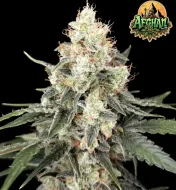
For example, the GanjaFarmer catalog identifies Afghan Fast as photoperiod-sensitive and Afghan Auto as autoflowering.
These products also have different reported parentage. Their shared Afghan branding should therefore not be interpreted as evidence that they are genetically identical apart from a single flowering trait.
Recommended products

How to Evaluate Fast-Flowering and Autoflowering Seed Descriptions
A scientifically informative strain description should answer more than the question of how many weeks flowering supposedly takes.
The most useful details include:
- Flowering classification: Is the cultivar genuinely day-neutral, or does full inflorescence development remain photoperiod-sensitive?
- Timing definition: Is the reported duration measured from seed establishment, flowering initiation, or another clearly defined stage?
- Environmental context: Under which conditions and geographical circumstances were the observations recorded?
- Genetic documentation: Is the reported lineage supported by breeding records or genetic information?
- Consistency: Does the flowering-time estimate reflect observations across multiple plants, or an isolated result?
A particularly useful sign of reliable documentation is transparency about variation.
A flowering estimate expressed as a range is generally more informative than a single guaranteed completion date, provided the endpoints and conditions are defined.
Can DNA Testing Identify Autoflowering Genetics?
Molecular marker analysis is becoming increasingly important in cannabis breeding research.
The discovery of Autoflower1, Autoflower2, and candidate genes associated with photoperiod sensitivity has created opportunities for more precise genetic classification.
However, a molecular marker validated in one population may fail to identify a similar phenotype produced by another genetic mechanism.
In 2026, Mehdi Babaei and colleagues reported a machine-learning model combining genomic and developmental measurements to distinguish autoflowering, early-flowering, and late-flowering cannabis classes.
The best model achieved an overall classification accuracy of 96.6%.
However, its test dataset contained only 29 samples, including two autoflowering samples.
The result is promising, but it does not establish a universally validated method for identifying every commercial autoflowering strain.
For seed buyers, the practical lesson is that genetic testing and breeder documentation are valuable, but neither a single marker nor a marketing label should be treated as an absolute guarantee.
Frequently Asked Questions
Are Fast-Flowering Cannabis Seeds the Same as Autoflowering Seeds?
No. Fast-flowering seeds generally produce photoperiod-sensitive plants selected for earlier flowering or maturity. Autoflowering seeds produce plants capable of developing complete inflorescences without short-day induction. These characteristics describe different aspects of flowering biology.
Can Fast-Flowering Cannabis Strains Have Autoflowering Genetics?
Yes. Some Fast Version lines have autoflowering ancestors. Nevertheless, autoflowering ancestry does not automatically make the resulting cultivar day-neutral. The actual phenotype depends on the genetic combination inherited.
Are All Autoflowering Traits Recessive?
No. Research has identified both recessive and dominant genetic contributions to photoperiod-insensitive flowering. Autoflower1 and Autoflower2 provide documented examples of different inheritance patterns.
Do All Autoflowering Cannabis Strains Contain Ruderalis Genetics?
Autoflowering has historically been associated with genetics described as Cannabis ruderalis, but this does not establish the ancestry of every modern commercial line. Different genetic mechanisms can contribute to photoperiod independence, and historical breeding claims do not always provide complete molecular evidence.
Can Autoflowering Cannabis Be Cloned?
Autoflowering does not create an absolute biological barrier to vegetative regeneration. Preliminary laboratory research has reported successful micropropagation of day-neutral cannabis through floral reversion. However, these experimental results should not be confused with the practicality or reliability of conventional clonal propagation.
Which Is More Potent: Fast-Flowering or Autoflowering Cannabis?
Neither category inherently determines cannabinoid concentration. Potency is a property of the particular cultivar's chemotype and its expressed characteristics, not simply whether flowering is early or day-neutral.
Are Fast-Flowering and Autoflowering Seeds Legal?
The labels Fast Flowering and Autoflowering do not establish a separate legal classification. Rules governing cannabis seeds, possession, germination, and cultivation differ by jurisdiction. Hemp-specific regulations may also depend on approved varieties, intended use, and cannabinoid content. Always check the applicable local laws.
Final Verdict: Fast Flowering vs. Autoflowering — Which Is Better?
The answer depends on which flowering characteristic matters most.
Fast-flowering cannabis genetics are primarily associated with earlier reproductive development or maturity while generally retaining photoperiod sensitivity. Autoflowering genetics are distinguished by their ability to develop full inflorescences without a required short-day signal.
Neither category guarantees superior yields, potency, stability, or overall speed.
Scientific studies demonstrate that early flowering and photoperiod independence can have different genetic origins, that autoflowering inheritance is not universally recessive, and that the definition of flowering itself matters when comparing results.
The most reliable way to evaluate fast-flowering vs. autoflowering cannabis seeds is to compare the actual flowering phenotype, genetic background, developmental timeline, and quality of the available evidence—not simply the number of weeks printed in a catalog.
Scientific References
- Toth, J. A., Stack, G. M., Carlson, C. H., & Smart, L. B. (2022). Identification and mapping of major-effect flowering time loci Autoflower1 and Early1 in Cannabis sativa L. Frontiers in Plant Science, 13, 991680.
- Dowling, C. A., Shi, J., Toth, J. A., et al. (2024). A FLOWERING LOCUS T ortholog is associated with photoperiod-insensitive flowering in hemp (Cannabis sativa L.). The Plant Journal, 119(1), 383–403.
- Zhang, M., Anderson, S. L., Brym, Z. T., & Pearson, B. J. (2021). Photoperiodic Flowering Response of Essential Oil, Grain, and Fiber Hemp (Cannabis sativa L.) Cultivars. Frontiers in Plant Science, 12, 694153.
- Schilling, S., Melzer, R., Dowling, C. A., et al. (2023). A protocol for rapid generation cycling (speed breeding) of hemp (Cannabis sativa) for research and agriculture. The Plant Journal, 113(3), 437–445.
- Alter, H., Sade, Y., Sood, A., et al. (2024). Inflorescence development in female cannabis plants is mediated by photoperiod and gibberellin. Horticulture Research, 11(11), uhae245.
- Eckels, M., Heins, R., & Bugbee, B. (2026). Unraveling the Confusion of Flowering Types and Terminology in Cannabis sativa. HortScience, 61(2), 396–402.
- Babaei, M., Nemati, H., Arouiee, H., & Torkamaneh, D. (2026). Integrating temporal morphophysiological and genomic markers for precise classification of flowering time in cannabis. Scientific Reports, 16, 23150.
- Tabatabaei, D. S., Abiri, R., & Jones, A. M. P. (2024). Floral Reversion based micropropagation of Day-Neutral Cannabis sativa L. bioRxiv. Preprint; findings should be interpreted as preliminary.
 USA
 Česko
 Deutschland
 España
 France
 Italia
 Nederland
 Polska
 Europe