


 @ganjafarmer.seed
 @GanjaFarmerSeed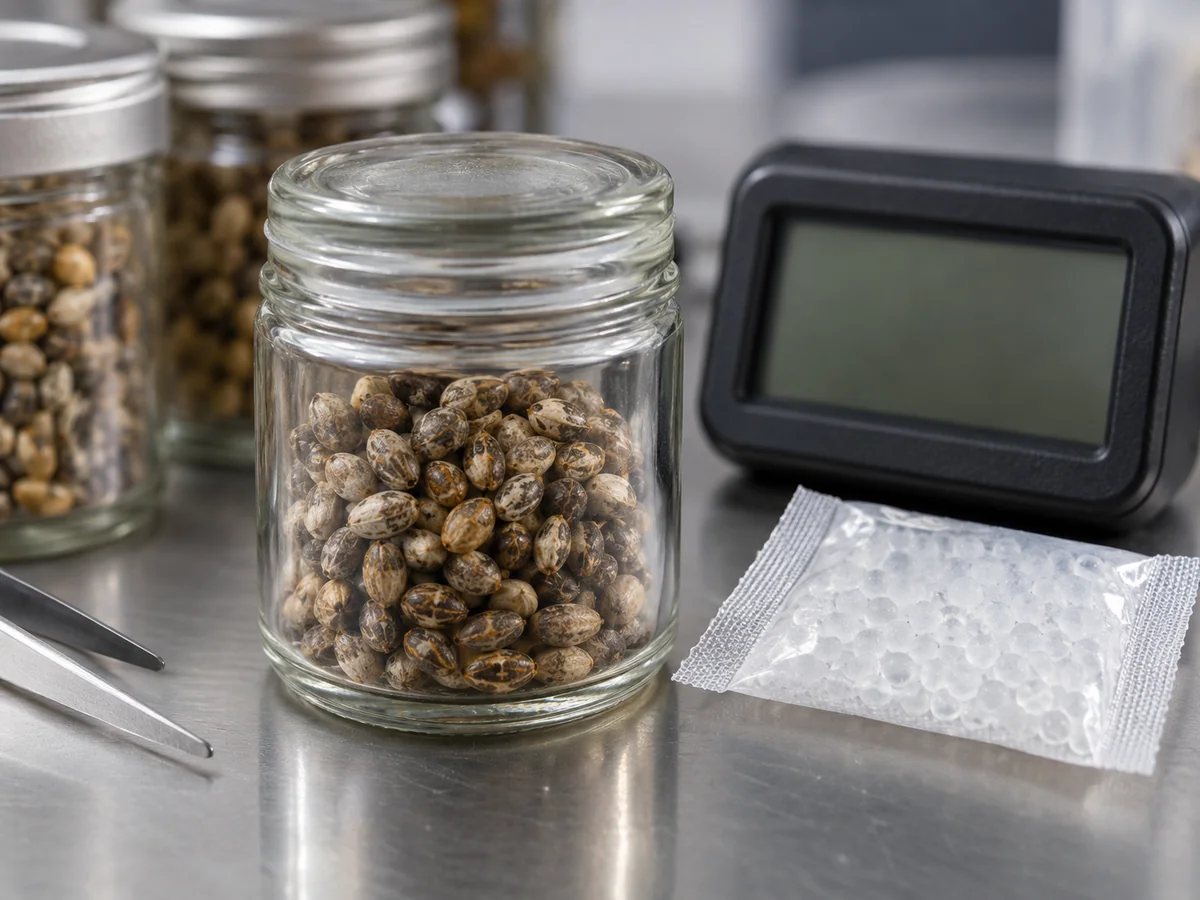
Cannabis seed moisture content is one of the main variables controlling dormancy, longevity, viability, and later germination. In practical terms, a dry cannabis seed remains biologically alive but metabolically quiet. For well-prepared seed lots, an internal moisture level of roughly 5% to 9% supports this low-activity state, while a tighter storage target of about 5% to 8% is preferable for maintaining quality over time.
Moisture should be considered together with temperature, packaging, and initial seed quality. Stable, cool, dry storage slows aging, while excess moisture accelerates respiration, weakens tissues, and supports microorganisms.
This article is educational and focuses on seed physiology and preservation. Cannabis seeds should be stored, handled, germinated, or cultivated only where local law permits it.
Why Does Cannabis Seed Moisture Content Matter?
Seed moisture content is the amount of water held inside the seed, usually expressed as a percentage of fresh weight. This water influences membrane behavior, enzymatic reactions, respiration, and the physical state of the cytoplasm.
A mature dry seed survives because most metabolic processes are reduced to very low levels. As moisture increases, molecular mobility rises, enzymes become more active, respiratory pathways accelerate, and membranes move toward the hydrated state required for growth. Moisture therefore helps determine whether the seed remains dormant, deteriorates during storage, or transitions toward germination.
What Is Metabolic Dormancy in Cannabis Seeds?
Metabolic dormancy describes a viable seed that remains alive while using very little stored energy. Cannabis seeds contain reserves that will later support early development, so conserving those reserves during storage is essential.
At low internal moisture, respiration and enzymatic activity are strongly suppressed. The embryo remains in a maintenance state rather than entering the growth cycle prematurely, conserving energy and reducing oxidative damage.
What Is the Ideal Cannabis Seed Moisture Content?
For dry, storable cannabis seeds, a practical internal moisture range is approximately 5% to 9%. Within this zone, metabolism remains strongly restricted and viability can be retained far longer than under humid storage conditions.
For deliberate storage, a narrower target of about 5% to 8% is preferable. Exact equilibrium values vary with seed composition, genotype, temperature, and the method used to measure moisture, so these figures should be treated as technical targets rather than universal absolutes.
Cannabis is an oil-bearing species whose seeds show the desiccation tolerance typical of orthodox seeds. Research on Cannabis sativa has shown that moisture content and storage temperature interact in determining how well germination capacity is retained over time.
How Does Low Moisture Preserve Seed Energy?
A dry seed is not dead tissue. It is an organized biological system operating at a very low metabolic rate. When moisture stays near the recommended storage range, mitochondrial respiration remains minimal, many enzymes function at negligible rates, and reduced molecular mobility slows reactions associated with aging.
Stable dry conditions also help preserve membranes so they can reorganize efficiently during later rehydration. Storage does not stop biology completely, but it slows deterioration enough to protect the embryo and its energy reserves.
What Happens If Cannabis Seeds Are Too Moist?
The risk profile changes sharply as seed moisture rises. Above roughly 12% moisture, aging processes can accelerate and seed vigor may decline faster. Higher water availability increases respiration and biochemical activity, causing stored reserves to be consumed more rapidly.
One important effect is loss of membrane integrity. Aging membranes become less capable of reorganizing correctly when water returns, which can result in electrolyte leakage during imbibition. A seed may still germinate after moderate aging, but emergence can become slower, less uniform, or weaker.
At approximately 12% to 14% moisture, storage risks become more serious. These conditions can encourage fungal development, mold, insect activity, rot, and damage to embryonic tissue. Prolonged exposure can therefore reduce seed viability even when the outer shell initially appears normal.
Recommended products


Why Are Mold, Fungi, and Insects Linked to Moisture?
Very dry seeds in sealed, stable conditions provide a relatively hostile environment for storage organisms. As moisture rises, fungi can colonize damaged coats or nutrient-rich tissues more easily, especially when warmth is also present. Insect activity likewise increases under warmer, more humid conditions. Moisture control therefore protects the embryo both physiologically and hygienically.
How Does Moisture Trigger Germination?
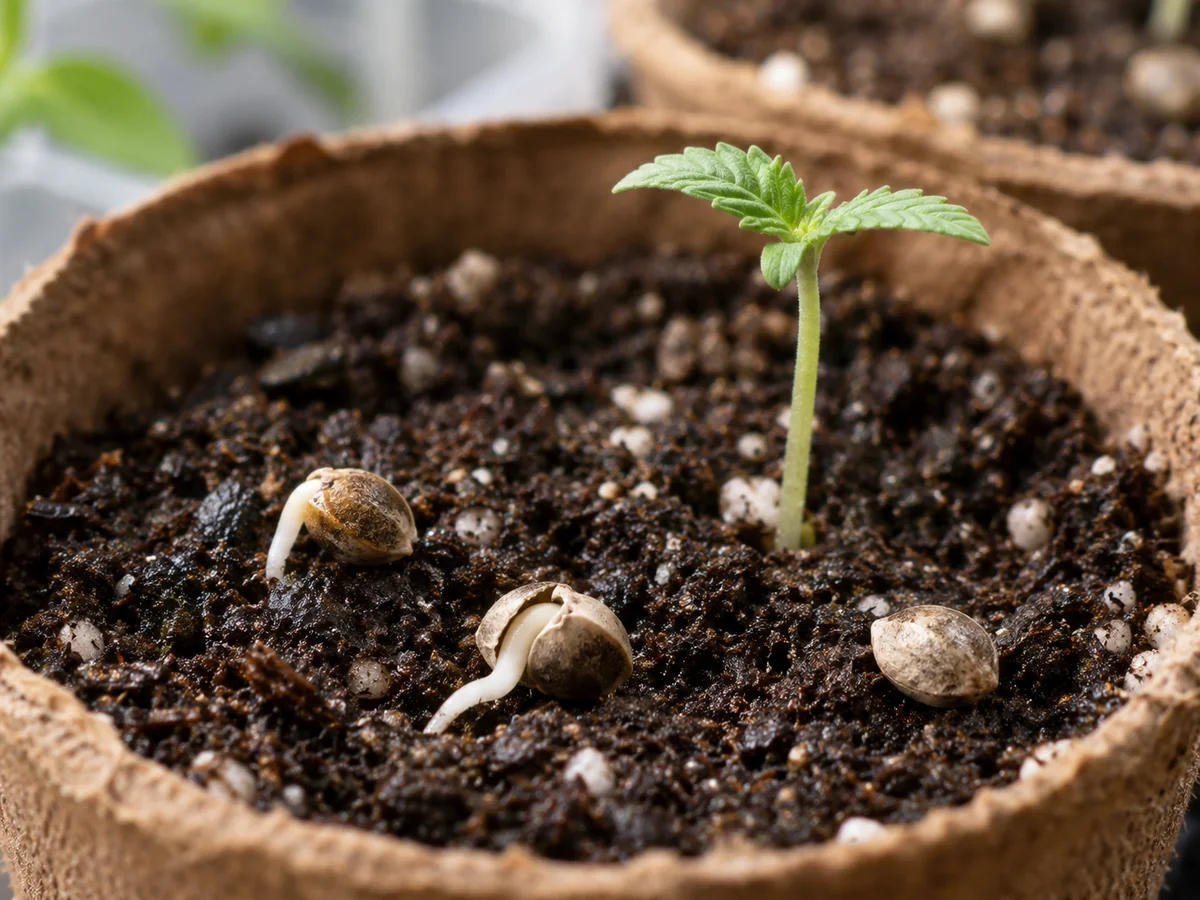
The same water that is undesirable during storage becomes essential when germination begins. Germination starts with controlled rehydration, or imbibition, during which the dry seed absorbs water and cellular structures progressively return to an active state.
As hydration increases, enzymes regain mobility and begin mobilizing stored reserves. Mitochondria resume active respiration, ATP production rises, and repair processes become more active. Healthy membranes restore selective permeability, while aged or damaged membranes may leak electrolytes and metabolites.
When hydration, temperature, and oxygen availability are suitable, the embryo resumes cell division and expansion. Moisture is therefore both a storage variable and a developmental signal.
What Should Buyers Know About Marijuana Seeds?
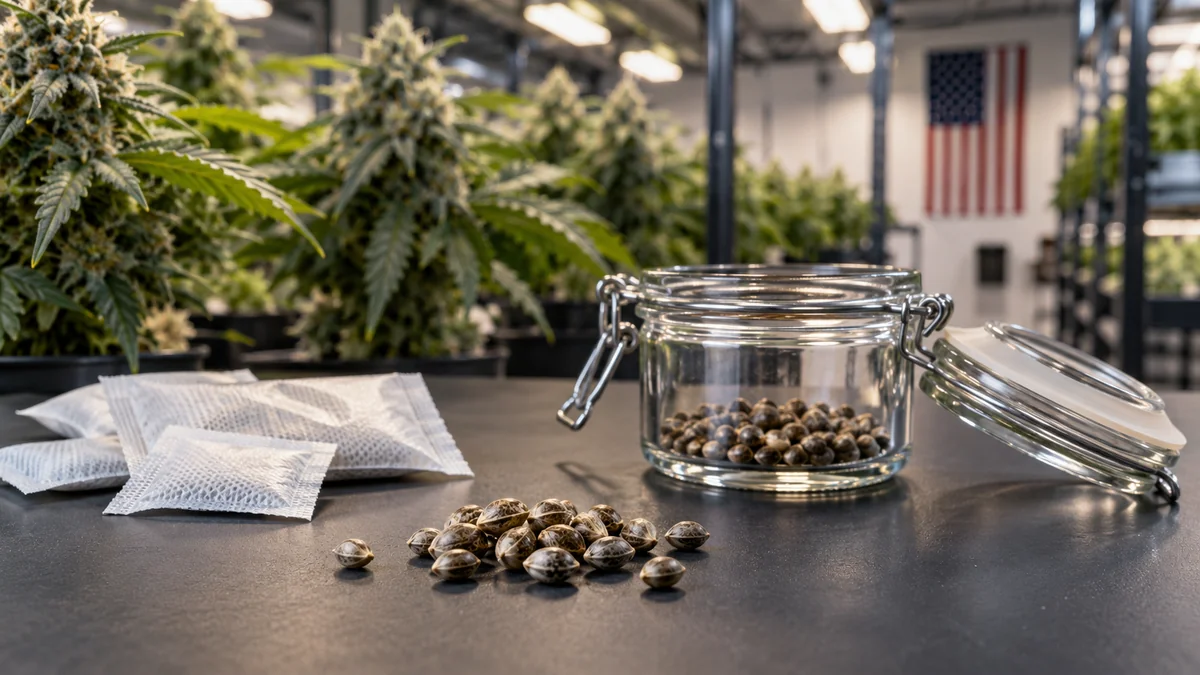
For people purchasing marijuana seeds in jurisdictions where possession and cultivation are lawful, visible appearance is only one part of quality. A mature shell may look intact while internal vigor has already been reduced by poor drying, repeated humidity changes, or warm storage. Seed handling before sale therefore matters alongside genetics.
Specialist seed shops can add value by treating storage stability as part of product quality. Ganjafarmer.com, for example, provides a broad selection for customers interested in cannabis genetics and serves as a useful point of reference for seed-focused information. Whatever the supplier, seeds should be protected from moisture swings after delivery and kept sealed until needed. Good genetics cannot compensate indefinitely for poor storage conditions.
What Are the Best Storage Conditions for Cannabis Seeds?
For stable storage, seeds should be placed in airtight containers that limit exchange with humid ambient air. Silica desiccants can help buffer residual moisture, especially when containers are opened periodically.
A relative humidity of about 20% to 40% is commonly associated with conditions that help maintain low seed moisture, although equilibrium moisture still depends on temperature and seed composition. Stability matters more than chasing a single number; repeated movement between dry and humid environments can cause unwanted cycles of moisture uptake and loss.
Temperature control adds a second protective layer. Around +5°C is a practical reference point for medium-term refrigerated storage when seeds are already dry and sealed. For long-term conservation, genebank-style conditions commonly use approximately –18°C to –20°C. Freezing is suitable only for sufficiently dry, desiccation-tolerant seeds in moisture-proof packaging.
Cold-stored containers should remain closed until they have warmed toward room temperature. This helps reduce condensation on cold seeds or inside the package.
Recommended products
Cannabis Seed Moisture Content Comparison Table
| Internal moisture level | Physiological effect | Storage impact | Main risk |
|---|---|---|---|
| 5% to 8% | Very low respiration and enzymatic activity | Preferred storage target | Low if temperature and packaging are stable |
| 5% to 9% | Strong metabolic suppression and dormancy maintenance | Favorable for dry storage | Humidity fluctuations if packaging is poor |
| Above 12% | Faster respiration, aging, and membrane deterioration | Reduced longevity and vigor | Electrolyte leakage and accelerated aging |
| 12% to 14% and above | Conditions increasingly favorable to biological activity | Unsuitable for extended storage | Fungi, mold, insects, rot, embryo damage |
Key Takeaways on Cannabis Seed Moisture Management
Cannabis seed moisture content is a central regulator of seed quality because water controls the balance between metabolic dormancy and biological activity. Keeping internal moisture at roughly 5% to 9%, and preferably around 5% to 8% for storage, helps suppress respiration, conserve energy reserves, and slow aging.
Above about 12%, deterioration can accelerate and membrane integrity becomes more vulnerable. At roughly 12% to 14% and higher, risks from fungi, mold, insects, and tissue decay increase. By contrast, controlled rehydration at the appropriate time reactivates enzymes, mitochondrial respiration, and cell division.
The practical principle is straightforward: dry, cool, stable storage preserves potential; controlled hydration releases it. Airtight containers, desiccants, low relative humidity, and temperature control all contribute to seed longevity. For collectors, researchers, breeders, and legally permitted growers, moisture management is therefore one of the foundations of cannabis seed physiology and successful preservation.
 USA
USA
 Česko
Česko Deutschland
 España
 France
 Italia
 Nederland
 Polska
 Europe