

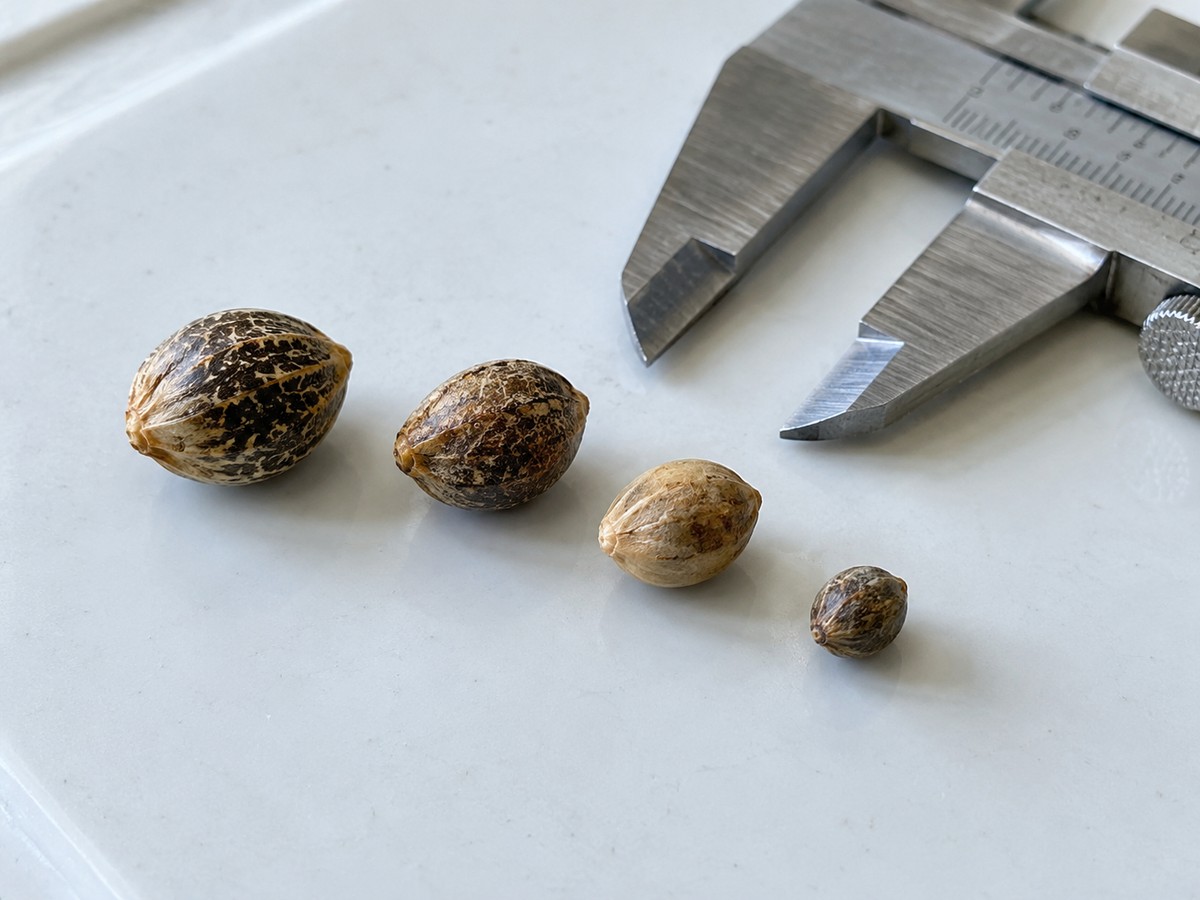
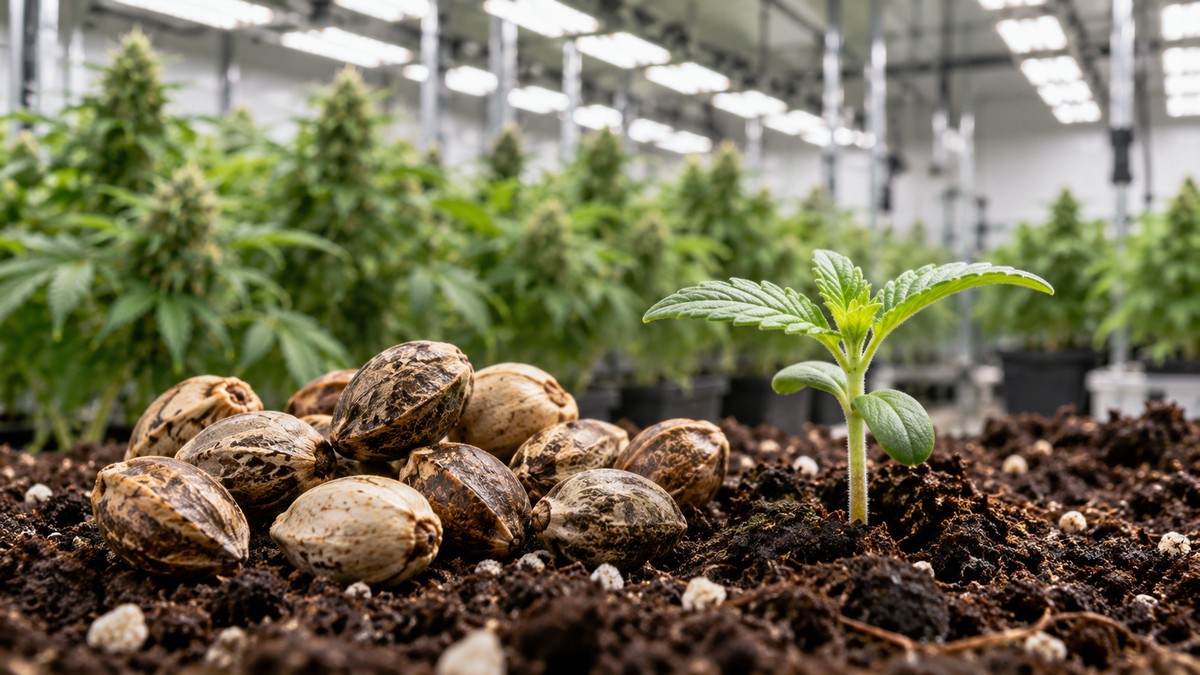
Do dark, large, tiger-striped cannabis seeds indicate better quality? Not necessarily. Seed color, size, and surface patterns can provide useful clues about genetics, maturity, and physical condition, but none reliably proves that a seed is viable, vigorous, or genetically authentic.
A pale cannabis seed is not automatically immature. A small seed is not necessarily weak. And a seed without tiger stripes may be perfectly healthy.
Scientific research, including the Community Plant Variety Office's updated 2026 cannabis protocol, shows that these characteristics vary naturally between varieties. Meanwhile, factors such as seed maturity, storage conditions, dormancy, and hidden pathogens can have a much greater influence on germination.
The key is understanding what cannabis seed appearance can tell you—and what it cannot.
What Do Good Cannabis Seeds Look Like? A Quick Comparison
There is no single appearance that identifies a high-quality cannabis seed. However, some visible features deserve more attention than others.
| Seed characteristic | What it may indicate | What it cannot prove |
|---|---|---|
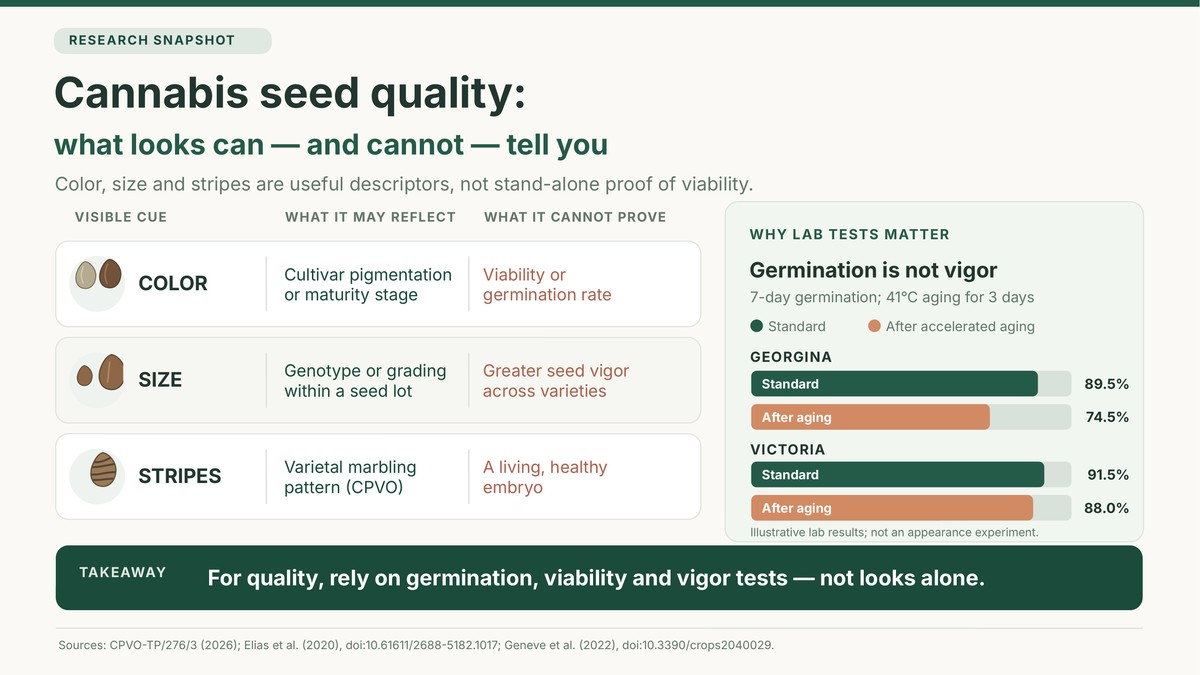
| Dark brown or gray color | Natural pigmentation, potentially advanced maturity | High germination rate or strong genetics |
| Pale gray or tan color | Normal varietal pigmentation or an earlier developmental stage | That the seed is immature or dead |
| Greenish, soft appearance | Possible incomplete maturation | Exact viability without testing |
| Tiger stripes or marbling | Characteristic pigmentation or outer tissue patterns | Superior vigor or potency |
| Smooth surface without stripes | Natural variation between varieties | Inferior seed quality |
| Large size | Genetic differences, seed development, or greater reserve mass | Better germination or larger future plants |
| Small size | Genotype-dependent seed morphology | Poor genetics or weak seedlings |
| Cracked shell or visible mold | Possible mechanical damage or contamination | The precise extent of internal damage |
| Intact, dry, firm shell | An absence of obvious external damage | That the embryo is alive and healthy |
The practical distinction: visual inspection is useful for identifying suspicious damage and unusual conditions. It is much less reliable for predicting the physiological performance of an individual seed.
Myth 1: Dark Cannabis Seeds Are Always Better Than Light Seeds
One of the most common claims about cannabis seed quality is that healthy seeds must be dark brown, while white or pale seeds are defective.
The reality is more complicated.
Why Pale Cannabis Seeds Are Not Always Immature
Cannabis seed coat pigmentation varies naturally between genotypes.
The Community Plant Variety Office (CPVO) classifies seed coat color as a descriptive characteristic in its technical protocol CPVO-TP/276/3, adopted in April 2026. The official categories include:
- Light gray
- Medium gray
- Gray-brown
- Yellowish-brown
- Brown
The protocol identifies Finola as an example of light-gray seed coloration and Dioica 88 as an example of brown coloration. [1]
These are normal descriptors used to distinguish varieties, not rankings of seed quality.
Consequently, comparing a light-colored seed from one variety with a dark-colored seed from another can be misleading.
When Seed Color Really Can Indicate a Problem
Although pale coloration is not automatically problematic, it can sometimes reflect incomplete development.
In a 2025 study, Yılmaz and colleagues examined hemp seeds at different maturity stages. The mature group achieved approximately 84.7% germination, whereas the two less-developed groups produced substantially lower results, approximately 14.7% and 6.7%. [5]
However, this does not establish a universal rule that every pale seed will germinate poorly.
A separate 2025 investigation by Santangelo and colleagues produced a more surprising result. Among seeds collected at three crop-development stages, the highest average germination occurred at the earlier BBCH 85 stage (31.2%), compared with 18.6% and 10.2% at later stages. The researchers also reported substantial sample contamination, which complicated interpretation. [6]
The studies assessed different varieties, harvest conditions, and experimental procedures.
What should you look for? Unusual green pigmentation combined with softness, deformation, or an obviously underdeveloped shell deserves attention. A naturally light-gray, dry, intact seed should not be rejected simply because it lacks dark pigmentation.
Myth 2: Tiger Stripes Mean a Cannabis Seed Is High Quality
Many photographs of supposedly premium cannabis seeds emphasize prominent dark stripes, spots, or marbling.
These patterns can be visually distinctive, but they are not certificates of germination potential.
What the 2026 CPVO Standard Says About Seed Stripes
The CPVO protocol describes three natural levels of cannabis seed marbling:
| Marbling intensity | Reference variety | Official interpretation |
|---|---|---|
| Weak | Finola | Descriptive varietal characteristic |
| Medium | Felina 32 | Descriptive varietal characteristic |
| Strong | Dioica 88 | Descriptive varietal characteristic |
Source: CPVO-TP/276/3, 2026. [1]
Notice what this classification does not contain: a corresponding scale for germination, embryo viability, or seed vigor.
The absence of prominent stripes is therefore not sufficient evidence of poor seed quality.
Importantly, the CPVO protocol is designed for evaluating distinctness, uniformity, and stability (DUS) of varieties. It was not developed to validate the predictive value of marbling for germination.
A Cannabis "Seed" Is Technically a Fruit
There is another botanical detail that makes the stripe myth particularly interesting.
What we normally call a cannabis seed is technically an achene, a small, dry, one-seeded fruit. The true seed is enclosed within additional protective structures.
The externally visible surface may include tissues associated with the fruit wall and persistent perianth, alongside the structures described as seed coat characteristics in varietal testing.
Botanists John McPartland and Ernest Small documented differences in perianth persistence between wild-type and domesticated cannabis populations. Some forms retain conspicuous mottled tissues, while others lose much of this covering. [2]
This explains why external patterns can differ considerably between cannabis populations.
A faded or partially missing pattern does not necessarily indicate embryo damage.
The important distinction is between a naturally variable surface pattern and actual structural damage, such as a fracture extending through protective tissues.
Myth 3: Bigger Cannabis Seeds Produce Better Plants
Large cannabis seeds are sometimes marketed as stronger, healthier, or genetically superior.
Size is certainly a meaningful biological characteristic. It is not, however, a universal measure of quality.
What Scientific Research Reveals About Cannabis Seed Size
A 2025 study by Manansala-Siazon and colleagues examined 84 hemp accessions originating from 14 countries.
The researchers documented substantial natural variation:
- Average seed length ranged from 3.1 to 5.9 mm.
- Average seed width ranged from 2.2 to 4.5 mm.
- Average weight per 100 seeds ranged from 0.5 to 4.2 g.
The study also identified genomic regions associated with seed weight and volume, demonstrating that part of this variation is genetically determined. [4]
These measurements describe morphology, not guaranteed germination rates.
An earlier study by Sabry G. Elias, Yea-ching Wu, and David C. Stimpson compared the hemp varieties Merlot and Berry Blossom, which differed in seed size.
Their conclusion was direct:
"Difference in seed size did not affect seed quality." [3]
The researchers instead observed important effects associated with maturity, harvest position, and physiological dormancy.
This does not mean size is always irrelevant. Sorting seeds into size or density fractions can improve uniformity in certain production systems. But a useful sorting criterion within one seed lot does not automatically become a universal quality standard across different genetics.
Can Seed Size Predict Plant Size or Yield?
Not reliably.
Cannabis plant height, branching, flowering behavior, and yield depend on genetic characteristics and environmental conditions.
Larger seeds may contain greater reserves in some situations, but this alone cannot predict the mature plant's size, cannabinoid profile, or productivity.
For a deeper explanation of inherited traits and environmental influences, see our guide to cannabis genotype vs. phenotype.
Do These Rules Also Apply to Marijuana Seeds?
Yes. Marijuana seeds and industrial hemp seeds belong to the same species, Cannabis sativa L., although their breeding objectives, genetic backgrounds, and intended uses may differ.
The appearance of marijuana seeds cannot reliably identify their THC potential, flowering type, sex, or genetic authenticity.
A dark, heavily striped seed is not automatically a high-THC seed. Similarly, a pale or small seed is not proof of low cannabinoid potential.
Regular, feminized, and autoflowering seeds are distinguished by reproductive genetics and breeding history—not by a universal color or stripe pattern.
At Ganjafarmer.com, collectors can explore clearly organized categories such as feminized cannabis seeds, regular seeds, and autoflowering seeds. Comparing documented genetics and seed characteristics is more meaningful than choosing varieties solely by the appearance of their shells.
The same principle applies to claims about feminization. A 2025/2026 morphometric study found no direct relationship between seed size and whether seeds were regular or feminized. [10]
Recommended seeds:


What Actually Determines Cannabis Seed Quality?
To understand whether cannabis seeds are good, several different measurements must be considered.
Seed Viability vs. Germination vs. Vigor
These terms are frequently used interchangeably, but they describe different biological properties.
Seed viability refers to whether the seed contains living tissues capable of continued biological activity.
Germination capacity describes the proportion of seeds that produce appropriately developed seedlings under specified test conditions.
Seed vigor describes aspects of performance beyond basic germination, including speed, uniformity, and resilience under less favorable conditions.
Seed dormancy occurs when a viable seed does not germinate despite conditions that might otherwise support germination.
Seed health concerns the presence or absence of damaging pathogens and other biological problems.
Genetic identity establishes whether the material corresponds to its declared variety or breeding type.
A seed can be alive but dormant. It can germinate yet produce an abnormal seedling. It can also appear externally healthy while carrying a pathogen.
These differences explain why a single photograph cannot establish overall seed quality.
Two Seed Lots Can Germinate Similarly but Have Different Vigor
A 2022 study by Geneve and colleagues provides an excellent example.
The researchers compared two industrial hemp cultivars, Georgina and Victoria.
| Quality measurement | Georgina | Victoria |
|---|---|---|
| Standard germination after 7 days | 89.5% | 91.5% |
| Germination after accelerated aging | 74.5% | 88.0% |
Source: Geneve et al., 2022. [7]
The two varieties showed similar standard germination results, but their performance diverged significantly after accelerated aging.
The implication is important: even a conventional germination test does not describe every aspect of seed performance.
Color and stripes reveal considerably less.
Why Storage Conditions Matter More Than Attractive Seed Patterns
Seed appearance changes relatively little during some forms of deterioration.
Two batches of similarly colored cannabis seeds may therefore have dramatically different viability because of their storage histories.
What a Two-Year Hemp Seed Storage Experiment Found
In 2025, Paul Cockson and colleagues investigated the relationship between moisture content, storage temperature, and hemp seed germination.
They studied the cultivar NWG2730 under combinations of:
- Seed moisture levels of 6%, 8%, 10%, and 14%.
- Storage temperatures of −20°C, 4°C, 10°C, and 21°C.
- Storage periods extending to 24 months.
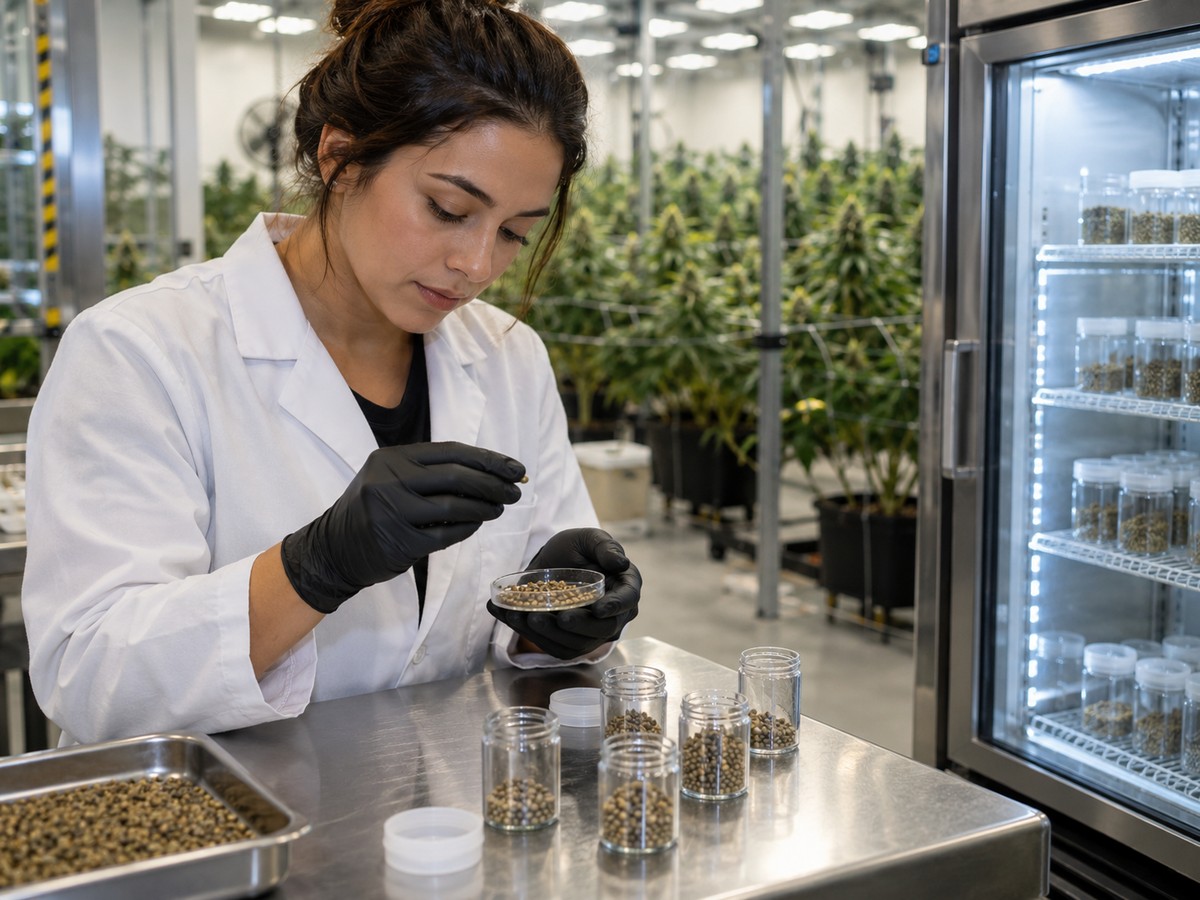
Seeds stored at 6–8% moisture and temperatures of 4–10°C retained approximately 81–90% germination after two years.
In striking contrast, seeds stored at 14% moisture and 21°C showed no germination after just three months, with viability testing also indicating complete loss of viability in that treatment. [8]
The researchers emphasized that only one cultivar was used, so the exact results should not be generalized to every cannabis variety.
Nevertheless, the experiment illustrates why seed storage history can be much more informative than shell pigmentation.
For further reading, explore our articles on cannabis seed moisture content, storage, and viability and how long cannabis seeds last under different storage conditions.
Seeds Can Be Alive Without Germinating Immediately
Elias and colleagues identified short-lived dormancy lasting approximately 35–42 days in the two hemp varieties examined in their 2020 research. [3]
This matters because a seed that fails to germinate during a particular test is not necessarily dead.
Laboratories may use tetrazolium testing to evaluate living tissues independently of normal seedling development.
The tetrazolium test and a standard germination test therefore answer related but different questions.
Invisible Pathogens Can Cause Seed Failure
Physical appearance also cannot reliably establish whether a seed is free from disease.
A 2023 study by Sorrentino and colleagues investigated serious seedling emergence problems in the industrial hemp cultivar Fibrante in Italy.
The researchers reported emergence failures reaching approximately 80–90% in the affected trials and identified the seed-transmitted fungal pathogen Alternaria rosae. [9]
This was a specific regional case, not evidence that such infection rates are common across commercial cannabis seeds.
However, it demonstrates an essential limitation of visual inspection: important biological problems can exist beneath an otherwise normal-looking surface.
For more information about the different factors involved, read Why Cannabis Seeds Fail to Germinate: The Most Common Causes.
Recommended seeds:


Can AI and Laboratory Technology Judge Cannabis Seeds Better Than the Human Eye?
Modern seed science increasingly uses imaging, spectroscopy, and machine learning to measure characteristics that consumers cannot assess visually.
These methods offer substantial potential, but their capabilities depend on what they have been trained and validated to predict.
Machine Learning Can Recognize Some Genetic Differences
Francisco Fernandez Torne and colleagues studied 713 cannabis seeds from seven varieties using geometric morphometrics and machine learning.
Their optimized Random Forest model achieved approximately 70% correct varietal classification, increasing to 78% after two difficult-to-distinguish varieties were removed. [10]
The researchers also found differences in shape variability associated with seed production methods.
However, the study did not establish a reliable method for identifying any unknown cannabis variety from a single photograph, nor did it measure germination success from external appearance.
The researchers summarized one important finding:
"No direct relationship was observed between size and seed type." [10]
X-Ray Micro-CT Reveals Internal Seed Structures
In September 2026, Marsala and colleagues published research using X-ray micro-computed tomography and three-dimensional analysis of hemp seeds.
Their approach examined internal structures rather than relying exclusively on shell color or surface patterns.
The experimental model correctly classified approximately:
- 88% of normally developing seedlings.
- 66% of seeds that did not germinate.
However, around 76% of abnormally developing seedlings were incorrectly classified as normal. [11]
These results are promising but also demonstrate why experimental accuracy should not be confused with a fully validated commercial quality test.
Hyperspectral Imaging Offers Another Approach
A separate 2025 study by Onwimol and colleagues used hyperspectral imaging and deep learning to evaluate hemp seed vigor.
One experimental model achieved 98.85% sensitivity and 99.22% specificity in the reported assessment. [12]
Unlike ordinary photographs, hyperspectral imaging records information across numerous wavelengths, potentially revealing differences that are invisible to human vision.
Nevertheless, results from a particular experimental dataset do not establish equivalent performance across every cannabis variety, producer, or storage condition.
The emerging scientific lesson is not that appearance is meaningless. It is that meaningful predictions require validated measurements and a clearly defined question.
How to Assess Cannabis Seed Quality More Reliably
Consumers cannot reproduce every laboratory procedure, but they can use a more evidence-based approach when examining seeds or selecting a supplier.
1. Inspect for Physical Damage, Not Cosmetic Perfection
Look for visible cracks, holes, mold, severe deformation, or signs of deterioration.
Treat these as reasons for closer examination rather than assigning an exact germination probability.
Do not reject an intact seed merely because its color is pale, its surface is smooth, or its size differs from that of another variety.
2. Consider the Variety and Seed Type
A useful comparison should account for genetic background.
Expect natural differences in color, dimensions, and surface patterns between varieties.
Information about breeding type, genetics, and intended characteristics is more valuable than generalized claims about ideal seed appearance.
3. Ask About Seed Storage and Lot Information
Where available, look for information about seed age, lot identification, handling, and storage conditions.
A documented, appropriately stored seed lot can provide more meaningful reassurance than attractive product photography.
4. Understand What Germination Guarantees Actually Cover
A seller's germination guarantee is a commercial policy, not necessarily an independent laboratory certificate.
Where test results are provided, consider the test date, sample size, method, and whether results apply to the relevant lot.
For comparison, EU Directive 2002/57/EC establishes minimum germination of 75% and analytical purity of 98% for Cannabis sativa seed within its specified regulatory scope. [13]
Those standards are not universal guarantees for every retail marijuana seed or seed sold for a different purpose.
5. Avoid Unreliable Home Tests
Popular methods include squeezing seeds between fingers or placing them in water to see whether they float.
Neither should be treated as a universal cannabis seed viability test.
Floating or sinking alone does not establish whether an embryo is alive, and squeezing may physically damage an otherwise viable seed.
For a meaningful quality assessment, standardized germination and viability testing are more defensible than improvised visual or mechanical checks.
Frequently Asked Questions About Cannabis Seed Appearance
Are white or pale cannabis seeds always bad?
No. Some varieties naturally produce lighter seeds. Very pale or greenish coloration combined with a soft, poorly developed shell may indicate immaturity, but color alone cannot establish whether a seed is viable.
Do cannabis seeds need tiger stripes to germinate?
No. Stripe intensity varies naturally between cannabis varieties. The CPVO recognizes weak, medium, and strong marbling as normal descriptive characteristics, not germination-quality grades.
Are big marijuana seeds better than small ones?
Not necessarily. Seed size is influenced by genetics and development. Research has documented major natural differences in cannabis seed dimensions without establishing a universal rule that larger seeds possess greater germination potential.
Can you identify feminized cannabis seeds by their appearance?
Not reliably. Although specialized morphometric research has identified statistical differences between certain groups, consumers cannot confidently determine feminization from size, color, or stripes.
For a deeper explanation of cannabis reproductive genetics, see Cannabis Sex Determination: What X and Y Chromosomes Tell Us.
Are dark cannabis seeds more likely to germinate than light seeds?
Dark coloration can sometimes accompany maturation, but it is not an independently validated universal predictor of germination. Genotype, maturity, storage history, dormancy, and seed health must also be considered.
Can a beautiful-looking cannabis seed still be dead?
Yes. A seed may retain an intact, visually attractive shell after losing viability because of unfavorable storage, aging, or internal damage. Conversely, a healthy seed may have relatively plain or pale natural pigmentation.
Final Verdict: Appearance Is a Clue, Not Proof of Quality
Cannabis seed color, size, and stripes matter biologically, but none is a universal indicator of quality.
Color may reflect pigmentation or maturity. Size may reflect genetic differences and seed development. Marbling may help describe a variety. None of these characteristics independently establishes embryo viability, germination capacity, vigor, or genetic authenticity.
The most reliable approach combines sensible visual inspection with knowledge of the seed's genetics, origin, storage history, and—where available—properly conducted quality tests.
When evaluating cannabis seeds, look beyond the shell. A good seed is defined by its biological condition and verified characteristics, not simply by how impressive it looks.
References and Scientific Sources
- Community Plant Variety Office (CPVO). (2026). CPVO-TP/276/3: Protocol for Tests on Distinctness, Uniformity and Stability — Cannabis sativa L. Adopted April 1, 2026.
- McPartland, J. M., & Small, E. (2020). A classification of endangered high-THC cannabis (Cannabis sativa subsp. indica) domesticates and their wild relatives. PhytoKeys, 144, 81–112.
- Elias, S. G., Wu, Y., & Stimpson, D. C. (2020). Seed Quality and Dormancy of Hemp (Cannabis sativa L.). Journal of Agricultural Hemp Research, 2(1), Article 2.
- Manansala-Siazon, S. E., et al. (2025). Seed the Difference: QTL Mapping Reveals Several Major Loci for Seed Size in Cannabis sativa L. Plants, 14(24), 3853.
- Yılmaz, G., Yıldırım, C., & Gür, N. D. (2025). Determination of Germination and Emergence Performance of Hemp (Cannabis sativa L.) Seeds at Different Maturity Stages. Turkish Journal of Agriculture – Food Science and Technology, 13(1), 175–180.
- Santangelo, E., Moscovini, L., Violino, S., & Assirelli, A. (2025). Tools to Produce Hemp (Cannabis sativa L.) for Sowing Seed: Optical Differentiation of Seed Ripening Stages Through a Portable Spectrometer. Agronomy, 15(12), 2680.
- Geneve, R. L., Janes, E. W., Kester, S. T., Hildebrand, D. F., & Davis, D. (2022). Temperature Limits for Seed Germination in Industrial Hemp (Cannabis sativa L.). Crops, 2(4), 415–427.
- Cockson, P., et al. (2025). Impact of Seed Moisture and Temperature on Hemp Seed Germination. Agrosystems, Geosciences & Environment.
- Sorrentino, R., Lahoz, E., Battaglia, V., Sorrentino, M. C., & Cerrato, D. (2023). First Report of Seedling Damping-Off of Industrial Hemp (Cannabis sativa) Caused by Seed-Transmitted Alternaria rosae in Italy. Plant Disease, 107(5), 1636.
- Fernandez Torne, F., et al. (2026). Self-pollinated Cannabis Seeds Lead to Less Variation in Shape: A Technological Approach of Potential Commercial Interest. BMC Plant Biology, 26, Article 133. First published online December 20, 2025.
- Marsala, S. M., Gargiulo, L., Formisano, G., & Mele, G. (2026). The Role of Seed Structure on Hemp Germination: A Study Based on X-ray Microtomography and 3D Image Analysis. Industrial Crops and Products, 251, 124233.
- Onwimol, D., Chakranon, P., Wonggasem, K., & Wongchaisuwat, P. (2025). Non-destructive Assessment of Hemp Seed Vigor Using Machine Learning and Deep Learning Models with Hyperspectral Imaging. Journal of Agriculture and Food Research, 21, 101836.
-
Council of the European Union. (2002). Council Directive 2002/57/EC on the Marketing of Seed of Oil and Fibre Plants, Annex II, as amended.