

 @ganjafarmer.seed
 @GanjaFarmerSeed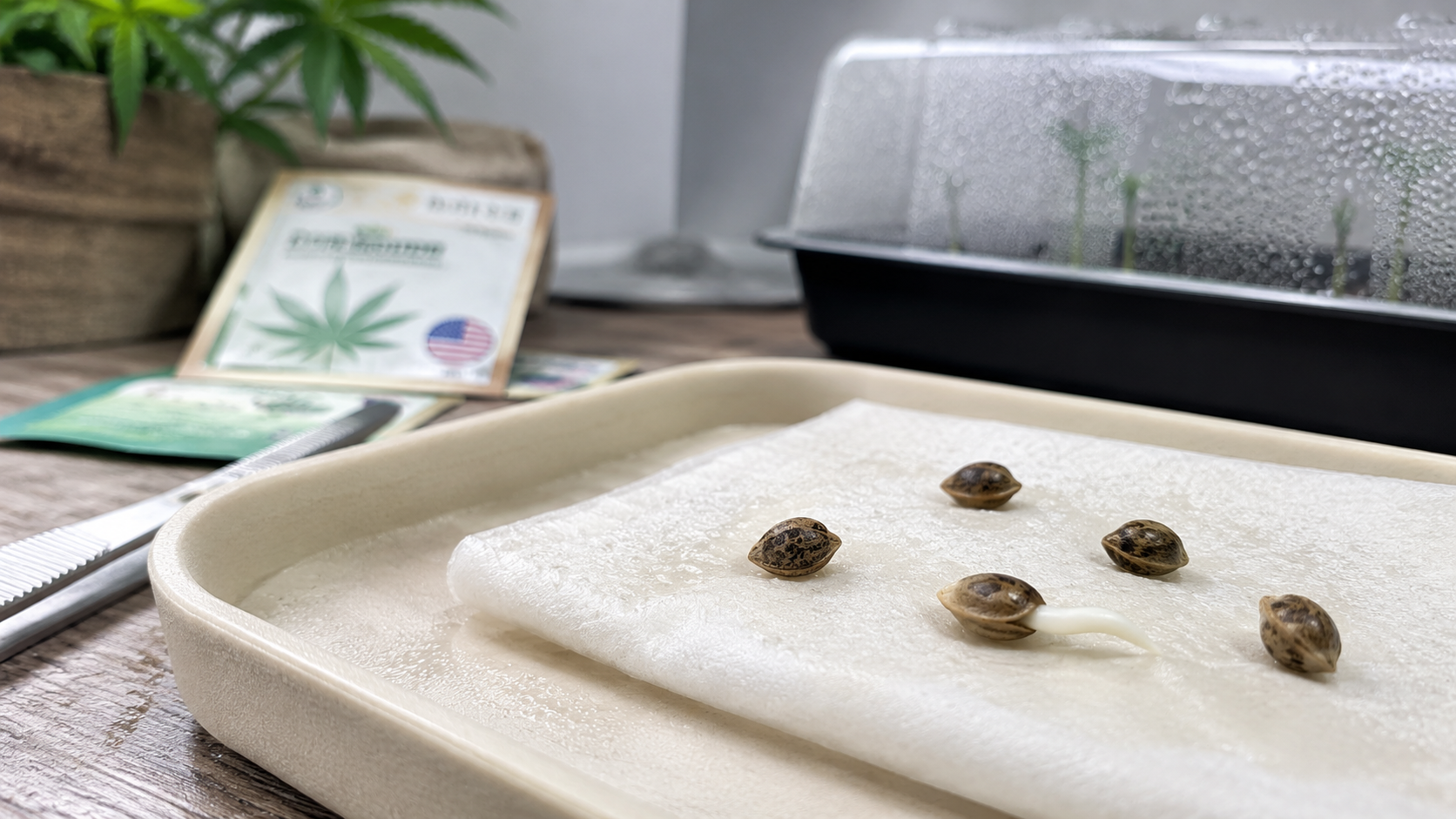
Cannabis seeds usually fail to germinate because of poor seed quality, excess water, unsuitable temperature, deep planting, physical damage, or contamination. A viable seed needs moisture, oxygen, moderate warmth, and cleanliness. When one of these factors is missing—or supplied in excess—the seed may remain dormant, decay, or open without producing a healthy taproot. The problem may begin before germination. Old seeds can lose viability, while immature seeds may not contain a fully developed embryo or enough stored energy. Even good seeds can fail when soaked, overheated, buried too deeply, handled roughly, or exposed to mold and fungi. Always check the laws that apply in your location before germinating cannabis seeds.
Main Reasons Cannabis Seeds Do Not Sprout
Old or Immature Seeds
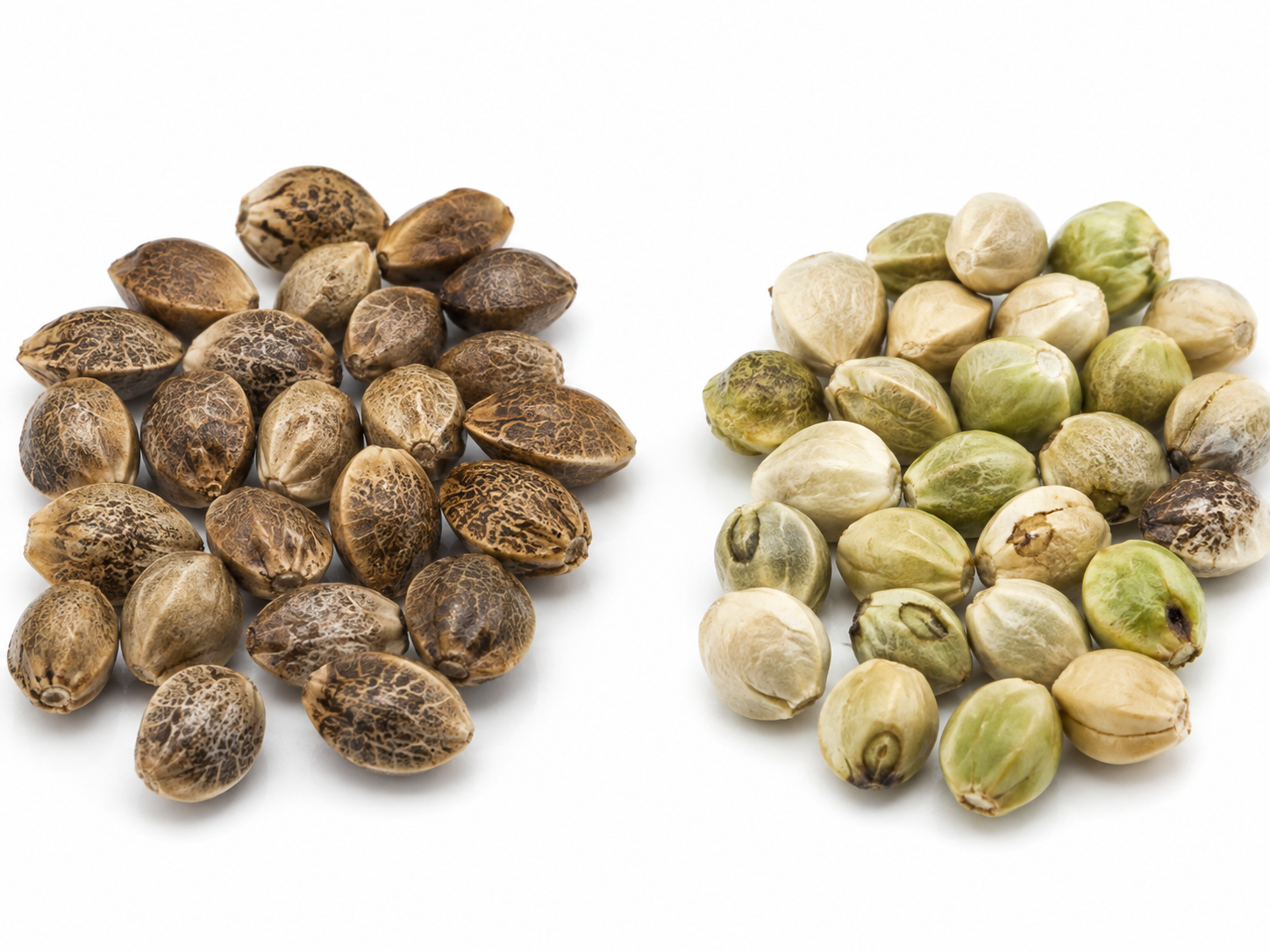
Seed age and maturity strongly affect germination. Immature seeds are often white, pale, or green and may feel soft or fragile. They can absorb water without ever producing a healthy root.
Old seeds fail for a different reason. Their stored energy declines over time, especially after exposure to heat, humidity, light, or repeated temperature changes. Correctly stored old seeds may still sprout, but usually more slowly and less reliably. When several seeds from one batch fail under stable conditions, age or poor storage may be the cause.
Too Much Water
Water activates the seed, but too much water can stop germination. Seeds also need oxygen. In a soaked paper towel, waterlogged soil, or a container with standing water, air spaces disappear and the seed can effectively drown.
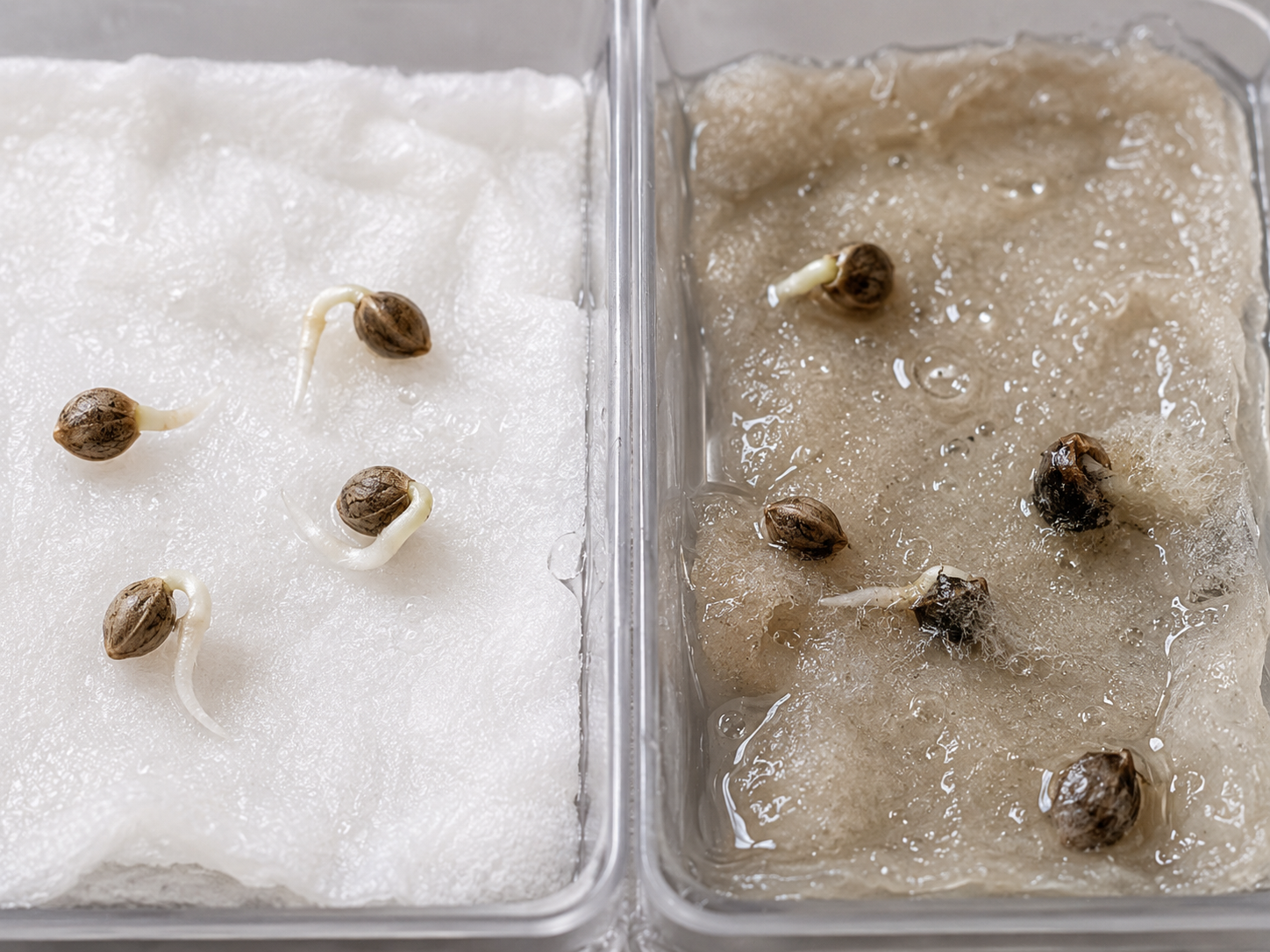
Oversaturation also encourages seed rot. Warning signs include softening, dark discoloration, an unpleasant smell, slime, or a shell that collapses under light pressure. The correct goal is dampness, not saturation. This applies to soil, starter plugs, and the paper towel method.
Incorrect Temperature
Wrong temperature can delay or destroy germination. Cold temperatures slow the internal reactions needed for sprouting and may keep seeds dormant. A long delay also increases exposure to moisture and contamination.
Excessive heat can damage the embryo, dry the medium unevenly, and accelerate microbial growth. Sudden temperature swings are also stressful. A stable, moderate environment is safer than a cold floor, hot radiator, overheated mat, or sunny windowsill.
Planting Too Deep
Deep planting can prevent a healthy seed from reaching the surface. After the root appears, the seedling relies on limited internal energy. If it must push through too much dense material, it may use that energy before emerging.
The medium should be loose, lightly moist, and easy for the root to penetrate. Plant shallowly and avoid compacting the surface above the seed.
Rough Handling
The shell protects the embryo, but cannabis seeds can still be damaged by crushing, scratching, or repeated pressure. Attempts to crack or scrape the shell may injure living tissue. After the taproot emerges, the risk is greater because the new root is delicate.
Handle seeds only when necessary. Do not squeeze them to test viability, repeatedly unfold paper towels, or move a germinating seed several times. If transfer is required, use clean hands or sanitized tweezers and avoid touching the taproot.
Dirty Tools, Water, Mold, and Fungi
Dirty tools, reused containers, contaminated media, and unclean water can introduce bacteria, mold, and fungi. Warm, moist conditions help the seed germinate, but they also support microorganisms.
Contamination may appear as fuzzy growth, spotting, slime, discoloration, or rapid softening. Use clean hands, fresh materials, washed containers, clean tools, and suitable water. Never reuse a moldy paper towel or contaminated medium.
How to Identify Better-Quality Seeds
Color, Texture, and Dryness
Mature cannabis seeds are commonly brown, hard, dry, and firm. Their shells may be plain, speckled, striped, or marbled. Color is not a perfect test, but brown hard dry seeds are generally more promising than pale, soft ones.
A better-quality seed should not feel spongy, damp, cracked, or hollow. Source also matters because breeding, harvesting, drying, and storage influence viability. In places where cannabis seeds are legal, specialist retailers such as Ganjafarmer.com can help buyers compare clearly described genetics and organized seed categories.
Signs of Weak or Unripe Seeds
White or green seeds are often immature, particularly when they also have thin shells or soft surfaces. Dents, holes, cracks, mold, brittleness, or irregular development are further warning signs.
Appearance cannot guarantee success. Visual inspection should be combined with information about age, source, storage, and handling.
How Moisture Affects Germination
Damp Conditions Versus Soaked Conditions
A seed needs enough moisture to soften its shell and activate growth, but it also needs air. With the paper towel method, the towel should be evenly damp without dripping. In soil or a starter plug, the medium should feel lightly moist rather than muddy.
Covered containers lose moisture slowly, so frequent watering is rarely necessary. Condensation may be normal, but pooled water indicates oversaturation.
Recommended products

Why Too Much Water Causes Rot
A germinating seed uses oxygen to release energy from stored nutrients. Waterlogged conditions limit oxygen and weaken this process. Warm, stagnant moisture also favors microorganisms.
Seed rot may begin before visible mold appears. The seed may darken, soften, split without producing a healthy root, or develop a sour smell. Once decay is advanced, recovery is unlikely.
Temperature and Germination Success
Effects of Cold Conditions
Cold conditions slow water uptake and metabolic activity. A viable seed may remain closed longer than expected, but prolonged dormancy increases exposure to inconsistent moisture and contamination.
Keep germinating seeds away from cold windows, ventilation outlets, exterior walls, and unheated floors. The priority is steady, moderate warmth.
Effects of Excessive Heat
Excessive heat can damage the embryo and cause the medium to dry unevenly. Direct sunlight is risky because a closed container can heat up rapidly.
Heating devices may also create hot spots. A controlled room environment is generally safer than a radiator or unregulated heat source.
Handling and Hygiene Mistakes
Avoiding Physical Damage
Move seeds as little as possible. Never squeeze, scrape, or crush the shell. Once the taproot appears, transfer the seed carefully, keep the root facing downward, and avoid bending or rubbing it.
Repeatedly opening containers, peeling away paper, or digging through soil can damage new tissue and disturb temperature and humidity.
Recommended products
Preventing Mold and Contamination
Wash and dry germination containers before use. Choose fresh paper towels, clean water, and uncontaminated growing media. Sanitize reusable tools and do not move them from a failed batch to a new one without cleaning.
Air exchange matters too. A completely sealed, saturated environment can become stagnant. The seed needs humidity, but it also needs oxygen.
Quick Prevention Checklist
Choose mature, dry, firm seeds without cracks or visible mold. Store unused seeds in stable, dark, dry conditions. Keep the germination medium damp rather than soaked, maintain moderate and consistent warmth, and avoid sudden temperature changes. Plant shallowly in a loose medium, minimize handling, and use clean hands, tools, water, and containers.
| Cause | What Happens | Prevention |
|---|---|---|
| Old or immature seeds | Seeds may be weak, dead, or underdeveloped. | Choose mature, dry, firm seeds. |
| Too much water | Seeds lose oxygen and may rot. | Keep conditions damp, not soaked. |
| Wrong temperature | Cold delays sprouting; heat can damage the embryo. | Maintain stable, moderate warmth. |
| Deep planting | The seed may run out of energy before emerging. | Plant shallowly in a loose medium. |
| Rough handling | Pressure may damage the seed or root. | Handle gently and only when necessary. |
| Dirty tools or water | Mold and fungi may attack the seed. | Use clean materials, tools, and water. |
Frequently Asked Questions
How long should I wait before deciding that a seed has failed?
Germination speed depends on age, genetics, moisture, and temperature. Old seeds may take longer. A seed that remains unchanged for an extended period, becomes soft, smells unpleasant, or develops mold is more likely to have failed.
Are white or green cannabis seeds always bad?
Not always, but they are more likely to be immature, especially when soft, thin, or easily damaged. Mature seeds are more commonly brown, dry, and hard.
Can the paper towel method cause germination failure?
Yes. It can fail when the towel is soaked, allowed to dry, handled repeatedly, or kept too hot, too cold, or dirty. It should remain damp, clean, and mostly undisturbed.
Can a seed recover after being overwatered?
Possibly, if oversaturation was brief and rot has not started. Once the seed becomes soft, slimy, foul-smelling, or moldy, recovery is unlikely.
Why did the seed crack but no root appear?
The embryo may have been weak, damaged, immature, or infected. Too much water and rough handling are common contributing factors.
Is mold always caused by dirty tools?
No. Mold can also come from contaminated water, reused materials, poor air exchange, excessive humidity, or a damaged seed.
Most germination failure is preventable. Start with viable seeds, control moisture, maintain stable warmth, plant shallowly, minimize handling, and keep every material clean. These steps address the most common reasons cannabis seeds fail to sprout.
 USA
USA
 Česko
Česko Deutschland
 España
 France
 Italia
 Nederland
 Polska
 Europe