


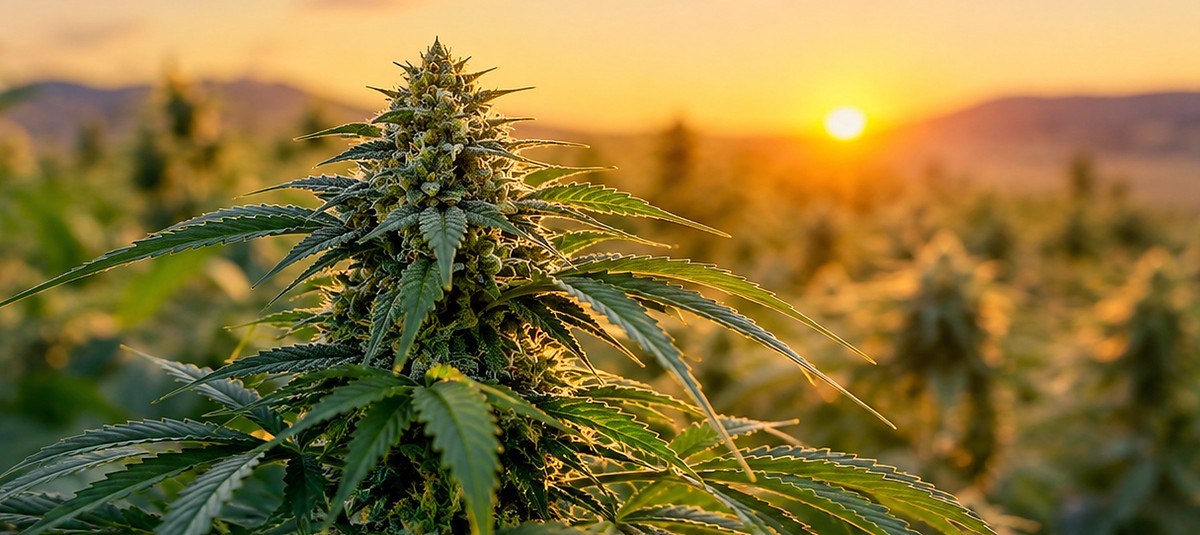
Cannabis terpenes are natural aromatic compounds that help determine how cannabis smells and tastes. Four of the best-known are myrcene, which contributes earthy and herbal notes; limonene, associated with citrus aromas; pinene, responsible for pine-like and resinous scents; and beta-caryophyllene, known for its peppery, spicy character.
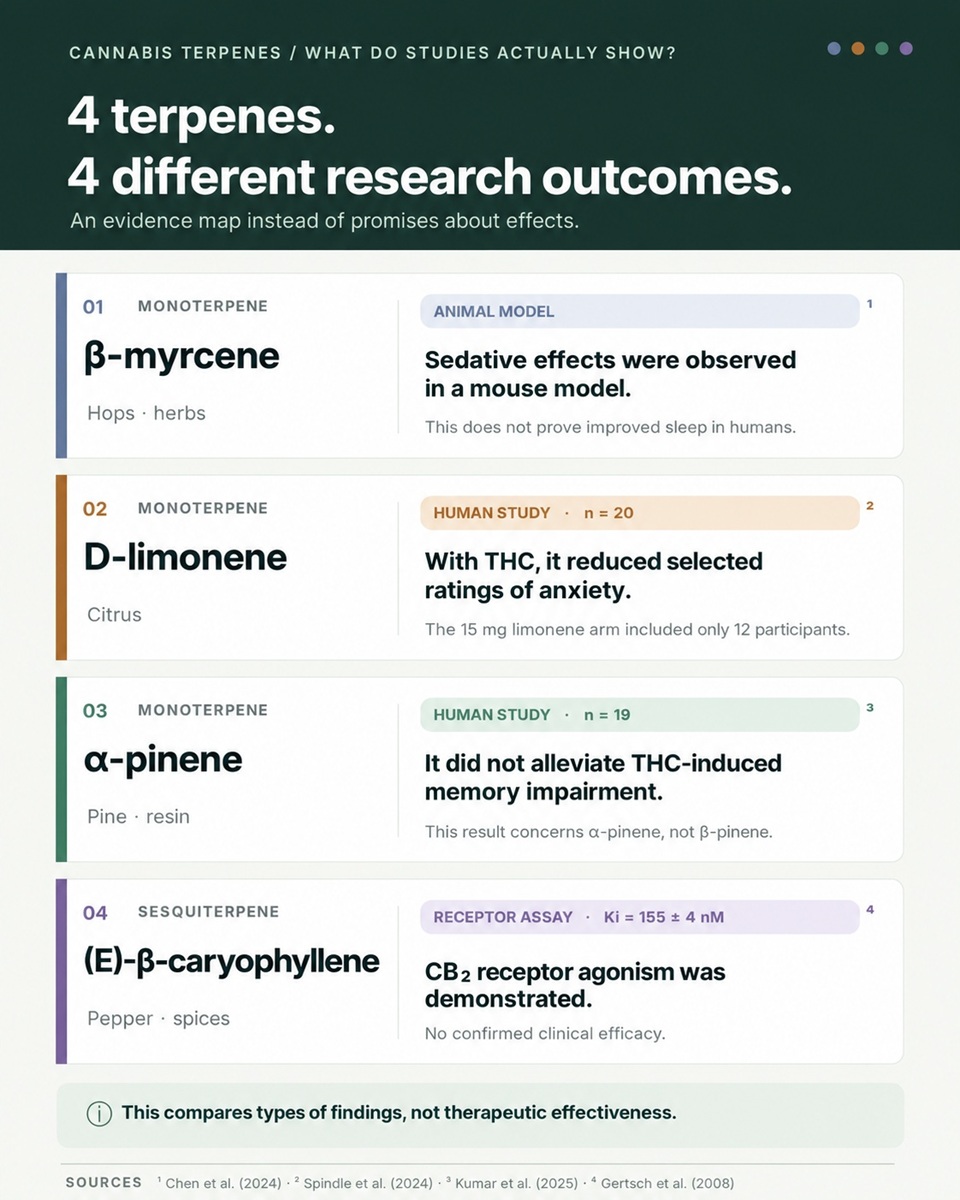
These compounds do more than contribute fragrance. Laboratory research has identified several biological interactions, including beta-caryophyllene's activity at cannabinoid CB2 receptors. A controlled human study also found that D-limonene reduced certain anxiety-like effects induced by THC.
However, an important distinction remains: a terpene's chemical properties, its effects in laboratory experiments, and its demonstrated effects in humans are not the same thing.
Understanding this difference is essential when comparing cannabis terpene profiles, interpreting scientific studies, or researching marijuana seed genetics.
What Are Cannabis Terpenes and Why Do They Matter?
Terpenes are naturally occurring organic compounds produced by many plants, including cannabis, citrus trees, rosemary, hops, and conifers. In cannabis, they are synthesized through specialized metabolic pathways and accumulate prominently in glandular trichomes, the resin-producing structures found particularly on female flowers.
While cannabinoids such as THC and CBD attract most of the attention, terpenes contribute much of the plant's distinctive aromatic character.
Their importance extends into several areas:
- Aroma and flavor: Terpenes contribute citrus, pine, herbal, woody, floral, and spicy notes.
- Chemical identification: Laboratory terpene profiles can help distinguish cannabis chemovars, or chemically characterized varieties.
- Plant genetics: Inherited terpene synthase genes influence which aromatic compounds a plant can produce.
- Product quality: Drying, extraction, packaging, and storage can significantly alter terpene concentrations.
- Pharmacological research: Some terpenes demonstrate biological activity, although clinical evidence remains limited.
Chemically, myrcene, limonene, and pinene are monoterpenes, each containing ten carbon atoms and having the molecular formula C₁₀H₁₆.
Beta-caryophyllene belongs to a different group: sesquiterpenes, containing fifteen carbon atoms with the formula C₁₅H₂₄.
This structural difference helps explain why caryophyllene generally has lower volatility than lighter monoterpenes.
The related term terpenoid is frequently used in cannabis literature, sometimes interchangeably with terpene. More precisely, terpenoids commonly include chemically modified terpene structures, such as oxygen-containing derivatives.
Cannabis Terpene Comparison Chart: Myrcene vs. Limonene vs. Pinene vs. Caryophyllene
The following cannabis terpene chart compares the four compounds, their established characteristics, and the strength of the available evidence.
| Terpene | Chemical class | Typical aroma | What research shows | What remains unproven |
|---|---|---|---|---|
| Beta-myrcene | Monoterpene, C₁₀H₁₆ | Earthy, herbal, hoppy, musky | Preclinical research suggests possible sedative activity; associated with some indica labeling | That myrcene-rich cannabis reliably causes sleepiness or improves sleep in humans |
| Limonene | Monoterpene, C₁₀H₁₆ | Lemon, orange peel, citrus | A small human experiment found reduced THC-induced anxiety-like ratings with D-limonene | That limonene alone treats anxiety disorders or guarantees an uplifting cannabis experience |
| Alpha- and beta-pinene | Monoterpenes, C₁₀H₁₆ | Pine, forest, fresh resin | Studied for biological activity; a human trial found no protection against THC-induced memory impairment from alpha-pinene | That pinene reliably improves concentration or reverses THC-related cognitive impairment |
| Beta-caryophyllene | Sesquiterpene, C₁₅H₂₄ | Black pepper, spice, wood | Demonstrated CB2 receptor binding and activity in experimental models | That ordinary exposure through cannabis produces clinically established pain relief or anti-inflammatory benefits |
The table highlights why assigning each terpene one guaranteed effect—relaxation, happiness, focus, or pain relief—is scientifically misleading.
Terpene concentrations are useful chemical information, but they cannot independently predict the experience or therapeutic response of an individual.
The Four Main Cannabis Terpenes Explained
Myrcene: The Earthy Terpene Associated With Indica Strains
Beta-myrcene is an acyclic monoterpene commonly associated with earthy, herbal, and slightly musky aromas.
It occurs naturally in cannabis, hops, lemongrass, and several other aromatic plants. Myrcene can be particularly noticeable in descriptions of traditional Kush-type and other earthy cannabis varieties.
Its reputation, however, extends beyond aroma.
Myrcene is frequently described as the terpene responsible for the heavy, relaxing sensation commonly called couch-lock. Many popular guides suggest that high-myrcene cannabis behaves like an indica strain, while low-myrcene varieties produce more stimulating effects.
The science is considerably less straightforward.
Does Myrcene Actually Make You Sleepy?
Some preclinical studies have identified sedative-like effects under experimental conditions. However, these observations do not establish that myrcene concentrations typically found in cannabis flowers produce clinically meaningful sedation in people.
A particularly informative study by Watts and colleagues, published in Nature Plants in 2021, investigated genetic variation, chemical composition, and commercial indica/sativa labeling.
The researchers found that myrcene concentration explained approximately 21.2% of the variation in indica labeling.
This is an interesting association between chemistry and commercial classification. It is not evidence that myrcene caused sleepiness in the people using those samples.
There is also a practical complication: myrcene is relatively volatile. Its measured concentration can decline during drying and other processing stages.
The takeaway: Myrcene is valuable for understanding earthy cannabis aromas and chemical classification. Its reputation as a reliable sleep-inducing terpene is not supported by sufficiently strong human clinical evidence.
Limonene: The Citrus Terpene With Promising Human Research
Limonene is a cyclic monoterpene known for its bright, citrus-like aroma. It is especially abundant in citrus peel and contributes to the sensory character of many lemon- and orange-associated cannabis varieties.
One important chemical detail is that limonene exists in different optical forms, known as enantiomers.
D-limonene, also called (R)-(+)-limonene, is commonly associated with orange-like citrus aromas. Its mirror-image form can have different sensory characteristics.
This distinction matters because studies involving purified D-limonene should not automatically be generalized to every product labeled simply as containing limonene.
Can Limonene Reduce Anxiety Caused by THC?
Among the four terpenes discussed here, limonene has some of the most interesting controlled human evidence.
In 2024, Tory Spindle, Ryan Vandrey, and colleagues published a randomized, double-blind experiment examining vaporized D-limonene combined with THC.
Twenty healthy adults completed the main study protocol.
Participants received controlled combinations of THC, D-limonene, or placebo. THC doses included 15 mg and 30 mg, while the main D-limonene conditions involved 1 mg or 5 mg.
An additional condition involving 30 mg THC and 15 mg D-limonene was completed by twelve participants.
The researchers found that D-limonene reduced certain subjective anxiety-related effects associated with THC, particularly at the higher tested combination. Other measured THC effects were not significantly changed in the same way.
Commenting on the findings in a Johns Hopkins Medicine release, pharmacologist Ryan Vandrey stated that D-limonene:
"can modulate the effects of THC in a meaningful way"
This finding is important because it directly tested an interaction in humans rather than relying entirely on laboratory or animal models.
Nevertheless, the experiment involved a small sample, specific doses, and a particular vaporized formulation.
It does not demonstrate that a lemon-scented cannabis strain will prevent anxiety, or that limonene alone is an effective treatment for an anxiety disorder.
The takeaway: Limonene has promising evidence as a potential modifier of certain acute THC effects, but its clinical applications require larger, independent studies.
Pinene: The Pine-Scented Terpene and the Memory Myth
Pinene is associated with the recognizable scent of pine needles, conifer resin, rosemary, and forest vegetation.
In cannabis, two main structural forms are relevant:
Alpha-pinene (α-pinene) and beta-pinene (β-pinene).
Both share the formula C₁₀H₁₆, but differences in molecular structure mean that their chemical properties and biological interactions should not automatically be treated as identical.
Pinene is often marketed as a terpene associated with alertness, mental clarity, and concentration.
One particularly persistent claim suggests that alpha-pinene may protect memory from THC-related impairment.
Does Pinene Counteract THC-Induced Memory Problems?
A controlled human experiment published in 2025 directly tested this idea.
Lakshmi Kumar, Tory Spindle, Ryan Vandrey, and colleagues studied nineteen healthy adults across six experimental conditions.
Participants inhaled THC alone, alpha-pinene alone, various combinations, or placebo.
The combined conditions included 30 mg THC with alpha-pinene doses of 0.5 mg, 5 mg, or 15 mg.
THC impaired cognitive performance and working memory, as expected.
However, alpha-pinene did not reverse the memory impairment caused by THC, nor did it meaningfully change most of the other acute effects examined.
This is an important negative finding. It challenges the common marketing description of pinene as a proven way to maintain cognitive clarity during THC exposure.
It does not exclude every possible effect of pinene, and the results for alpha-pinene cannot automatically be transferred to beta-pinene.
Further research published in September 2026 also demonstrated that interactions involving alpha-pinene, limonene, and THC could differ depending on dose in rats. Those findings reinforce the importance of experimental context but cannot be treated as evidence of equivalent effects in humans.
The takeaway: Pinene contributes characteristic fresh, resinous aromas, but claims that it reliably improves focus or protects memory during THC exposure remain unsupported.
Beta-Caryophyllene: The Peppery Terpene That Interacts With CB2
Beta-caryophyllene, frequently abbreviated BCP, is found in cannabis, black pepper, cloves, and numerous other aromatic plants.
Unlike myrcene, limonene, and pinene, it is a sesquiterpene.
Its larger molecular structure contributes to lower volatility under comparable conditions, although it can still evaporate and undergo chemical degradation.
Caryophyllene is associated with warm, peppery, woody, and spicy aromatic notes.
Its pharmacological significance is especially interesting because it has demonstrated activity at a cannabinoid receptor.
Is Beta-Caryophyllene a Cannabinoid?
In a landmark 2008 study, Jürg Gertsch and colleagues identified beta-caryophyllene as a selective agonist of the cannabinoid CB2 receptor.
They reported a binding affinity of:
Ki = 155 ± 4 nM
This is a laboratory measurement describing how strongly the compound interacts with the receptor under specified experimental conditions.
The researchers also observed biological effects in experimental models, contributing to beta-caryophyllene's description as a dietary cannabinoid.
That term does not mean caryophyllene is chemically identical to THC.
THC's intoxicating effects are strongly associated with CB1 receptor activity. Beta-caryophyllene has a different receptor profile.
It is also important not to confuse beta-caryophyllene with caryophyllene oxide, which is a different compound formed through oxidation.
Does CB2 activity make caryophyllene a proven anti-inflammatory treatment?
Not yet.
Receptor binding, functional activity in cells, and results from animal experiments do not automatically establish a therapeutic effect at the concentrations delivered by ordinary cannabis products.
Later receptor experiments have also produced findings dependent on the particular methods and biological systems used.
The takeaway: Beta-caryophyllene has one of the clearest identified receptor interactions among common cannabis terpenes, but the clinical significance of everyday exposure remains uncertain.
For readers interested in the genetics behind contrasting aromatic descriptions, Lemon Haze varieties and Jack Herer varieties offer examples commonly associated with citrus, herbal, and pine-like notes. These descriptions should not be mistaken for laboratory-confirmed terpene concentrations in every plant.
Recommended seeds:


Do Cannabis Terpenes Really Create the Entourage Effect?
The cannabis entourage effect is the hypothesis that different compounds within cannabis can interact to modify biological outcomes.
It is often summarized as the idea that cannabinoids and terpenes work better together than individually.
However, the scientific history of the term is more complicated.
The original entourage-effect study, published by Ben-Shabat and colleagues in 1998, did not investigate cannabis terpenes.
Instead, it examined endogenous fatty-acid derivatives that enhanced the activity of the endocannabinoid 2-arachidonoylglycerol (2-AG).
The concept was later expanded to include potential interactions between phytocannabinoids and cannabis terpenes, notably in Ethan Russo's influential 2011 review.
What Have Receptor Studies Found?
Research has not produced a single, universally consistent answer.
In 2019, Marina Santiago and colleagues tested several common cannabis terpenoids using human CB1 and CB2 receptors expressed in a laboratory cell system.
They did not observe the predicted modulation of THC-related receptor signaling through the particular pathway being measured.
In contrast, research by Noa Raz and colleagues published in 2026 reported additive and synergistic THC–terpene interactions in experimental CB1 and CB2 receptor systems.
The studies used different experimental models and measurements.
Consequently, the results should not be collapsed into either of two absolute statements: that the entourage effect has been conclusively disproven, or that cannabis terpene synergy has been established as a universal clinical phenomenon.
The 2024 D-limonene experiment provides a more specific example of a potentially meaningful interaction in humans.
But it does not validate every possible combination of terpenes and cannabinoids.
The most scientifically defensible position is that certain cannabis compound interactions are plausible and experimentally observable, while their relevance to real-world formulations, doses, and clinical outcomes must be investigated individually.
Cannabis Seeds, Genetics, and Terpene Profiles: What Is Actually Inherited?
For anyone researching cannabis seeds, the relationship between genetics and terpenes is particularly important.
Marijuana seeds contain genetic information that influences a plant's potential chemical profile, but they do not guarantee that mature flowers will contain one fixed combination of myrcene, limonene, pinene, and caryophyllene.
Terpene production involves enzymes known as terpene synthases, encoded by genes that participate in the plant's aromatic metabolism.
Different genetic lines can possess different capacities to produce particular compounds.
However, inherited potential is only part of the picture.
Actual terpene expression is influenced by developmental stage, environmental conditions, physiological variation, and subsequent processing.
Even plants grown from seeds sold under the same strain name may not develop perfectly identical chemical profiles.
This relationship is explained more fully in GanjaFarmer's guide to genotype vs. phenotype in cannabis.
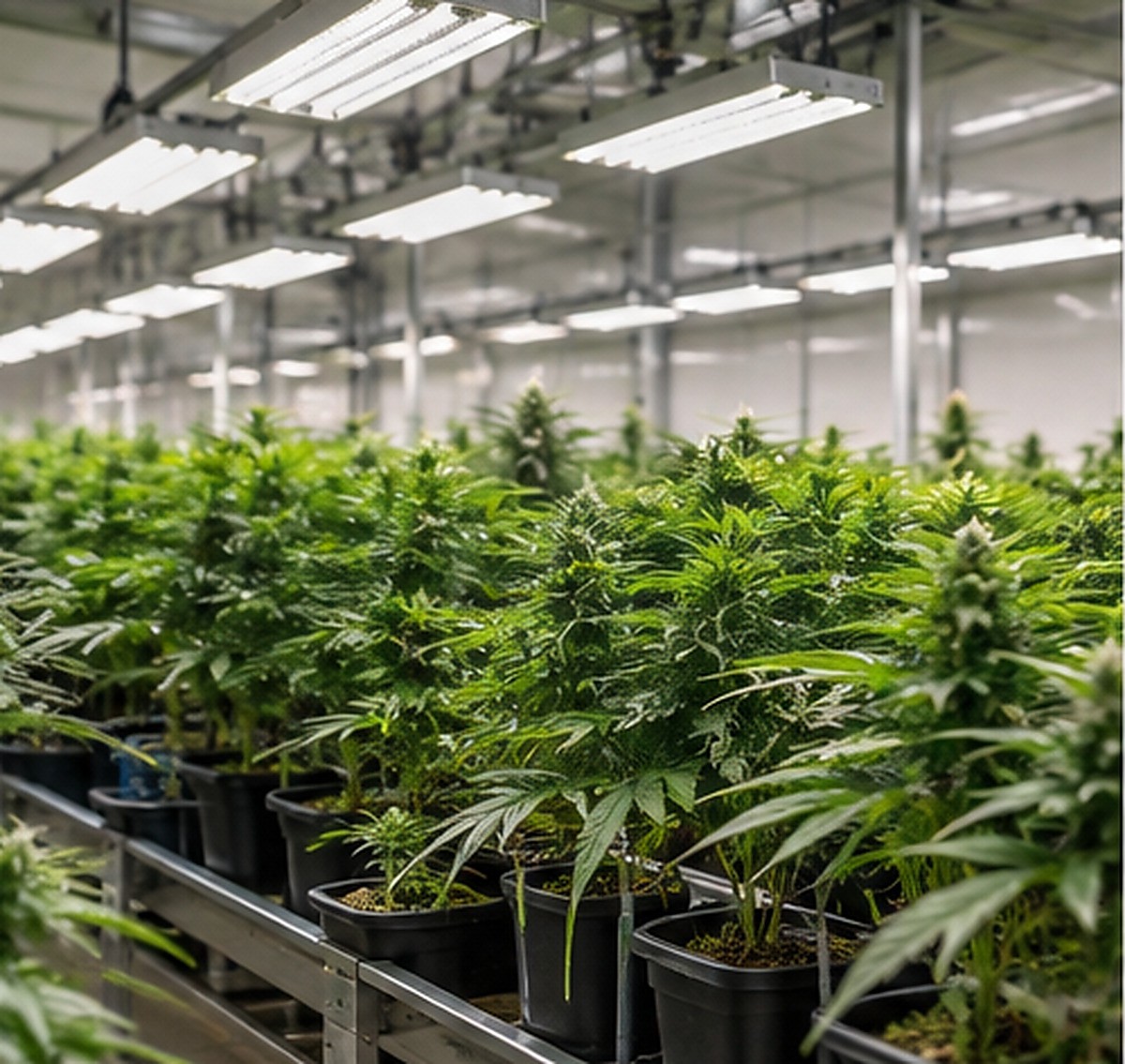
How Should You Compare Marijuana Seeds by Aroma?
A sensible starting point is the breeder's genetic documentation, including lineage and characteristic aroma descriptions.
For example, genetics marketed under names such as Lemon Haze, OG Kush, or Jack Herer may be associated with different sensory expectations.
But a lemon-related name does not prove that limonene is the dominant compound in every resulting flower. Nor does an earthy Kush description guarantee a specific myrcene percentage.
The terms feminized, regular, and autoflowering describe important aspects of seed genetics and reproductive or flowering characteristics. They are not, by themselves, scientifically validated indicators of particular terpene profiles.
Customers exploring feminized cannabis seeds, autoflowering seeds, or regular seeds should therefore assess aroma descriptions alongside genetic background and breeder information.
Those seeking a deeper understanding of consistency between seed-grown plants may also find the article on true F1 cannabis hybrids useful.
At Ganjafarmer.com, the range of cannabis seed genetics makes it possible to compare established varieties, contemporary hybrids, and their described aromatic characteristics in one place.
For terpene-focused enthusiasts, the value lies in understanding these genetic differences rather than assuming that a strain name guarantees a precise chemical or physiological outcome.
Cannabis seed ownership, germination, and cultivation are subject to different laws depending on jurisdiction. Always verify the regulations applicable to your location.
Recommended seeds:

Why Cannabis Terpene Profiles Change After Harvest
One of the most overlooked aspects of cannabis terpene science is the difference between the chemical composition of a living plant and that of a finished product.
A cannabis sample does not have one permanently fixed terpene profile.
Its chemistry can change during drying, curing, extraction, storage, and heating.
Drying Methods Can Change the Aroma
Monoterpenes such as myrcene, limonene, and pinene are relatively volatile.
This makes them more susceptible to evaporation during post-harvest processing than many heavier compounds.
A study by Mallis and colleagues, published in the Journal of Cannabis Research on October 14, 2026, compared three drying approaches using pharmaceutical cannabis inflorescences from the Huckleberry cultivar.
The results were particularly revealing.
Freeze drying reached the target moisture level in approximately eleven hours and performed well in preserving the flowers' visual appearance.
Drying under controlled vapor pressure deficit (VPD) conditions took approximately six to seven days.
However, the slower VPD-controlled process preserved the studied aromatic profile and essential oil yield more effectively, while freeze drying produced substantial losses of volatile monoterpenes.
This does not establish that VPD drying is universally best for every cannabis variety or production environment.
It demonstrates that visual quality, processing speed, and aroma preservation are different performance criteria.
Terpenes Also Change During Storage
Exposure to oxygen, light, heat, and changing environmental conditions can affect terpene stability.
Research by Raeber and colleagues used advanced chromatographic techniques to investigate individual terpene degradation and the behavior of their optical isomers.
As the authors explained:
"Each terpene generates a unique pattern of degradation products"
Their work identified products of oxidation and other chemical transformations, including p-cymene.
A separate 2024 study by MacLaughlin and MacDonald investigated cannabis storage under nitrogen-modified packaging.
Although nitrogen affected the retention of certain individual terpenes, it did not provide a universal improvement across the complete terpene profile.
Myrcene showed better retention under the tested nitrogen conditions, while limonene and certain other volatile compounds behaved differently.
The practical lesson is simple: preserving total terpene content does not necessarily mean preserving the original proportions of individual compounds or the original aroma.
Does a Terpene's Boiling Point Tell You When It Is Released?
Not directly.
Cannabis websites sometimes provide temperature charts suggesting that each terpene begins to evaporate at one precise temperature.
This confuses boiling point with evaporation.
For example, beta-caryophyllene has a reported normal boiling point of approximately 263°C at atmospheric pressure.
That does not mean it remains completely trapped in plant material below 263°C.
Evaporation occurs below the boiling point, and the amount transferred depends on vapor pressure, temperature, exposure time, airflow, and the surrounding material.
Research by Eyal and colleagues emphasizes that processing and heating can alter the relative proportions of volatile compounds.
Therefore, a list of terpene boiling points should not be interpreted as a reliable method for selectively delivering individual cannabis terpenes.
Can You Identify Cannabis Terpenes by Smell Alone?
Smell provides clues about aromatic chemistry, but it is not a definitive analytical test.
A citrus aroma may suggest the presence of limonene. A resinous pine aroma may suggest pinene, while peppery notes may be consistent with beta-caryophyllene.
Nevertheless, cannabis contains many additional volatile molecules, some of which contribute disproportionately to its aroma even at low concentrations.
The Surprising Chemistry Behind the Skunk Smell
In 2021, Iain Oswald and colleagues identified a family of volatile sulfur compounds associated with cannabis's characteristic skunk-like aroma.
One particularly important compound was 3-methyl-2-butene-1-thiol.
Using comprehensive two-dimensional gas chromatography and specialized detection techniques, the researchers demonstrated that sulfur-containing compounds could explain sensory characteristics inadequately described by conventional terpene measurements.
Subsequent research has also highlighted the role of non-terpene compounds in certain unusual fruity and citrus-related aromas.
This explains an apparent contradiction: two cannabis samples can display comparable major-terpene profiles while smelling noticeably different.
The opposite is possible as well. Two samples that smell similarly citrus-like do not necessarily contain identical limonene concentrations.
Aroma intensity is not equivalent to total terpene percentage.
Different molecules have different odor detection thresholds, meaning a compound present in a very small amount can sometimes contribute more to the perceived smell than a more abundant compound.
How to Read a Cannabis Terpene Lab Report
A laboratory certificate of analysis, commonly abbreviated CoA, can provide more precise information than a strain description or consumer aroma review.
However, interpreting the results requires attention to the analytical method.
GC–MS, GC–FID, and What the Numbers Mean
Gas chromatography–mass spectrometry (GC–MS) is widely used to separate and identify volatile compounds.
Gas chromatography with flame ionization detection (GC–FID) is another important technique for quantitative analysis.
Specialized approaches, including headspace sampling and solid-phase microextraction, can emphasize the compounds present in the air above a sample rather than the entire extractable fraction.
These methods are not automatically interchangeable.
A certificate reporting twenty quantified terpenes cannot necessarily be compared directly with one reporting forty compounds using a different preparation and calibration procedure.
When evaluating a cannabis terpene profile, check the sample date and batch, the measured compounds, the analytical method, and the reporting units.
For example, a concentration of 1% by weight corresponds to 10 mg of a compound per gram of material.
Also check whether the laboratory reports separate alpha-pinene and beta-pinene values, and whether the limonene measurement distinguishes optical isomers.
Most routine consumer-facing certificates do not provide complete stereochemical characterization.
The limit of detection (LOD) and limit of quantification (LOQ) are important too. A compound reported as not detected may simply fall below the method's detection threshold.
A credible terpene report is best understood as a measurement of a specific sample at a specific point in time—not a permanent guarantee of how every product with the same name will smell or behave.
Are Cannabis Terpenes Safe?
Terpenes occur naturally in many foods, herbs, and botanical materials.
That widespread natural occurrence does not automatically establish safety at every concentration or through every route of exposure.
Food ingestion, skin contact, and inhalation involve different exposure conditions.
For example, oxidized derivatives of limonene have been associated with contact sensitization in fragrance research. That finding should not be interpreted as proof of an identical risk through other exposure routes.
High-dose animal toxicology research on myrcene also requires careful interpretation because experimental doses and administration methods may differ substantially from ordinary exposure to cannabis aromas.
Heating can introduce additional variables, including chemical degradation products and changes in the composition of an inhaled aerosol.
Product safety therefore depends on more than the name or natural origin of a terpene. Concentration, purity, formulation, contamination, exposure route, and processing conditions all matter.
Likewise, a terpene being permitted for a particular food flavoring use does not automatically establish that it is safe as an ingredient in an inhaled formulation.
Frequently Asked Questions About Cannabis Terpenes
What Are the Four Main Terpenes in Cannabis?
Four commonly discussed cannabis terpenes are myrcene, limonene, pinene, and beta-caryophyllene.
Myrcene contributes earthy and herbal aromas, limonene contributes citrus notes, pinene is associated with pine and resin, and caryophyllene produces spicy, peppery characteristics.
They are not necessarily the four most abundant terpenes in every cannabis variety.
Which Cannabis Terpene Is Best for Sleep?
No individual cannabis terpene has sufficiently strong clinical evidence to be recommended as a reliable sleep aid based on its presence in a cannabis strain.
Myrcene is frequently associated with relaxation and sedation, but this reputation is supported more strongly by preclinical observations and commercial descriptions than by controlled human trials isolating its effects.
Does Limonene Make Cannabis Less Anxiety-Inducing?
A small controlled human study published in 2024 found that vaporized D-limonene reduced certain anxiety-like ratings associated with THC under specific experimental conditions.
It remains unknown whether the same findings apply across different cannabis strains, doses, products, and administration routes.
Limonene should not be considered a guaranteed safeguard against THC-induced anxiety.
Does Pinene Improve Focus and Memory?
There is insufficient clinical evidence that pinene reliably improves concentration.
In a 2025 study involving nineteen adults, alpha-pinene did not prevent working-memory impairment caused by THC.
Claims that pinene automatically produces a clear-headed or focused experience should therefore be treated cautiously.
Does Caryophyllene Work Like THC?
No. Beta-caryophyllene has demonstrated activity at CB2 receptors, while THC's characteristic intoxicating effects are primarily associated with CB1 receptor activation.
Caryophyllene's receptor activity is scientifically interesting, but it does not establish that cannabis products containing it provide specific medical benefits.
Can You Predict Terpene Content From Cannabis Seeds?
Cannabis seeds contain inherited genetic information affecting the plant's potential terpene production.
However, actual terpene concentrations depend on the genetic line, individual variation, environmental influences, plant development, and processing.
A strain description can indicate expected aromatic tendencies, but a laboratory analysis of the resulting material is needed to confirm its measured terpene composition.
Are Higher Terpene Percentages Always Better?
Not necessarily.
A higher measured total terpene concentration does not automatically produce a stronger aroma, greater quality, or a more desirable experience.
Individual odor thresholds, terpene proportions, other volatile compounds, product freshness, and the analytical method all affect how the result should be interpreted.
Final Thoughts: Understanding Cannabis Terpenes Beyond the Hype
Myrcene, limonene, pinene, and beta-caryophyllene are important components of cannabis chemistry, but each has a different scientific story.
Myrcene is strongly associated with earthy aromas and certain commercial classifications, yet its reputation as a dependable sedative remains clinically unconfirmed.
Limonene has promising human evidence for modifying specific THC-induced anxiety-like responses, but those findings cannot be generalized to all citrus-scented cannabis.
Pinene contributes distinctive forest-like notes, although a controlled human experiment did not confirm its proposed protection against THC-related memory impairment.
Beta-caryophyllene has demonstrated CB2 receptor activity, making it pharmacologically noteworthy without establishing it as a proven treatment for pain or inflammation.
For cannabis enthusiasts, seed collectors, and readers researching different cannabis genetics, these distinctions offer a more useful framework than the familiar formula of one terpene equaling one effect.
The best way to understand a cannabis terpene profile is to combine knowledge of genetics, measured chemistry, aromatic characteristics, and the limitations of current pharmacological evidence.
That approach makes it easier to appreciate the plant's chemical diversity without confusing intriguing scientific findings with guaranteed results.
Scientific References and Further Reading
- Spindle, T. R., et al. (2024). Vaporized D-limonene selectively mitigates the acute anxiogenic effects of Δ9-tetrahydrocannabinol in healthy adults who intermittently use cannabis. Drug and Alcohol Dependence, 257, 111267.
- Kumar, L., et al. (2025). The Individual and Interactive Effects of Alpha-Pinene and Delta-9-Tetrahydrocannabinol in Healthy Adults. Medical Cannabis and Cannabinoids, 8(1), 144–157.
- Gertsch, J., et al. (2008). Beta-caryophyllene is a dietary cannabinoid. Proceedings of the National Academy of Sciences, 105(26), 9099–9104.
- Watts, S., et al. (2021). Cannabis labelling is associated with genetic variation in terpene synthase genes. Nature Plants, 7, 1330–1334.
- Santiago, M., et al. (2019). Absence of Entourage: Terpenoids Commonly Found in Cannabis sativa Do Not Modulate the Functional Activity of Δ9-THC at Human CB1 and CB2 Receptors. Cannabis and Cannabinoid Research, 4(3), 165–176.
- Raz, N., et al. (2026). Synergistic and additive terpene-THC interactions in cannabinoid CB1 and CB2 receptors. Biochemical Pharmacology, 251, 118185.
- Ben-Shabat, S., et al. (1998). An entourage effect: inactive endogenous fatty acid glycerol esters enhance 2-arachidonoyl-glycerol cannabinoid activity. European Journal of Pharmacology.
- Russo, E. B. (2011). Taming THC: potential cannabis synergy and phytocannabinoid-terpenoid entourage effects. British Journal of Pharmacology, 163(7), 1344–1364.
- Oswald, I. W. H., et al. (2021). Identification of a New Family of Prenylated Volatile Sulfur Compounds in Cannabis Revealed by Comprehensive Two-Dimensional Gas Chromatography. ACS Omega, 6(47), 31667–31676.
- Raeber, J., Bajor, B., Poetzsch, M., & Steuer, C. (2025). Comprehensive analysis of chemical and enantiomeric stability of terpenes in Cannabis sativa L. flowers. Phytochemical Analysis, 36(1), 205–217.
- Eyal, A. M., et al. (2023). Vapor Pressure, Vaping, and Corrections to Misconceptions Related to Medical Cannabis' Active Pharmaceutical Ingredients' Physical Properties and Compositions. Cannabis and Cannabinoid Research, 8(3).
- MacLaughlin, L. L., & MacDonald, M. T. (2024). Is nitrogen-modified atmosphere packaging a tool for retention of volatile terpenes and cannabinoids in stored Cannabis sativa inflorescence? Journal of Cannabis Research, 6, 42.
- Mallis, E., et al. (2026). Post-harvest drying determines cannabinoid and volatile composition in pharmaceutical cannabis (Cannabis sativa). Journal of Cannabis Research. Published October 14, 2026.
- Moore, C. F., Wilberger, T. J., Jenkins, B. W., Vandrey, R., & Weerts, E. M. (2026). The monoterpenes α-pinene and limonene augment or mitigate THC-induced impairments in sustained attention in rats. Psychopharmacology. Published September 25, 2026.
- Johns Hopkins Medicine. (2024). Researchers Show Chemical Found Naturally in Cannabis May Reduce Anxiety-Inducing Effects of THC. Johns Hopkins Medicine Newsroom, April 10, 2024.
Scientific literature reviewed through October 2026. This article provides educational information and does not constitute medical advice or a guarantee of the effects of any cannabis variety.
 USA
 Česko
 Deutschland
 España
 France
 Italia
 Nederland
 Polska
 Europe