


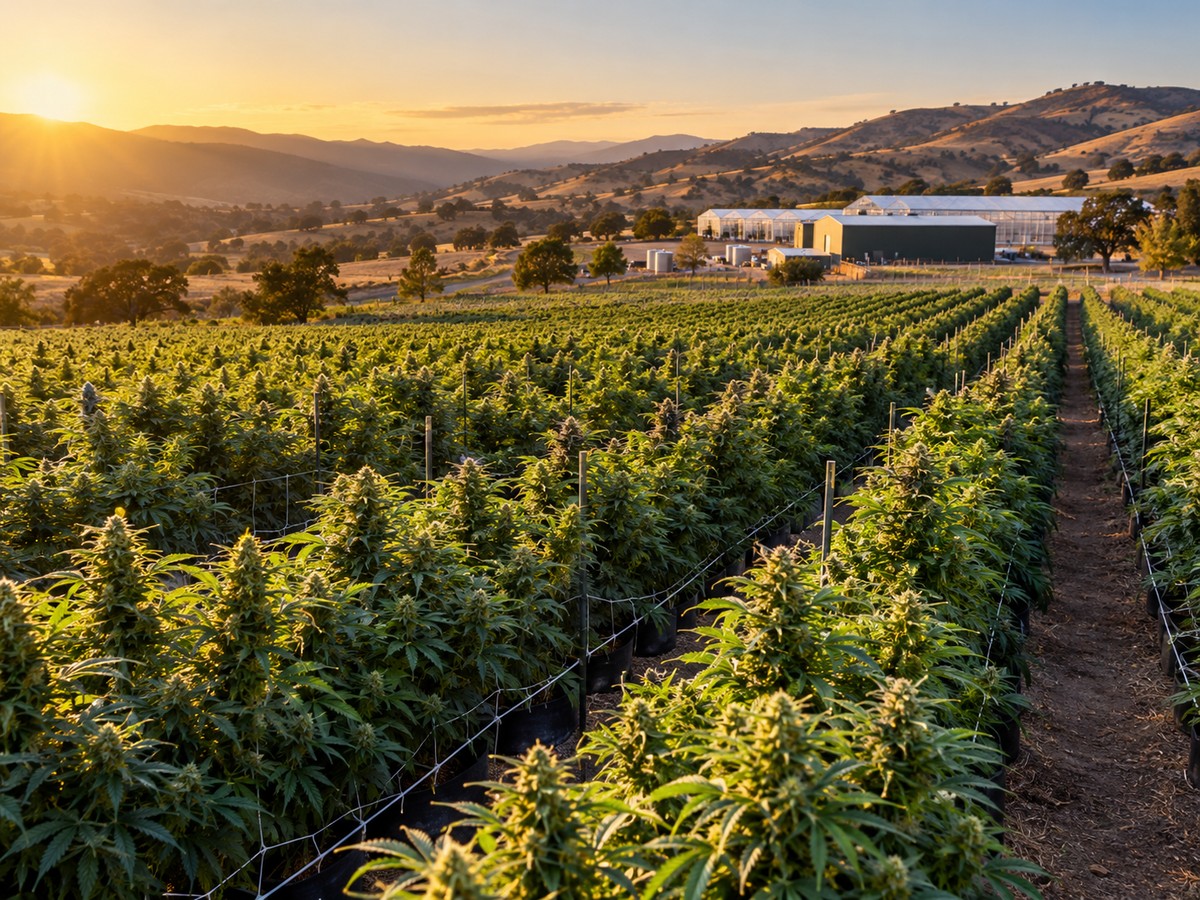
Cali weed is not a single cannabis strain or an officially defined quality grade. The term can refer to cannabis grown in California, genetics associated with Californian breeders, or premium cannabis marketed using California-inspired branding. These meanings often overlap, but they are not interchangeable. A product can contain genuine Cali genetics without ever having been grown in California.
That distinction matters because the word "Cali" has become shorthand for exceptional potency, distinctive flavors, exotic strains, and expensive packaging. Yet none of those characteristics independently verifies a product's origin, genetic identity, or quality.
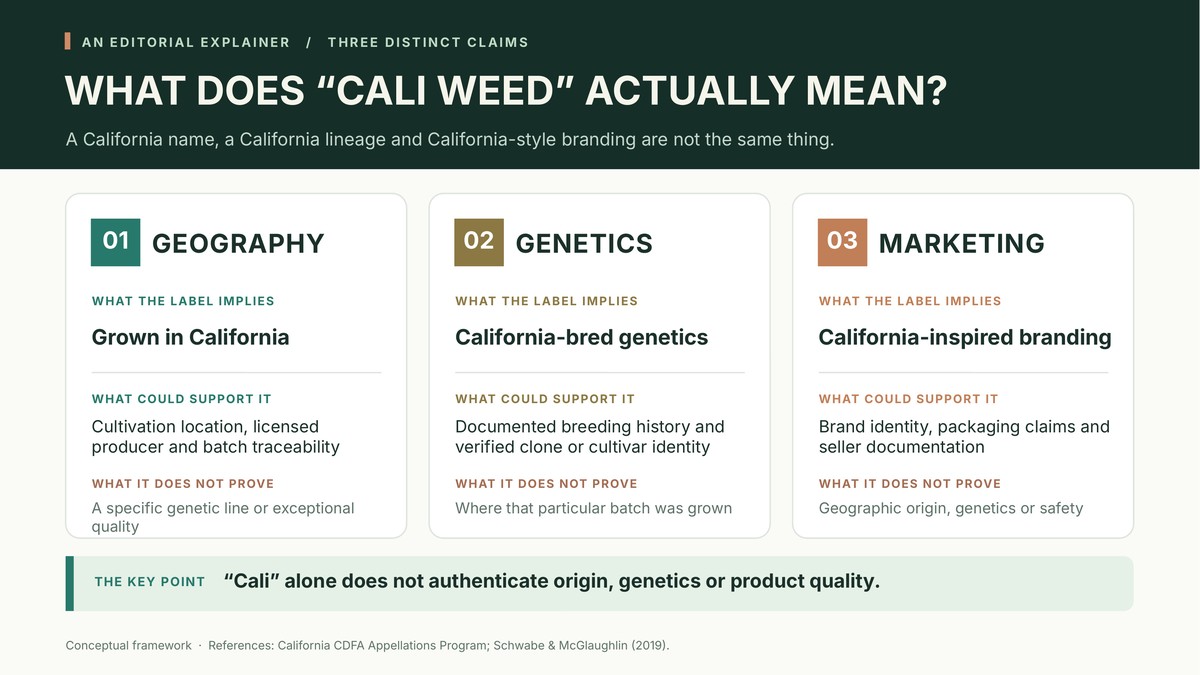
To understand what Cali weed really means, we need to separate three different things: where cannabis was produced, where its genetics originated, and how it is marketed.
What Is Cali Weed? Three Different Meanings Behind One Name
In cannabis culture, "Cali" is an abbreviation for California. In commercial use, however, the meaning has expanded considerably.
| Meaning | What "Cali" describes | What can verify the claim | What it does not prove |
|---|---|---|---|
| California-grown weed | Cannabis physically cultivated and harvested in California | Licensed producer records, batch tracking, documented supply chain | Superior potency, famous genetics, or exceptional quality |
| Cali genetics | A cultivar, clone, or seed line associated with Californian breeding | Breeder documentation, pedigree records, genetic comparisons | That the finished flower was grown in California |
| Cali-style weed | Cannabis presented through premium branding, exotic strain names, and distinctive packaging | Brand identity, product descriptions, packaging | Authentic California origin or genetic identity |
This three-part distinction is an analytical framework rather than an official classification.
California-grown cannabis: a geographic claim
In the strictest sense, authentic California-grown weed is cannabis produced within the state.
The cultivation method can vary. California's licensed industry includes indoor facilities, greenhouses, mixed-light production, and outdoor farms.
A plant cultivated in California is geographically Californian regardless of whether its genetic ancestors originated in California, the Netherlands, Afghanistan, or elsewhere.
Cali genetics: a breeding claim
The phrase Cali genetics generally describes cultivars connected with California's influential breeding scene.
Names such as Gelato, Girl Scout Cookies (GSC), Runtz, and certain OG Kush-derived lines frequently appear in discussions about California cannabis genetics.
However, a breeder in another country can work with genetic material descended from these lines. The resulting plants may have genuine California-related ancestry without being California-grown.
Cali-style weed: a marketing claim
The loosest meaning concerns presentation.
Colorful bags, dessert-inspired strain names, references to Los Angeles, and labels such as "exotic," "top shelf," or "premium Cali" can create a recognizable commercial identity.
This branding may accompany a legitimate high-quality product. It can also exist without verifiable information about its origin.
The central mistake is treating branding, genetics, and geography as if they were the same evidence.
Why Did California Weed Become So Famous?
California's reputation did not emerge solely from modern marketing. It developed through decades of cultivation, breeding, regional identity, and changing cannabis laws.
The Emerald Triangle and the roots of Cali cannabis
Northern California's Emerald Triangle consists of Humboldt, Mendocino, and Trinity counties.
Beginning in the late 1960s, the region developed a distinctive cannabis cultivation culture connected with rural communities, independent growers, and the back-to-the-land movement.
California's legalization of medical cannabis in 1996 helped transform the industry. Adult-use retail sales began in January 2018, creating another major shift in production, regulation, and competition.
Yet legalization introduced substantial costs and regulatory difficulties for some legacy producers.
Sociologist Philip R. Kavanaugh, examining the Humboldt experience, describes a process of "soft criminalization": financial and administrative pressures that can burden longstanding growers even within a legalized market.
The irony is significant. The communities that helped establish California's cannabis reputation do not necessarily capture the greatest economic benefit from its modern premium branding.
Humboldt is not California's largest production center
California's cultural map and its present-day production map are not identical.
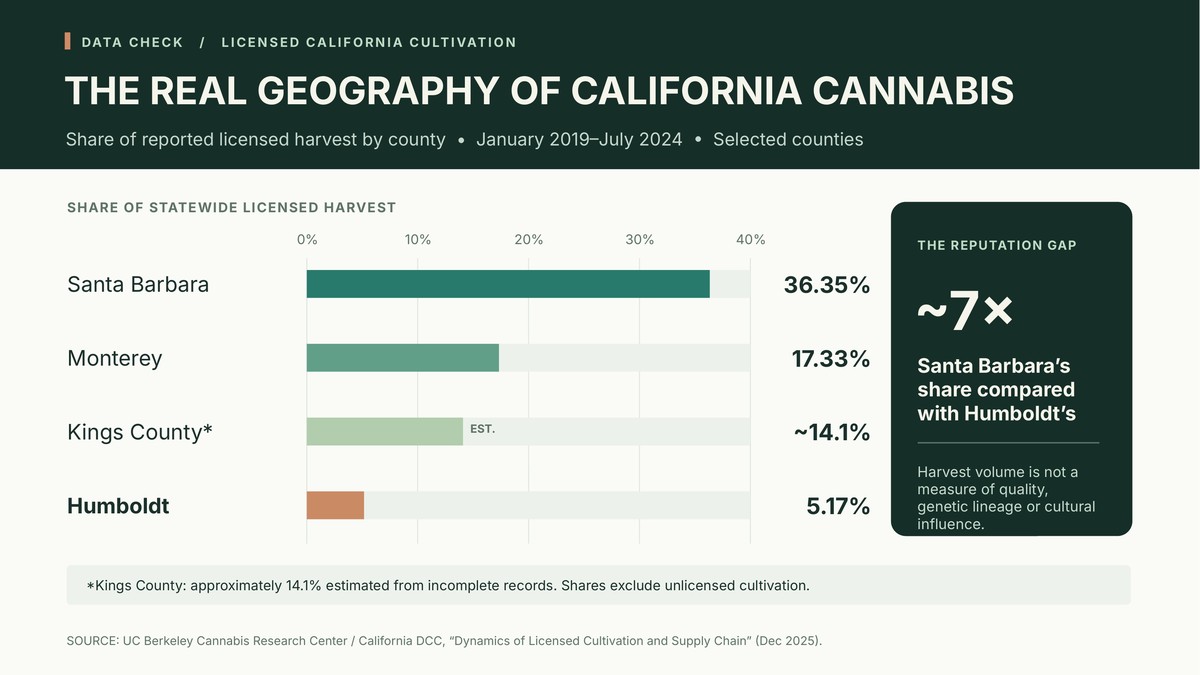
A Berkeley Cannabis Research Center analysis of licensed harvest data covering January 2019 through July 2024 reported the following county shares:
| California county | Share of reported licensed cultivation |
|---|---|
| Santa Barbara | 36.35% |
| Monterey | 17.33% |
| Humboldt | 5.17% |
The figures refer to the licensed production dataset examined by the researchers, not the entire cannabis economy. Incomplete information concerning Kings County also limits interpretation.
Nevertheless, the contrast is revealing.
Humboldt is disproportionately important to the history and identity of California cannabis, while Santa Barbara and Monterey account for much larger reported volumes in the analyzed legal market.
A recognizable regional reputation therefore tells us relatively little about where any particular modern cannabis batch was produced.
California Genetics and California-Grown Weed Are Not the Same Thing
One of the clearest examples of the difference between genetic ancestry and geographic origin comes from an actual cannabis plant patent.
The GPZ case: California breeding, Canadian cultivation
US plant patent USPP36619P3, granted on April 22, 2025, describes the cannabis cultivar GPZ, associated with inventor Chase Martin and Umami Worldwide LLC.
According to the patent, GPZ originated from breeding work involving genetic material from northern and southern California. Its parentage includes a proprietary male called Zuchi and a maternal line incorporating Bacio Gelato, Motorbreath #15, Bubba Kush, and Animal Cookies.
The breeder selected one plant from a population of 250 seedlings and propagated it clonally in Orange County, California.
But here is the important detail: the patent's detailed botanical observations describe a plant grown indoors in Victoria, British Columbia, Canada.
Its California-associated genetic background did not require every subsequent plant to be grown in California.
The patent also reports a THCA concentration of 41.3516% for one selected phenotype. That is an applicant-reported measurement, not an independently established typical result for all GPZ plants or future batches.
A documented Californian pedigree is evidence of breeding history, not proof of the origin or potency of every subsequent harvest.
Why a famous cannabis strain name is not a DNA certificate
Commercial cannabis naming introduces another complication.
In a 2019 study, geneticists Anna L. Schwabe and Mitchell E. McGlaughlin analyzed 122 cannabis samples representing 30 commercially named strains using microsatellite DNA markers.
They identified substantial inconsistencies among some samples sold under identical strain names.
The researchers also observed that many named strains showed considerable genetic stability once obvious outliers were removed.
Both findings matter.
It would be incorrect to assume that every cannabis strain name identifies an identical genotype. It would be equally incorrect to conclude that all strain names are meaningless.
A major 2022 study by Christiana J. Smith and colleagues provides additional perspective. Analyzing 89,923 commercial cannabis samples from six US states, the researchers identified recurring chemical profiles while showing that popular commercial labels did not consistently describe those differences.
Some strain names nevertheless demonstrated stronger chemical associations than random labeling would predict.
In other words, strain names can communicate useful information, but their reliability depends on documented breeding, producer consistency, and the material being compared.
For a deeper explanation of why plants with similar genetics may still develop different characteristics, see Ganja Farmer's article on genotype vs. phenotype in cannabis.
What Does Cali Weed Mean for Cannabis Seeds?
For seed collectors and people researching cannabis breeding, the distinction between California-grown flower and California-derived genetics is particularly important.
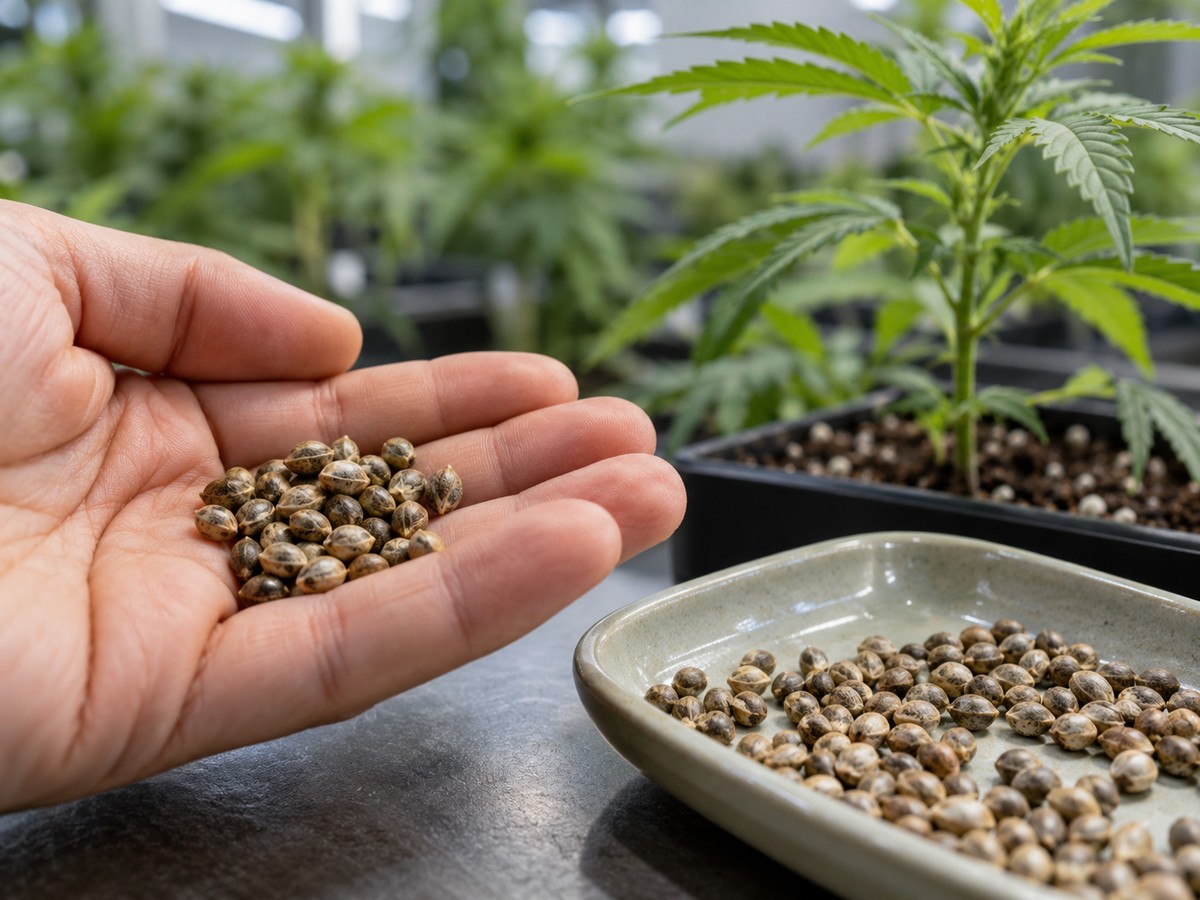
Cali weed seeds are generally seeds marketed as carrying genetics associated with California cannabis cultivars. They do not necessarily originate from seeds physically produced in California, and they cannot guarantee that future plants will be identical to a famous original clone.
Seeds, clones, and genetic variation
A clone is a vegetatively propagated plant derived from an existing individual. It normally preserves that individual's genetic identity, apart from possible mutations or other changes over time.
Seeds produced through sexual reproduction are different. Each seed receives inherited genetic material from its parents and may contain a distinct genetic combination.
That is why seeds marketed under the same strain name can produce related but non-identical phenotypes.
Even a carefully bred seed line should not automatically be treated as a genetic copy of an original clone-only cultivar.
Terms such as F1, F2, and BX describe breeding relationships or generations, but do not independently authenticate a famous strain name. Readers interested in these distinctions can explore backcrossing in cannabis breeding.
What should you look for in Cali genetics seeds?
When comparing cannabis seeds associated with Californian breeding, useful information includes the named breeder, documented parent cultivars, the type of seed line, and how the seller describes genetic consistency.
For example, a seed line described as Gelato × another cultivar indicates a claimed breeding relationship. It does not establish that the seeds contain an exact copy of a historically famous Gelato clone.
Similarly, the terms feminized, regular, and autoflowering describe seed characteristics or reproductive traits, not geographic origin.
Ganjafarmer.com provides a useful starting point for comparing these distinctions through its Cali Weed seed collection, alongside more specific genetic families such as Gelato and Cookies.
The most valuable approach is to examine individual breeding descriptions rather than assuming that a fashionable strain name guarantees a particular outcome.
Cannabis seed ownership, trade, germination, and cultivation are regulated differently across jurisdictions. Always check applicable local laws.
Recommended seeds:


Is Cali Weed Stronger Than Regular Weed?
Not necessarily.
The assumption that California weed is automatically stronger than locally produced cannabis has not been established by rigorous, representative comparisons controlling for genetics, growing conditions, processing, and laboratory testing.
California has helped popularize highly potent cultivars, but high THC content is not exclusive to any state or country.
Furthermore, potency is only one aspect of cannabis chemistry and cannot serve as a complete measure of quality.
THC percentages do not tell the whole story
Cannabis flower commonly contains much of its potential THC in the form of tetrahydrocannabinolic acid, or THCA.
Laboratories often calculate theoretical total THC using the formula:
Total THC = Δ9-THC + (0.877 × THCA)
The conversion factor accounts for the molecular mass lost during decarboxylation.
For example, flower containing 30% THCA and 1% Δ9-THC has a theoretical total THC value of approximately 27.3%, not 31%.
This calculation does not guarantee complete conversion without losses during actual consumption.
It also illustrates why apparently impressive cannabinoid numbers should be interpreted carefully rather than compared without examining how they were calculated.
Even legal-market THC labels can be inaccurate
In a 2025 study published in Scientific Reports, Gregory Giordano, L. Cinnamon Bidwell, and colleagues independently analyzed 277 cannabis products purchased from 52 dispensaries in Colorado.
Among the 178 flower samples, only 56.7% fell within the study's ±15% tolerance of their labeled THC values. The corresponding figure for the 99 concentrates was 96.0%.
These results concern Colorado products, not Cali weed specifically. They demonstrate why a printed potency figure should not be mistaken for independently verified product quality.
California's own regulatory analysis has examined possible laboratory-selection practices known as lab shopping.
An ERA Economics report prepared for California's Department of Cannabis Control in February 2026 estimated a 23.3% prevalence measure based on the share of tests associated with laboratories displaying statistically unusual results.
That figure is not evidence that 23.3% of California cannabis samples were proven fraudulent. It is a statistical estimate used in regulatory economic analysis.
The broader lesson is straightforward: a legitimate certificate of analysis is useful, but its value depends on laboratory reliability, batch identification, sampling, and context.
Are indica, sativa, and hybrid labels reliable indicators of effects?
These familiar categories have limited scientific predictive value.
Schwabe and McGlaughlin concluded:
"We failed to find clear genetic support"
Their statement concerned the conventional sativa, indica, and hybrid groupings described in consumer-facing databases.
A systematic review published on October 24, 2026, by Gabriel Zoobi and colleagues examined 28 peer-reviewed studies and similarly concluded that these labels are not reliable guides to cannabis chemical composition or therapeutic effects.
Individual responses also depend on dose, route of administration, product composition, previous exposure, and other personal factors.
Therefore, claims such as "Cali indica always makes you sleepy" or "Cali sativa always increases energy" oversimplify the available evidence.
Why Does Cali Weed Often Smell Like Candy, Gas, or Fruit?
A distinctive aroma is an important part of the premium Cali weed identity.
Popular descriptions include "gassy," "candy," "creamy," "fruity," "diesel," and "dessert-like."
These terms describe sensory impressions, not standardized geographic indicators.
Modern cultivar families associated with Gelato, Cookies, and Runtz helped popularize this vocabulary. Yet a sweet or fuel-like aroma is not exclusive to California genetics.
Terpenes matter, but they do not explain every aroma
Terpenes are volatile organic compounds present in cannabis and many other plants. They contribute to aroma, but the relationship between individual compounds and the perceived smell of a complex flower sample is not simple.
In October 2025, Solomon E. Isaacson and colleagues published a study evaluating 91 cannabis samples using a sensory vocabulary containing 25 aroma descriptors.
The researchers found that:
"terpene profiles alone poorly predicted sensory character"
Their analysis also investigated volatile sulfur compounds, some of which may contribute to distinctive odors.
The study's results challenge the assumption that listing a few dominant terpenes is sufficient to predict exactly how cannabis will smell.
Its samples included both THC-dominant and CBD-dominant material, and the experiment evaluated aroma rather than psychoactive effects.
For Cali weed, this means a product's "candy" or "gas" reputation should not be treated as a reliable scientific fingerprint of its identity.
Freshness and processing can change the experience
The final aroma of cannabis flower is influenced not only by genetics but also by environmental conditions, drying, post-harvest handling, storage, and product age.
Two batches derived from the same clone may differ in their measurable chemical profiles and sensory properties.
Transport and storage are especially relevant when products travel long distances.
A premium strain name cannot compensate for poor handling, and attractive packaging cannot restore volatile compounds that have already degraded.
Is Cali Weed Sold in Europe Really From California?
Sometimes cannabis sold in Europe under the Cali label is associated with genuine North American imports. But the label alone cannot establish that a particular product originated in California.
It would be inaccurate to claim that all European Cali weed is imported from California.
It would also be inaccurate to claim that every imported Cali product is fictional.
Genuine North American cannabis imports do exist
In May 2026, Greater Manchester Police reported a criminal investigation involving a network associated with "Cali weed."
Investigators connected the organization with at least 28 cannabis importations from North America between December 2022 and January 2024.
Five shipments were intercepted, yielding nearly 130 kilograms of cannabis.
Detective Constable Peter Martin characterized the operation as:
"a highly organised and sophisticated criminal network"
The investigation provides evidence of real transatlantic cannabis trafficking.
However, the police used the geographical description North America. Their report did not establish that every shipment originated specifically in California.
Not all imported cannabis comes from the United States
The United Kingdom's National Crime Agency reported in July 2026 that Thailand had overtaken the United States and Canada as the leading source country for cannabis intercepted from air passengers in 2024.
More than 28 tonnes of cannabis were seized from air passengers in 2025.
These figures describe a particular enforcement channel, not the total cannabis market or the proportion sold as Cali.
Similarly, the European Union Drugs Agency and Europol have documented trafficking routes involving Canada, the United States, and Thailand.
Such evidence shows why "imported," "American," and "Californian" must not be treated as synonyms.
What is EU Cali weed?
The informal expression EU Cali generally refers to cannabis produced in Europe and associated with California-style cultivars, genetics, presentation, or branding.
It is not a standardized botanical or regulatory classification.
EU Cali can describe locally grown material with a credible California-related lineage. It can also be a loose marketing label with limited documentation.
Neither geographic origin nor the marketing term independently establishes quality.
A well-documented locally produced batch can be more informative than an expensive imported-looking product with no traceable history.
Can Cali Weed Packaging Prove It Is Authentic?
Packaging is among the weakest forms of evidence when used on its own.
Premium branding can communicate a legitimate commercial identity, but it cannot independently verify genetic ancestry, the location of cultivation, or laboratory test results.
The California CA symbol is not an origin certificate
California requires a universal cannabis symbol on applicable regulated products. The familiar warning design includes a cannabis leaf and the letters "CA."
Its purpose is to indicate that the product contains cannabinoids.
It is not an independent certificate proving that cannabis was grown in California or that its strain identity has been authenticated.
A copied symbol on an unofficial package provides even less evidence.
The same principle applies to strain names, logos, QR codes, and packaging that resembles established California brands.
A QR code is only useful when it leads to verifiable information from a credible source and can be matched to the specific product or batch.
Does California have protected cannabis appellations?
California has established a regulatory framework for a Cannabis Appellations Program, designed to recognize qualifying geographic cultivation identities.
The concept resembles protected geographic origin systems used in certain agricultural industries.
But it is much more specific than the generic word "Cali."
As of October 30, 2026, the California Department of Food and Agriculture stated that it was not yet accepting petitions to establish appellations. The agency anticipated opening the program later in 2026.
Eligibility is focused on qualifying licensed outdoor cultivation, subject to geographical and production requirements.
Consequently, neither the general word "Cali" nor an indoor-grown premium product should be presented as automatically having a state-certified appellation of origin.
Recommended seeds:


How Can You Tell Whether Cali Weed Is Real?
There is no universally validated consumer test that can establish authentic California origin from appearance, smell, packaging, or THC percentage alone.
The strongest assessment combines several independent types of evidence.
1. Identify what the seller actually means by "Cali"
Does the claim concern California-grown cannabis, California-derived genetics, or premium California-style branding?
Until this distinction is clear, the claimed authenticity cannot be meaningfully evaluated.
2. Ask for identifiable production information
For an alleged California-grown batch, relevant documentation may include a licensed producer, cultivation facility, production records, batch identifiers, and a traceable distribution history.
A California-related brand name alone does not establish where the material was harvested.
3. Examine the genetic pedigree
For a claimed Cali cultivar, look for the breeder, parent lines, and any available documentation identifying the seed line or clone.
DNA fingerprinting may help establish genetic relationships when reliable reference material is available.
However, matching a genotype cannot by itself reveal where the matched plant was cultivated.
4. Evaluate the certificate of analysis
A credible certificate of analysis, or COA, should be relevant to the specific batch.
Depending on the regulatory system, it may include cannabinoid measurements, terpene data, and screening for contaminants such as pesticides or microbiological hazards.
Check the testing date, laboratory identity, batch number, and the relationship between the certificate and the product being evaluated.
A COA is not automatically a certificate of geographic origin.
5. Consider storage and product condition
A correctly identified cultivar can still lose desirable characteristics through unfavorable processing or storage.
Relevant considerations include product age, packaging integrity, visible deterioration, and handling history.
Appearance and smell may help identify potential quality concerns, but neither can establish safety or authenticity.
6. Check official safety and recall information
The California Department of Cannabis Control maintains a public recall system for regulated cannabis products.
For example, a flower product labeled "Cali KOSHER" was recalled in May 2024 because of inaccurate cannabinoid labeling. Other recalls have involved specific batches associated with established brands, including Alien Labs and Connected.
These events do not imply that every product under those names is defective.
They demonstrate that brand reputation and California origin are not substitutes for batch-level quality control.

Frequently Asked Questions About Cali Weed
What does Cali weed mean in slang?
Cali weed is slang for cannabis associated with California. Depending on context, it may mean California-grown flower, California-related cannabis genetics, or premium cannabis marketed in a Californian style.
Is Cali weed a specific strain?
No. Cali weed is an umbrella term, not one genetically defined strain. It can describe many cultivars, including varieties associated with the Gelato, Cookies, and Runtz families.
Is Cali weed better than regular weed?
Not automatically. Quality depends on the specific genetic material, production standards, chemical composition, contaminant testing, and post-harvest condition. California origin does not guarantee superior results.
What does a Cali pack mean?
A Cali pack usually refers to cannabis packaging presented in a California-inspired premium style, often with recognizable graphics and exotic strain names. The packaging itself does not prove California origin.
Can Cali genetics be grown outside California?
Yes. Genetic material associated with California breeding can exist in other countries. The resulting plants may have California-related ancestry, while the harvested flower is geographically produced elsewhere.
Are Cali weed seeds different from ordinary cannabis seeds?
They are not a separate botanical category. The term generally refers to seeds with claimed connections to California-associated cultivars or breeding programs. Their identity and reliability depend on the actual genetics and breeding documentation.
Can a laboratory prove cannabis came from California?
Not through standard cannabinoid or DNA analysis alone.
Experimental techniques involving chemical fingerprints and statistical classification have shown potential for distinguishing samples from certain geographical sources. However, no universal, validated consumer test has been established that reliably authenticates all claimed California-grown cannabis.
Final Verdict: Cali Is a Reputation, Not a Guarantee
California's influence on modern cannabis is undeniable. Its legacy growers, regional cultivation traditions, innovative breeders, and influential brands have helped shape the global industry.
But the commercial meaning of Cali weed has expanded well beyond the state's borders.
Some products genuinely come from California. Others carry genetics associated with its breeding history. Still others borrow the appearance and language of Californian cannabis culture without demonstrating either claim.
The difference is not necessarily visible in the flower, detectable from a strain name, or reflected in its price.
Authentic California origin, credible Cali genetics, and demonstrable product quality are three separate questions.
For anyone researching cannabis strains or comparing marijuana seeds, that distinction is more useful than a promise of exceptional potency or the latest exotic label.
The most informative question is not simply "Is this Cali weed?"
It is: "What can actually be verified about this particular genetic line or product batch?"
References and Further Reading
-
California Department of Food and Agriculture. (2026). Cannabis Appellations Program. Official regulatory program documentation and status information.
-
California Department of Cannabis Control. (2026). Department of Cannabis Control Regulations. Cannabis labeling, universal symbol, laboratory testing, and track-and-trace provisions.
-
California Department of Cannabis Control. (2024–2026). Cannabis Recalls and Safety Notices. Official product recall records.
-
Reiman, A., Dillis, C., & Polson, M. (2025). Licensed Cultivation and Supply Chain Dynamics. Berkeley Cannabis Research Center, University of California, Berkeley.
-
United States Patent and Trademark Office. (2025). Cannabis Plant Named 'GPZ'. US Plant Patent USPP36619P3.
-
Schwabe, A. L., & McGlaughlin, M. E. (2019). Genetic tools weed out misconceptions of strain reliability in Cannabis sativa: implications for a budding industry. Journal of Cannabis Research, 1, Article 3.
-
Smith, C. J., Vergara, D., Keegan, B., & Jikomes, N. (2022). The phytochemical diversity of commercial Cannabis in the United States. PLOS ONE, 17(5), e0267498.
-
Isaacson, S. E., Wilson-Poe, A. R., Ye, T., Qian, Y. L., & Shellhammer, T. H. (2025). Beyond potency: A proposed lexicon for sensory differentiation of Cannabis sativa L. aroma. PLOS ONE, 20(10), e0335125.
-
Giordano, G., et al. (2025). Accuracy of labeled THC potency across flower and concentrate cannabis products. Scientific Reports.
-
Zoobi, G., Marco, M., Foraida, K. J., Tandon, S., & Zhornitsky, S. (2026). Do consumer-facing “Indica,” “Sativa,” and “Hybrid” labels predict cannabis composition or effects? A systematic review. Journal of Cannabis Research.
-
ERA Economics. (2026). Standardized Regulatory Impact Analysis: 2026 CCTT Package. Prepared for the California Department of Cannabis Control.
-
Kavanaugh, P. R. (2025). Recreational Cannabis and Recriminalization in the “Emerald Triangle”. Sociological Inquiry, 95(2).
-
Greater Manchester Police. (2026, May 13). Organised Crime Gang Weeded Out as Ten Jailed for a Combined 32 Years. Official police communication.
-
National Crime Agency. (2026, July 8). Huge New Fines for Brit Cannabis Smugglers in Thailand or Up to Two Years in Prison. Official agency communication.
-
European Union Drugs Agency. (2026). European Drug Report 2026: Trends and Developments.
-
Europol. (2026, October 1). Cannabis Smuggling from North America and Thailand into Europe: Europol Highlights Growing Threat.