Choose your store:
Select a local store to browse products and offers available to you.
or stay on: USA | ganjafarmer.com
Are you 21 or older?
This website contains content for adults and uses necessary cookies.
Durban Poison seeds from Dutch Passion offer you the regular, photoperiod version of a sativa-dominant strain with South African roots. Its tall, strongly branched plants, resinous flowers and spicy notes of lemon and anise give this classic a distinctive character.
The story of Durban Poison begins in the South African city of Durban. The line was brought to the Netherlands and inbred over many years during the 1970s. It carries a South African landrace heritage, while its listed genetic combination is Durban × an unknown indica. The resulting cultivar is sativa-dominant and belongs to the Dutch Outdoor family.
Durban Poison’s heritage is also linked to the foundations of the Girl Scout Cookies, or GSC, line, from which strains such as Sherbet and Gelato later developed. The variety appeared in GrowDiaries’ Top 10 selection of photoperiod sativas. SeedFinder attributes seventh place in the Outdoor category of the 2016 Emerald Cup to a Durban Poison entry from Dutch Passion.
Durban Poison is suited to both indoor and outdoor growing. It is considered easy to grow and can appeal to beginners as well as experienced growers. In a very restricted indoor space, however, HoneyBlunt42 described their own experience with the strain as difficult.
The listed flowering period is eight weeks, while the indoor flowering time is estimated at around 8–9 weeks. An estimate of around 11–13 weeks from seed to harvest is tied to the vegetative phase described for the strain. Outdoors, the harvest window is early to mid-autumn; an earlier description gives September to October. In an outdoor report, Paul Purple observed the first signs of flowering around mid-August.
Plants can stretch substantially during bloom, often doubling or tripling their earlier size. Outdoors, maximum heights of around 10–13 ft are possible. An earlier 2020 description gives an outdoor height of about 7–10 ft.
The strain has extremely high yield potential, with 1.5–2.1 oz/ft² possible indoors. In an outdoor diary, Teamdirtbag2 recorded 30 oz of dried flower per plant, with the single plant reaching 7 ft. The diary covered 155 days, and the author estimated losses related to pests at 20% or more.
In a small trial recorded in a 2011 report, Paul Purple saw one seedling emerge from four seeds. The same report also described an initially misshapen, weak plant and the later loss of a plant for unexplained reasons.
Durban Poison is suited to outdoor growing across a broad range of latitudes, including far northern and southern locations. Over successive generations, the line was increasingly adapted to the windy and rainy conditions of northern Europe, although it prefers a somewhat milder climate. The strain is described as resistant to mold and pests.
On a balcony in northern Germany, aKrreh reported that one plant came through cold, wet weather without major problems, despite having no shelter from wind or rain. Its flowers showed dark colors, which the author suspected were associated with the low temperatures.
Other outdoor observations include a week-22 image in Teamdirtbag2’s diary captioned “mold in center.” Pimmelnase1 reported a small amount of mold in two or three places on a plant ready at the end of October, despite no direct exposure to rain. Paul Purple also noted a small mold problem in late September on the plant he considered the more sativa-dominant of two phenotypes.
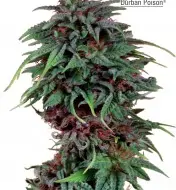
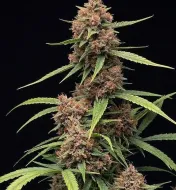
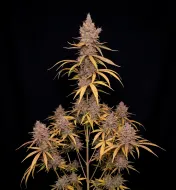
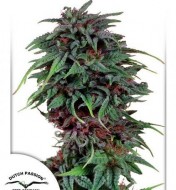
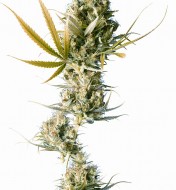
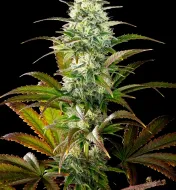
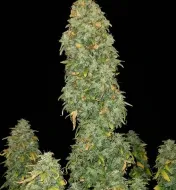
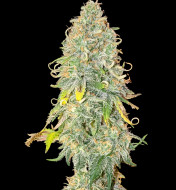
Early in development, Durban Poison may show broad leaves with an indica-like appearance. Later in flowering, long flower clusters appear with the narrow leaves associated with sativas. The plant develops numerous strong side branches that can carry heavy, resinous flowers.
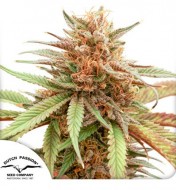
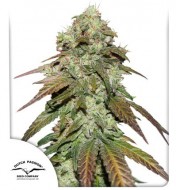
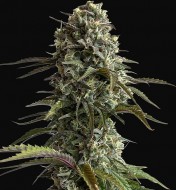
The buds combine a slim, sativa-style shape with density and are often dark green. The calyx-to-leaf ratio is very high, and even the small sugar leaves are covered in resin. Large resin glands, or glandular trichomes, add to the flowers’ visual character.
In an outdoor diary, Teamdirtbag2 found the buds very dense, while whocares described flowers as rather small and fluffy. Pimmelnase1’s dried flowers were also described as fluffy and interspersed with leaves. Paul Purple’s two outdoor plants bore rather fluffy flowers and had very abundant resin coverage.
Durban Poison’s flavor profile combines floral and spicy notes with lemon and anise. Its aroma has a spicy, Haze-like character, with licorice and cloves joining the citrus and anise accents. The result is a profile with both a bright citrus side and a more aromatic, spice-led character.
Teamdirtbag2 described the scent of one outdoor plant as very sweet and strong enough to be noticed by neighbors; its dried flower tasted citrusy, earthy and sweet. DrLubinski found anise and pepper in the pronounced spicy aroma of an outdoor plant. Pimmelnase1 described the smell of burning dried flower as sweet and reminiscent of incense, with a sharp, sweet flavor like ginger beer.
Paul Purple distinguished two phenotypes in his outdoor report. One smelled fairly fruity; the other, which he considered more sativa-dominant, had an exotic scent he had not encountered before. He also noted that the plants’ aroma could be detected from a distance.
The flowers are associated with high THC levels and a strong, relatively long-lasting effect. The initial sensation is described as uplifting and energizing; with larger amounts, that first burst of energy may be followed by a more sedative effect.
Teamdirtbag2 associated the dried flower with happiness and creativity while also noting dry mouth. In another review, whocares found the effect uplifting and conducive to activity and creativity. Pimmelnase1 recalled remaining awake and thinking for a while after using the flower before bed.
In Paul Purple’s comparison, the flower from the more sativa-like phenotype felt clear and motivating to him and his companion. The more indica-like phenotype was described as more noticeable in the body and associated with a stoned feeling.
A Sativanalysis certificate published in 2020 for one dried-flower sample named Durban PC recorded 12.29% Δ9-THC, 2.65% CBD and 0.52% CBG. It also reported 0.31% CBC, 0.05% THCV and 0.14% CBN, while CBDV was below 0.01%. The five principal terpenes listed in that sample were beta-myrcene, alpha-pinene, beta-pinene, limonene and beta-caryophyllene.
Durban Poison combines South African roots and sativa-dominant genetics with strong branching, substantial yield potential and a distinctive floral, spicy, lemon-and-anise profile. If that blend of heritage, structure and flavor appeals to you, choose Durban Poison regular seeds by Dutch Passion.