


 @ganjafarmer.seed
 @GanjaFarmerSeed
Amnesia Haze is known for vigorous, sativa-dominant growth, a pronounced flowering stretch and intensely aromatic, resin-covered flowers. In this indoor test grow, GrowDiaries user all_about_420 cultivated three Amnesia Haze plants from Ganja Farmer under the same general conditions.
Despite sharing the same genetics, the plants eventually developed into three noticeably different phenotypes. One became tall and displayed strong purple colouring, one remained shorter and more compact, and the topped plant produced a balanced canopy with several evenly sized main flower sites.
The complete run lasted 114 days and received a final rating of 9 out of 10. The grower particularly praised the strain’s vigour, resistance to training-related stress, resin production and phenotype diversity.
Grow Specifications
| Grow parameter | Recorded information |
|---|---|
| Strain | Amnesia Haze |
| Breeder | Ganja Farmer |
| Number of plants | 3 |
| Environment | Indoor |
| Declared grow area | 1.8 m² / 19.4 ft² |
| Tent listed in the setup | 240 × 120 × 200 cm |
| Seed-to-harvest time | 114 days, harvested during week 17 |
| Vegetative period | Approximately 8 weeks |
| Flowering period | Approximately 8 weeks |
| Starter container | Approximately 1 l / 0.26 US gal |
| Final pot size | Approximately 15–17 l / 4.0–4.5 US gal |
| Growing medium | BioBizz Light-Mix and All-Mix; coco starter pots were used after germination |
| Nutrient type | Organic or biologically based BioBizz programme |
| Vegetative light cycle | The grower’s notes indicate 18/6, although some early weekly data cards display 12 hours |
| Flowering light cycle | 12/12 |
| Light type | LED with supplementary blue and red lighting |
| Listed vegetative lighting | 159 W LED plus 30 W supplementary blue light |
| Listed flowering lighting | Two 320 W LEDs plus 30 W supplementary red light |
| pH | 6.8 |
| Day temperature | Initially 27°C / 80.6°F, later 26°C / 78.8°F |
| Night temperature | Approximately 20–22°C / 68–71.6°F |
| Humidity | Approximately 65% → 60% → 55% → 50% |
| Final recorded height | Around 70 cm average, with individual plants ranging from approximately 45 to 74 cm during the stretch |
| Difficulty | Easy |
| Training methods | LST, topping, defoliation, HST, ScrOG-style canopy management and lollipopping |
| Final rating | 9/10 |
Equipment and Nutrients
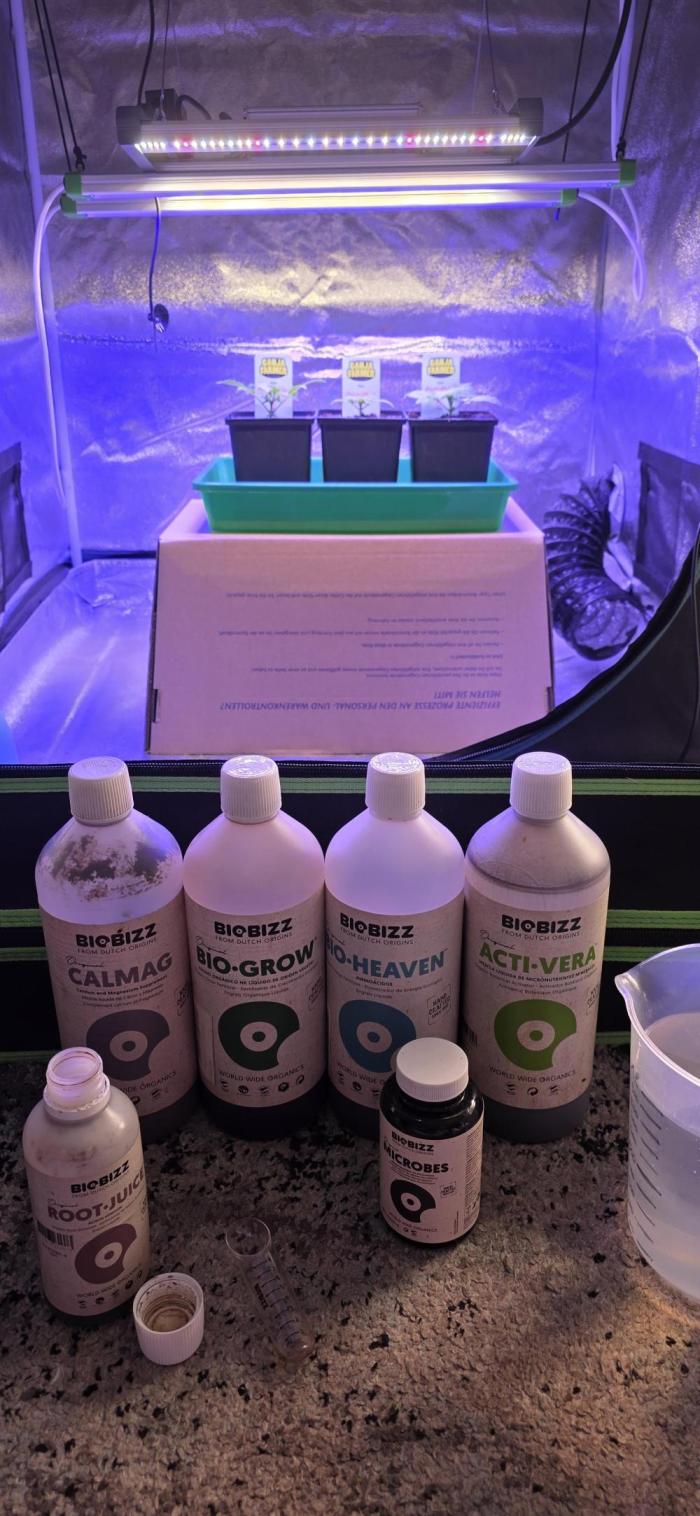
The equipment list included a Zelsius MyHomeGrow tent measuring 240 × 120 × 200 cm, Mars Hydro LED fixtures, supplementary blue and red lights, several inline fans and both four-inch and six-inch carbon filters.
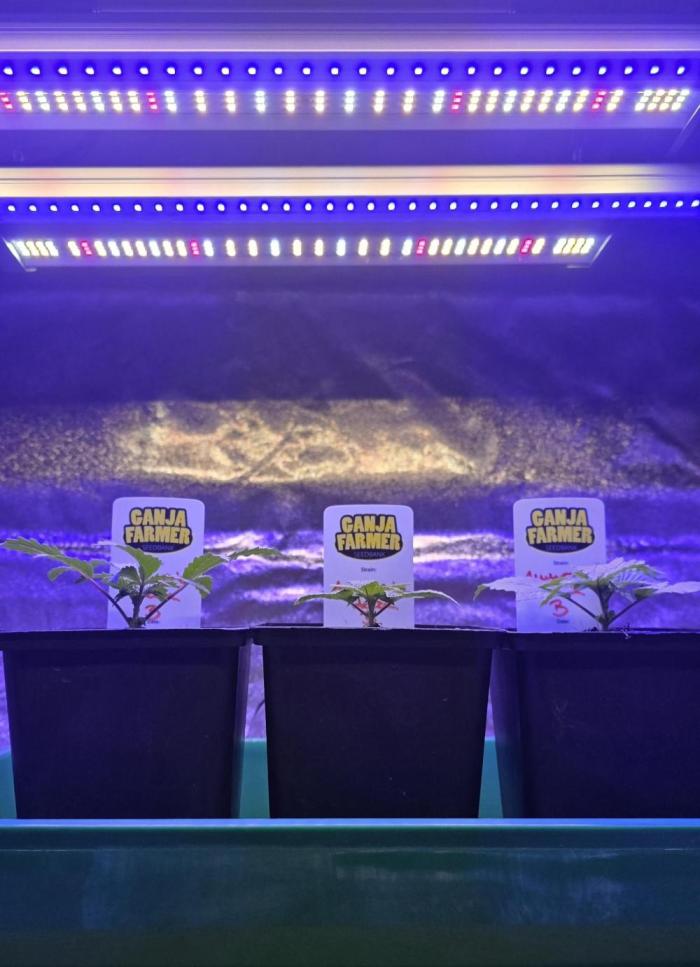
The vegetative lighting consisted of a Mars Hydro FC 1500-EVO rated at 159 W, supported by a 30 W blue supplementary light. For flowering, the setup listed two Mars Hydro FC4000-EVO 320 W fixtures and a 30 W supplementary red light.
The growing media were BioBizz Light-Mix and All-Mix. The young seedlings were initially placed in small coco starter pots before being transplanted into their final soil containers.
The BioBizz feeding programme included:
- Calmag
- Root-Juice
- Bio-Grow
- Bio-Bloom
- Top-Max
- Bio-Heaven
- Acti-Vera
- Microbes
- Leaf-Coat
The grower described the programme as biologically based and reported that the plants responded well to it throughout both vegetative growth and flowering.
Germination
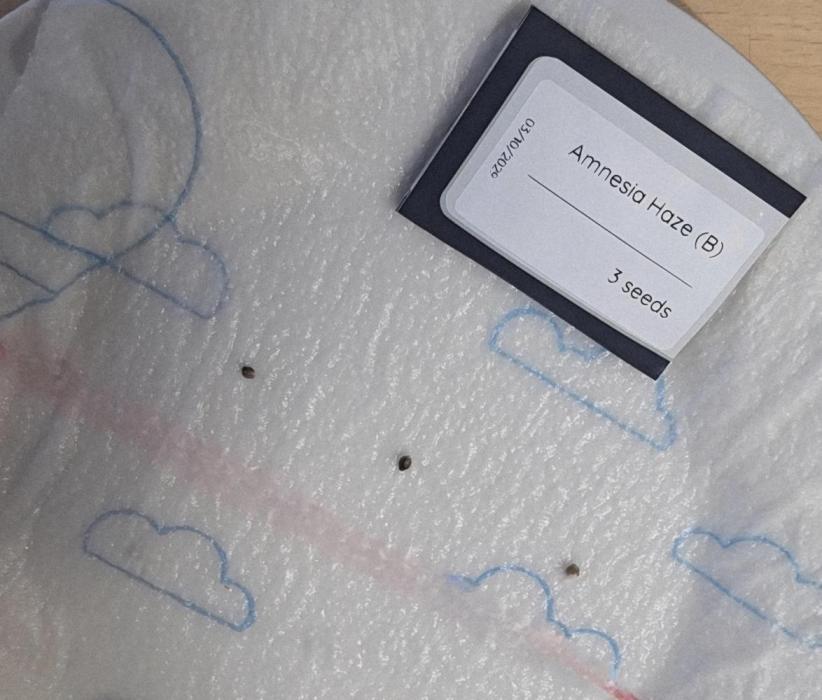
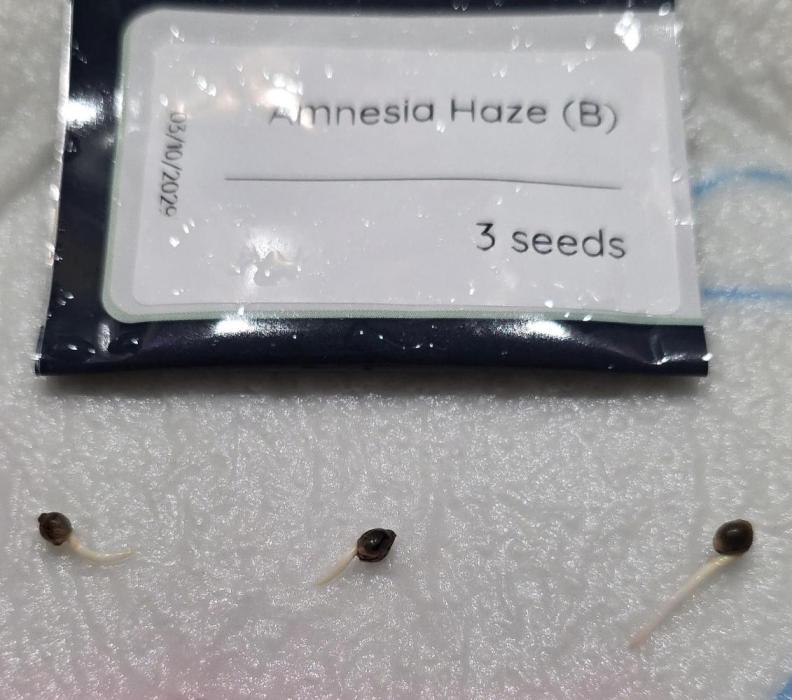
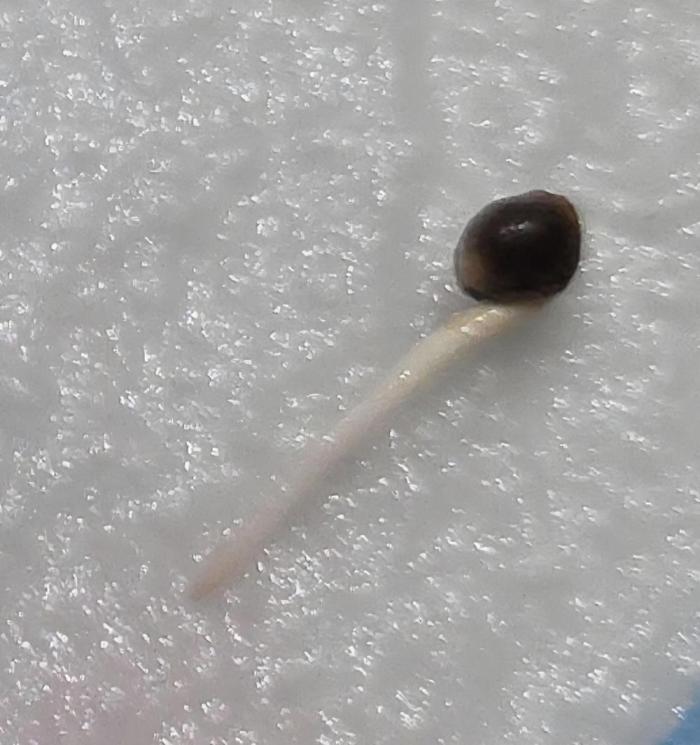
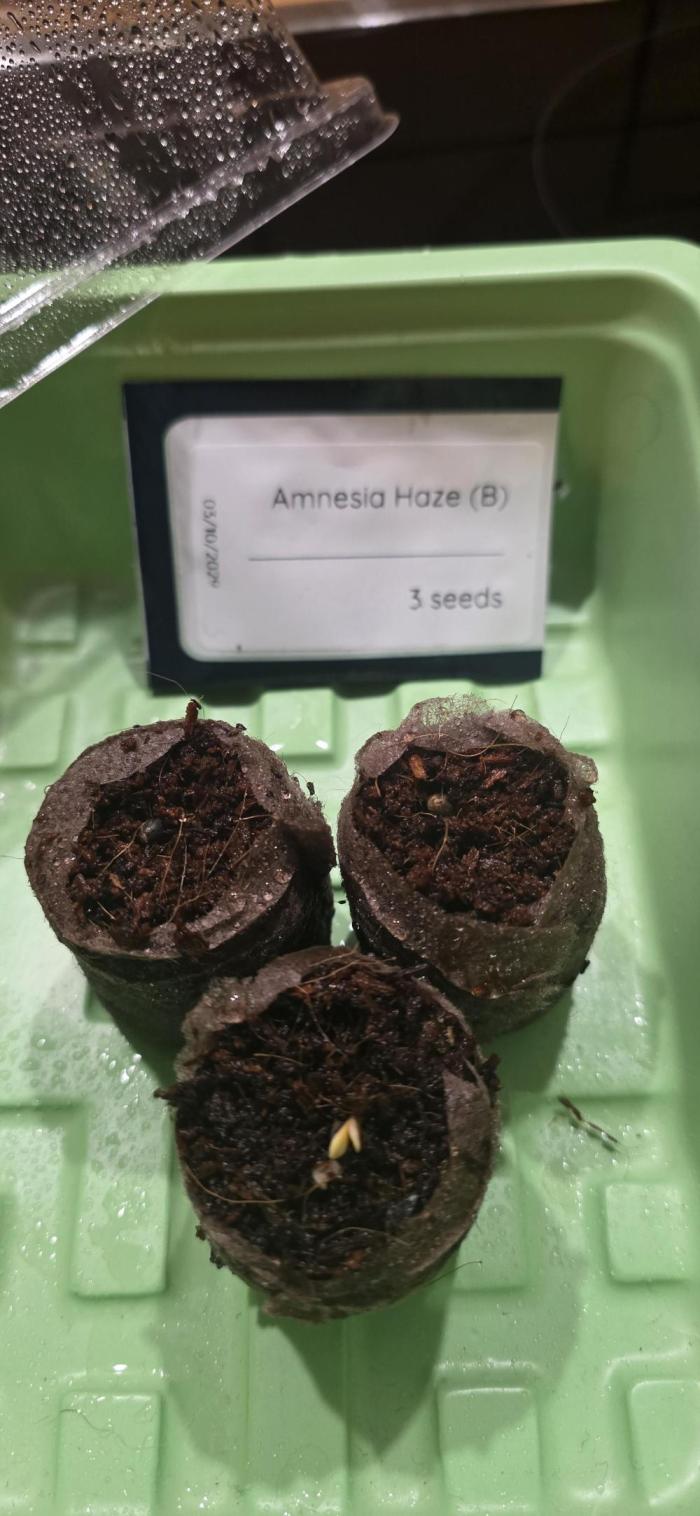
The three Amnesia Haze seeds were germinated using the paper-towel method.
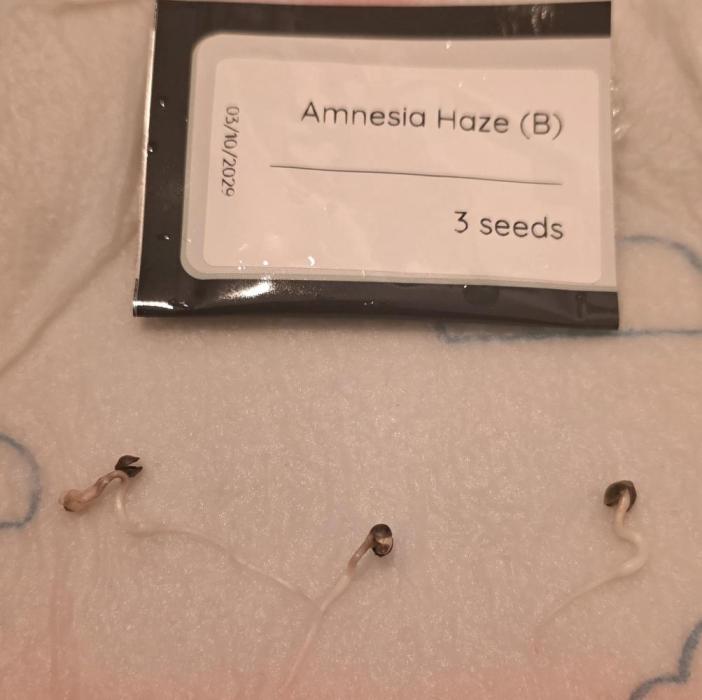
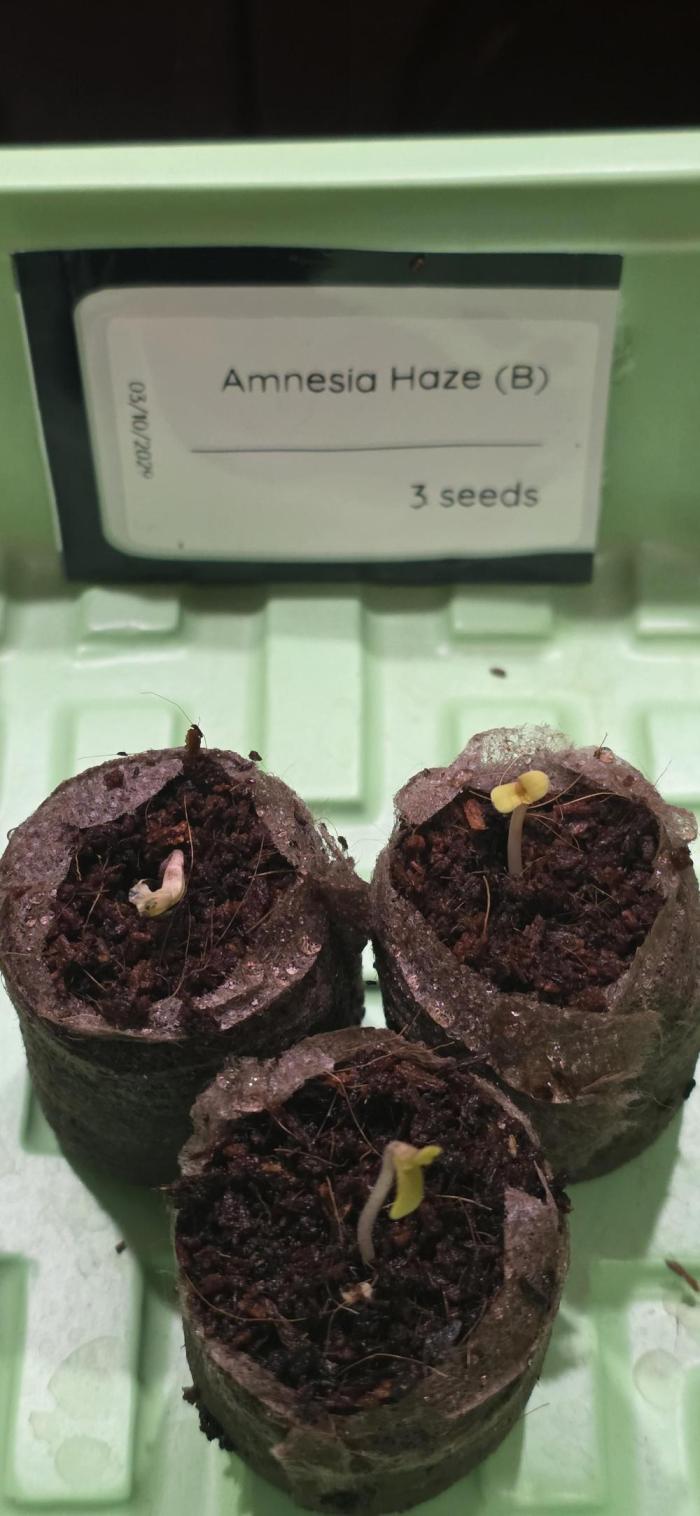
All three seeds opened successfully, giving the grower a 100% germination rate. Taproots appeared approximately two days after the process began, after which the seeds were transferred into small coco starter pots.
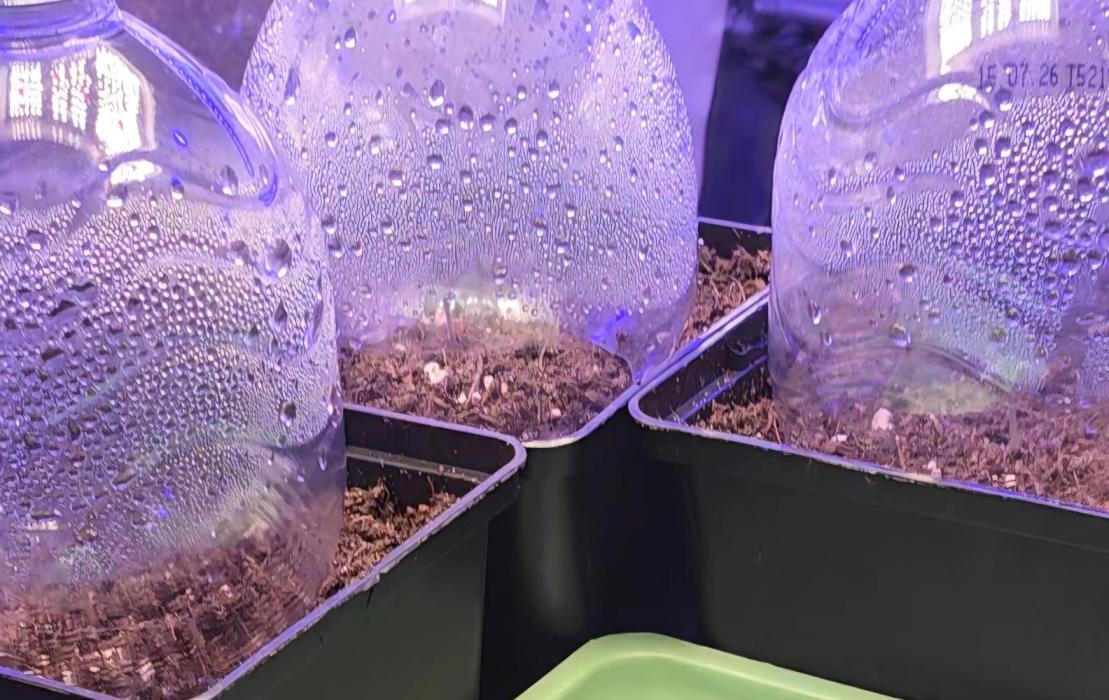
The seedlings remained under a humidity cover for several additional days. This helped maintain a moist environment while the young root systems became established.
Week 1: Establishing the Root System
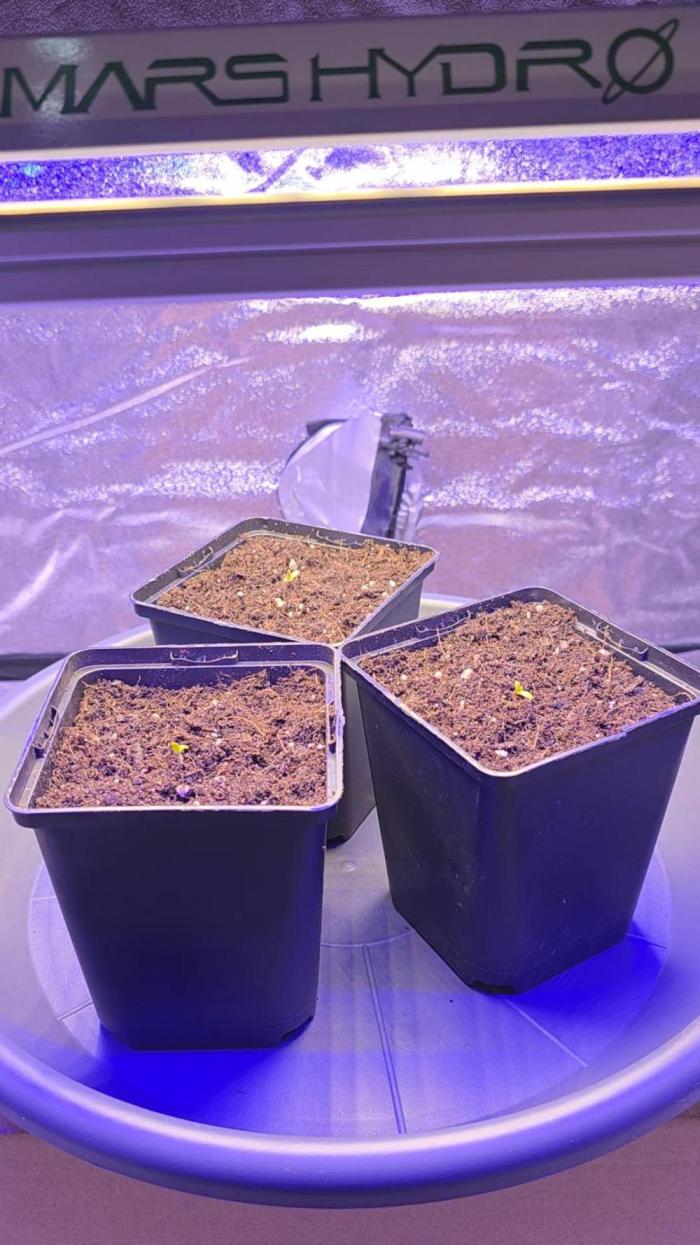
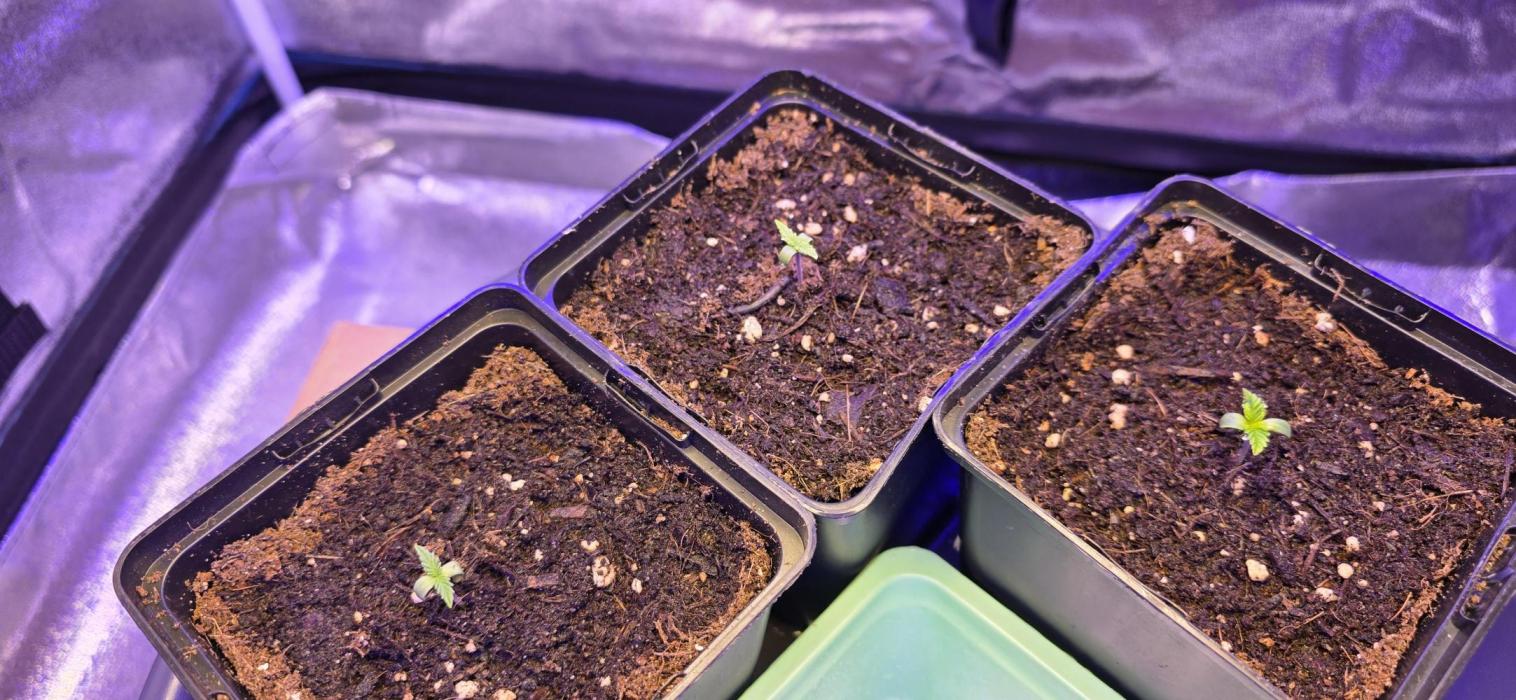
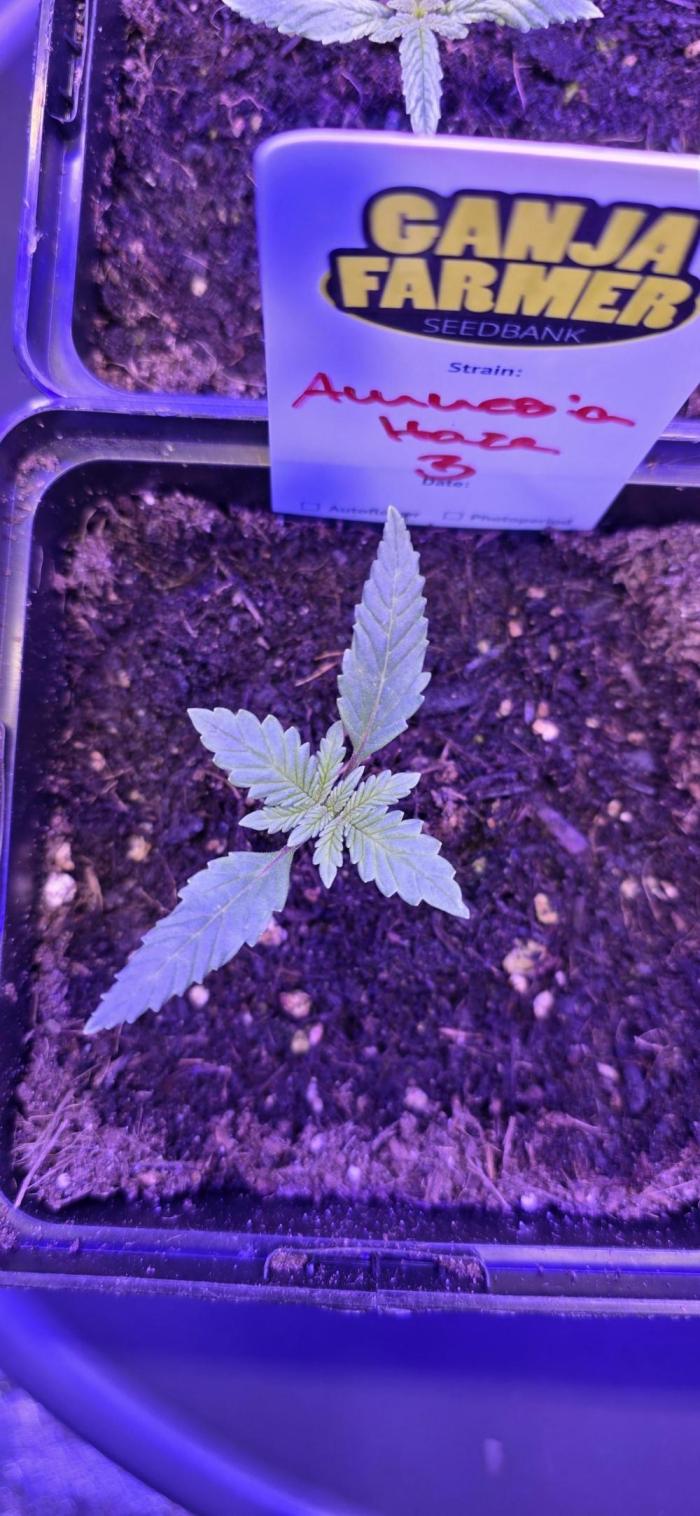
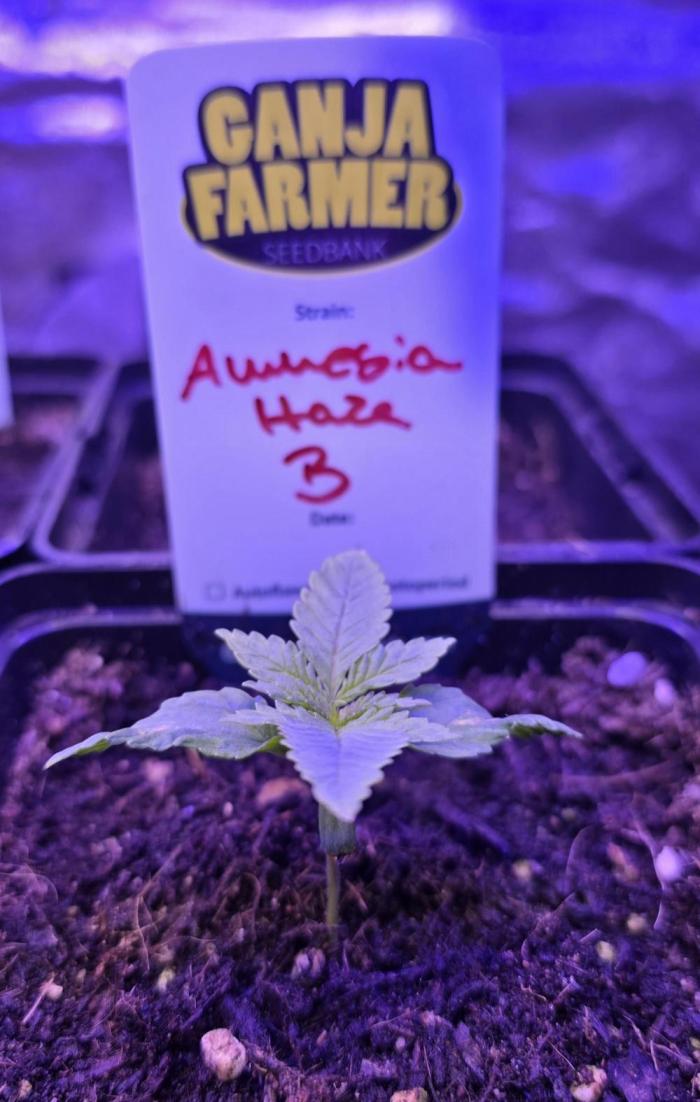
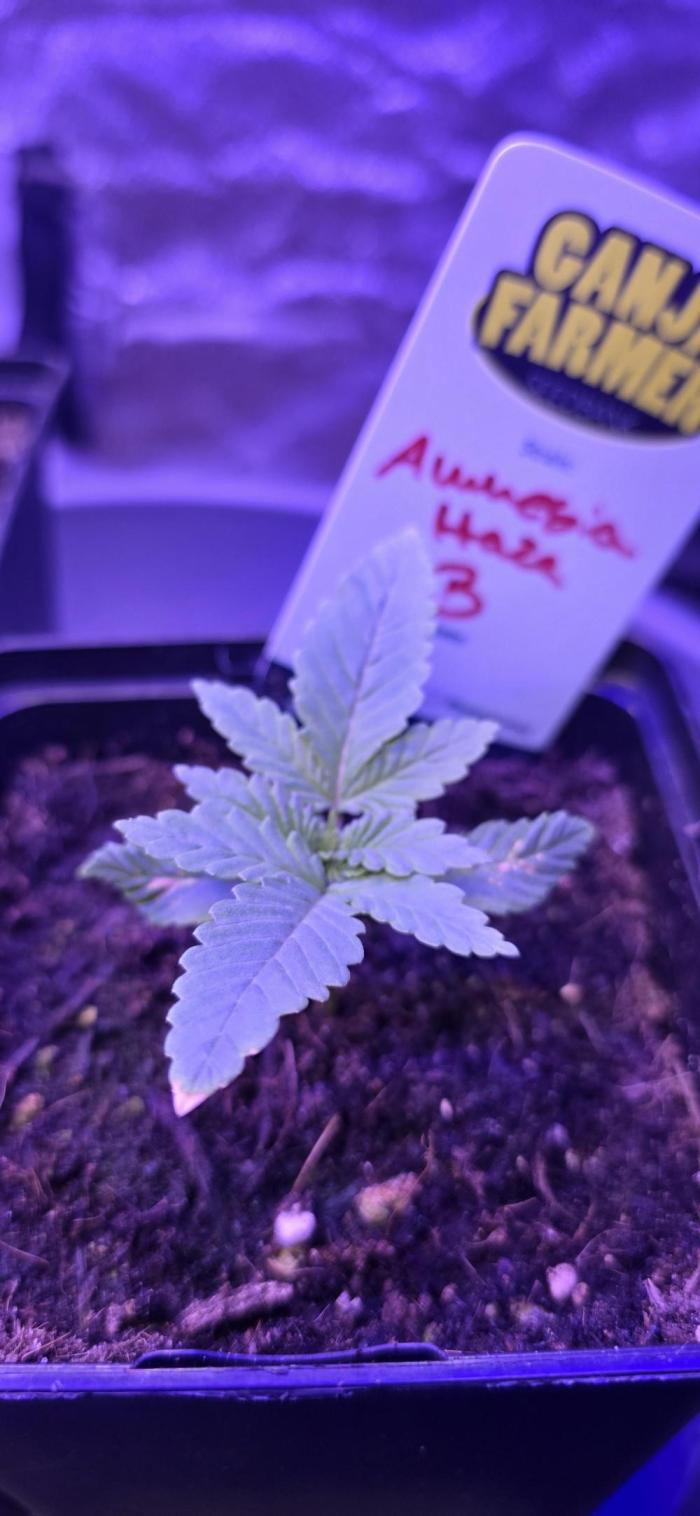
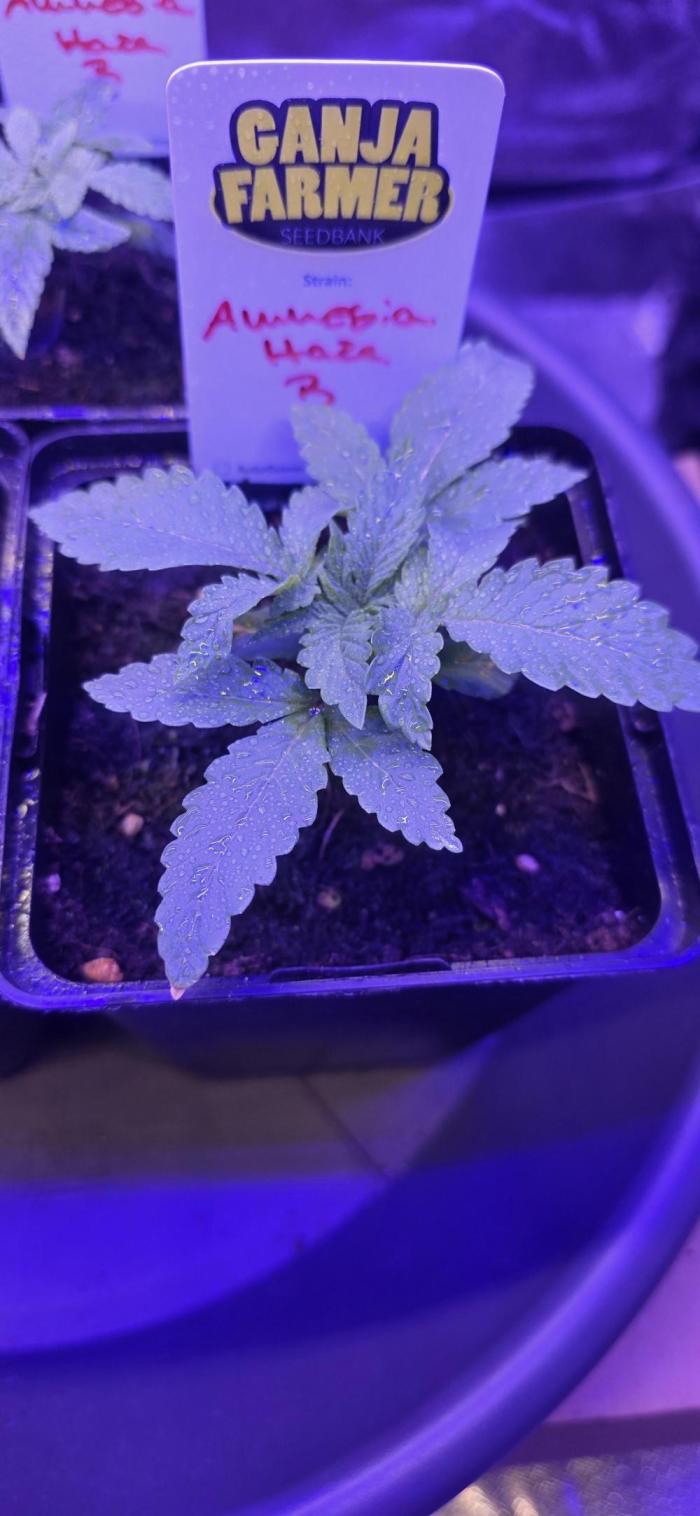
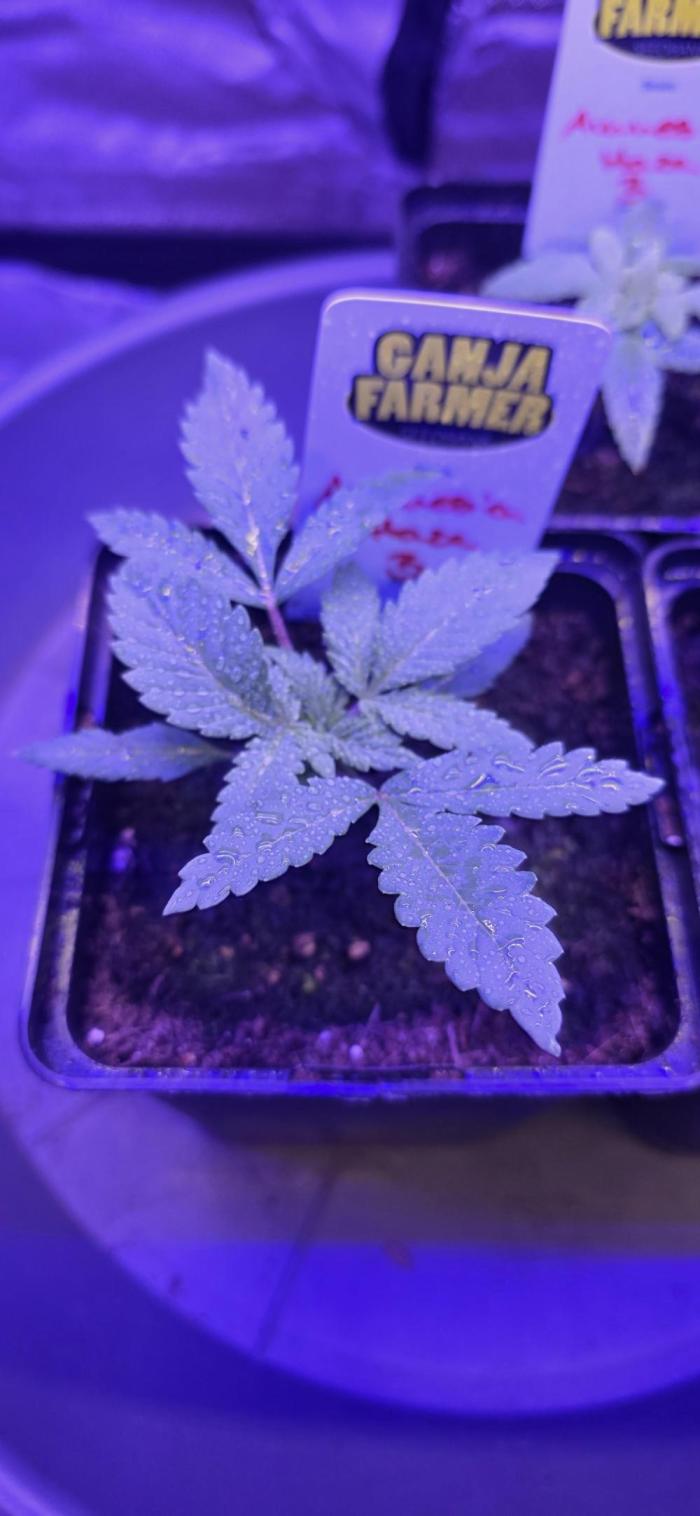
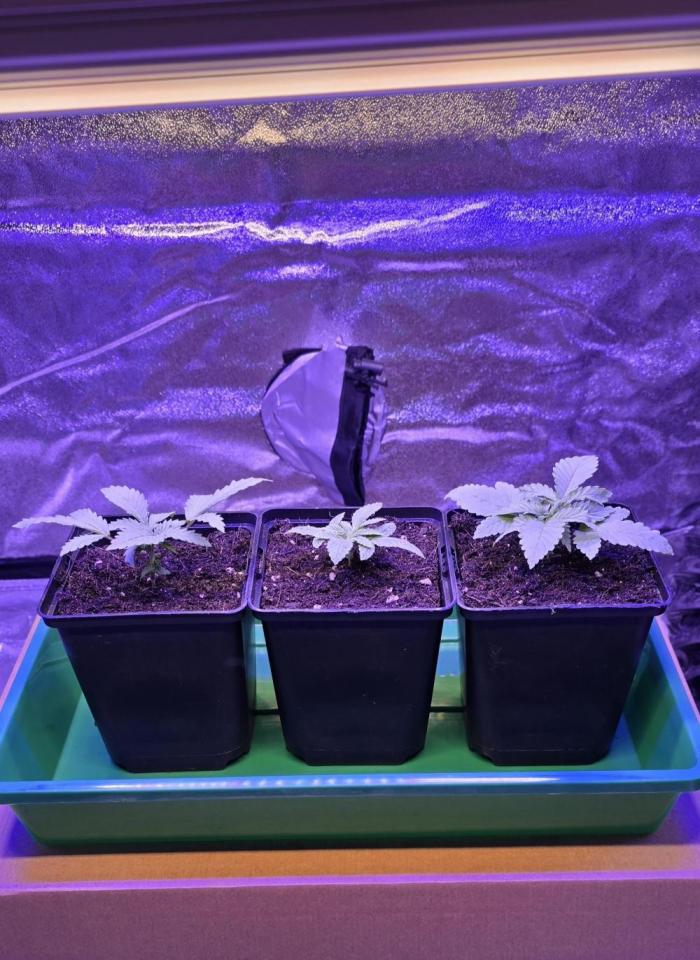
During the first week, the seedlings focused primarily on root development. They measured approximately 5 cm and remained in small one-litre containers.
The grower noticed a few light marks on the early leaves but did not consider them serious. New growth continued to emerge, and all three seedlings appeared to be establishing themselves successfully.
The recorded daytime temperature was approximately 27°C, with relative humidity around 65% and pH maintained at 6.8.
Week 2: Steady Seedling Development
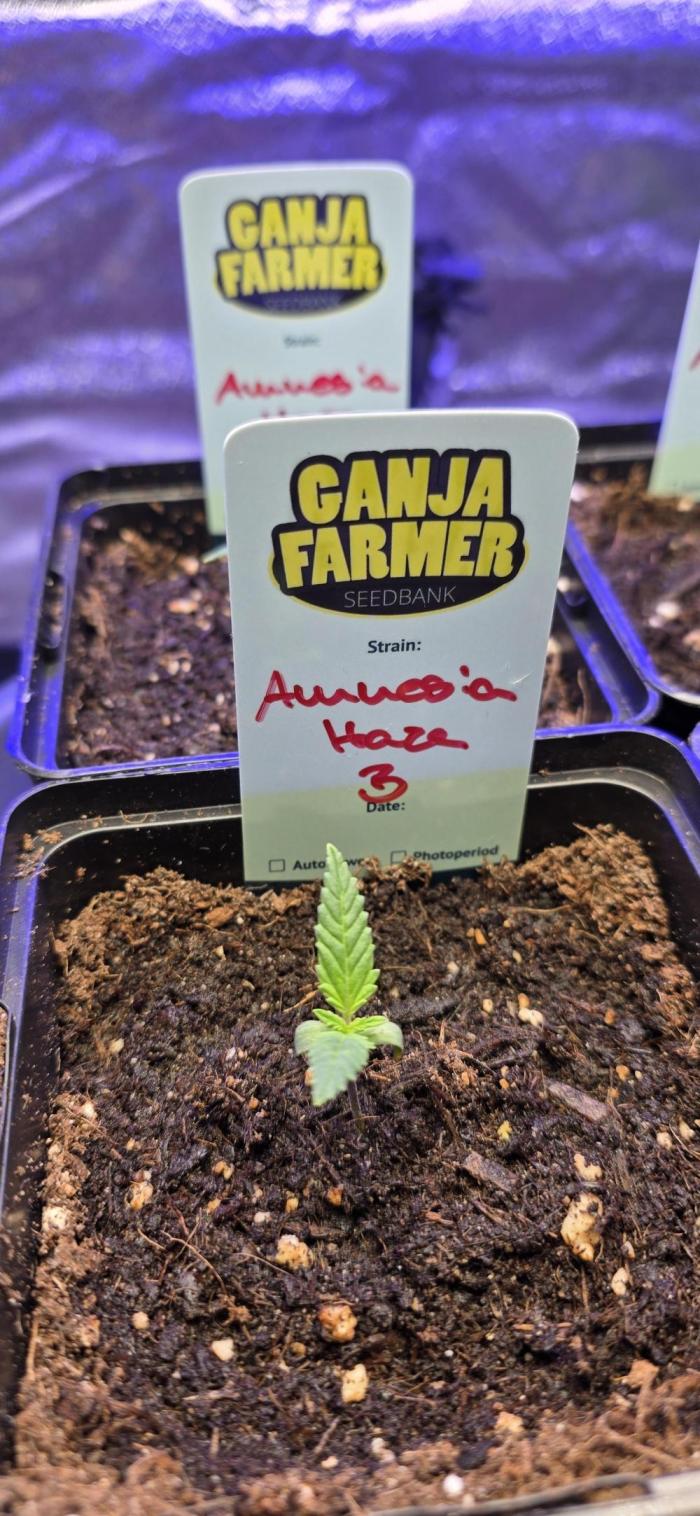
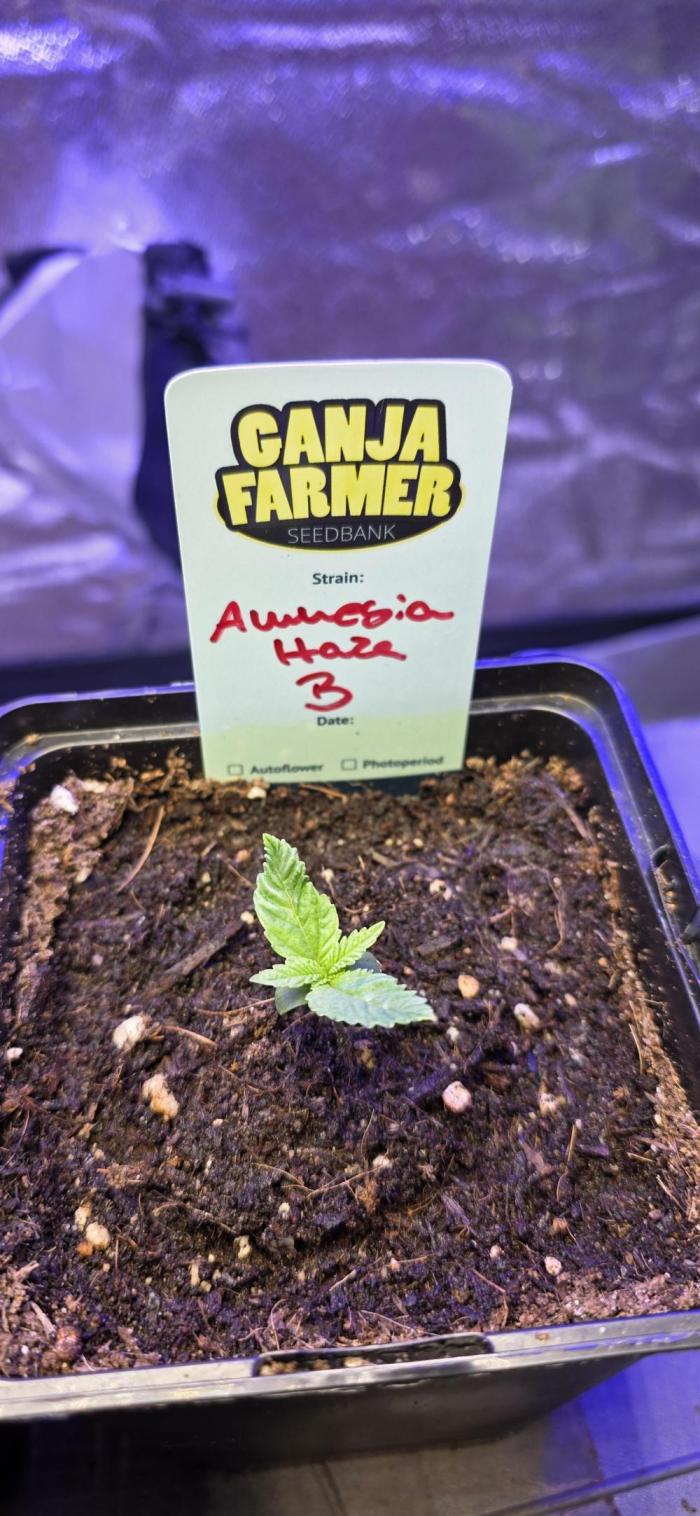
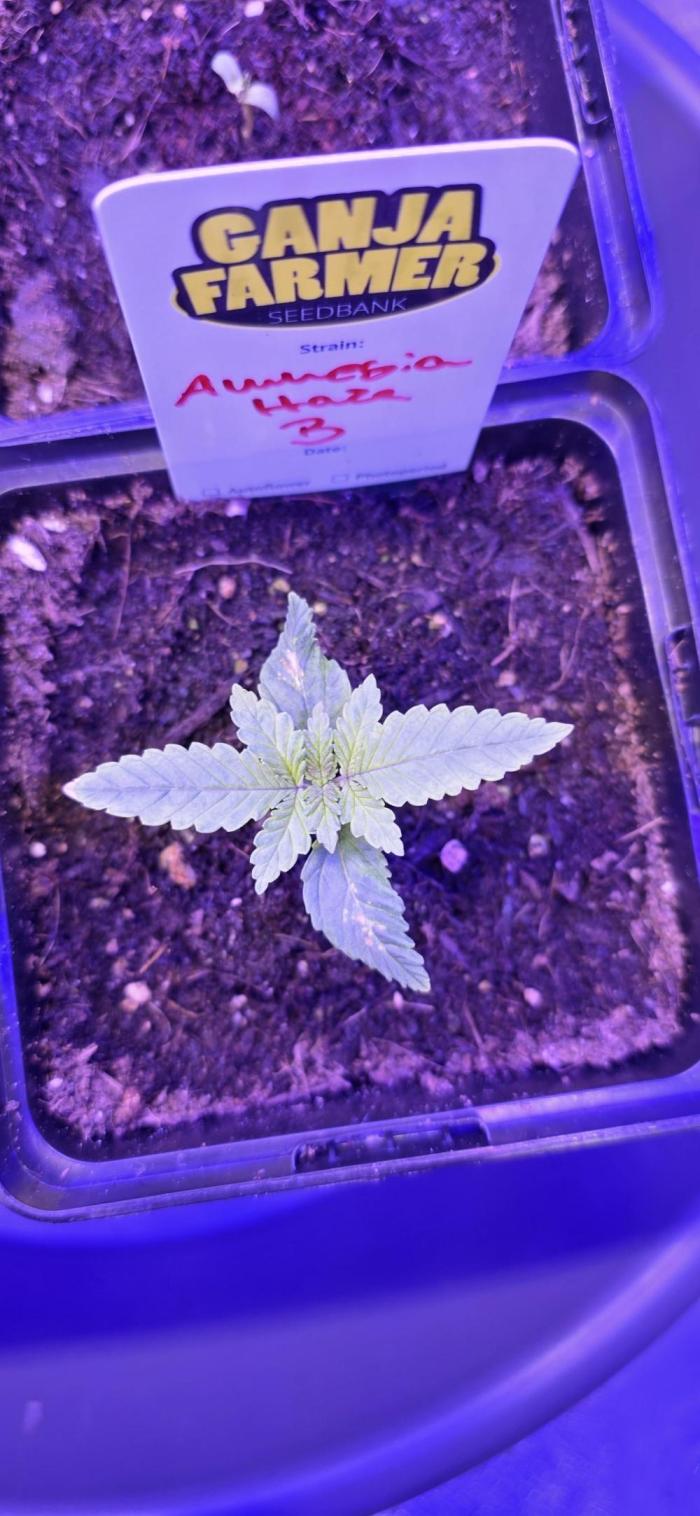
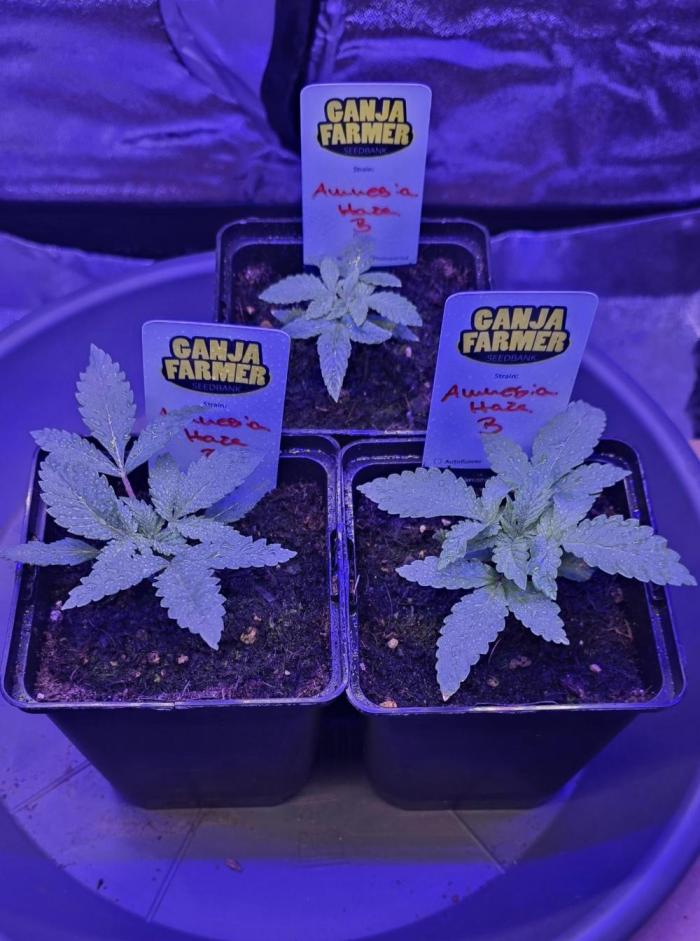
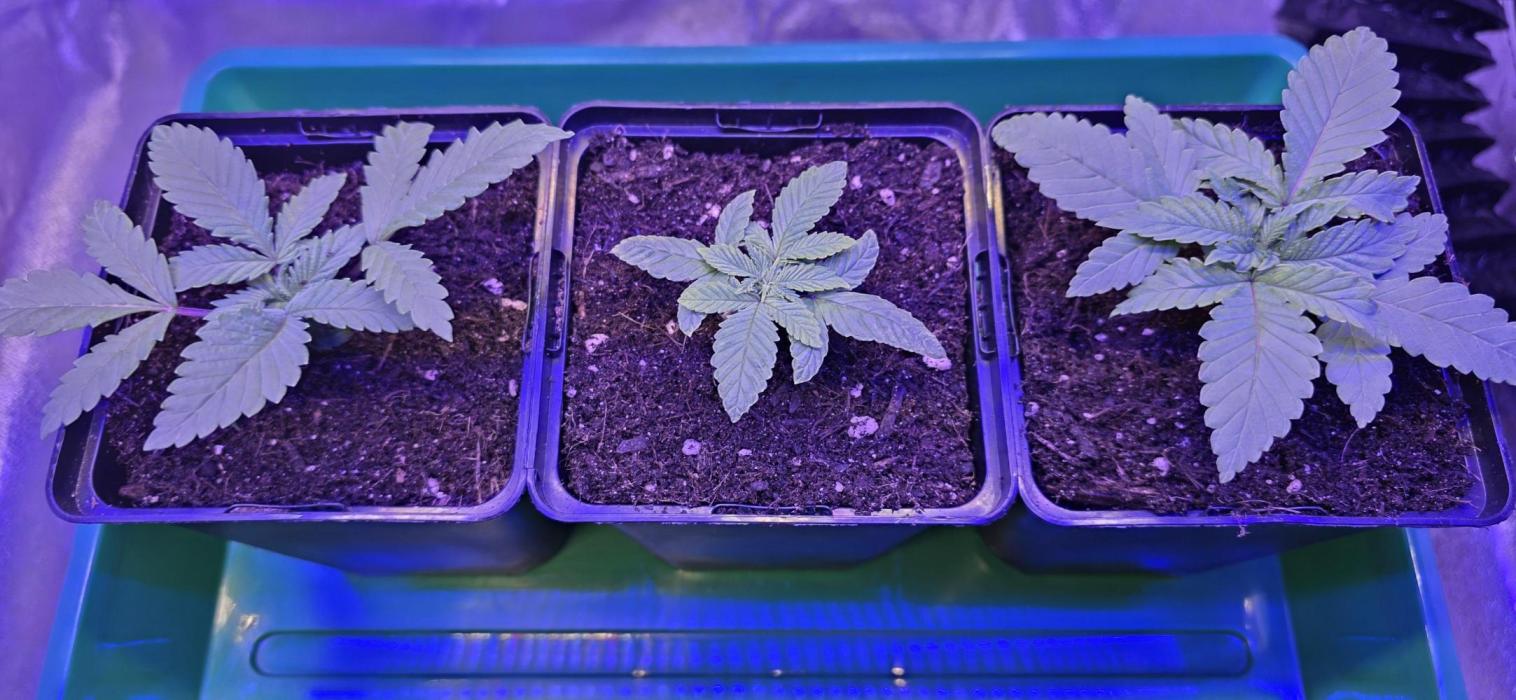
By the second week, the plants had reached approximately 7 cm.
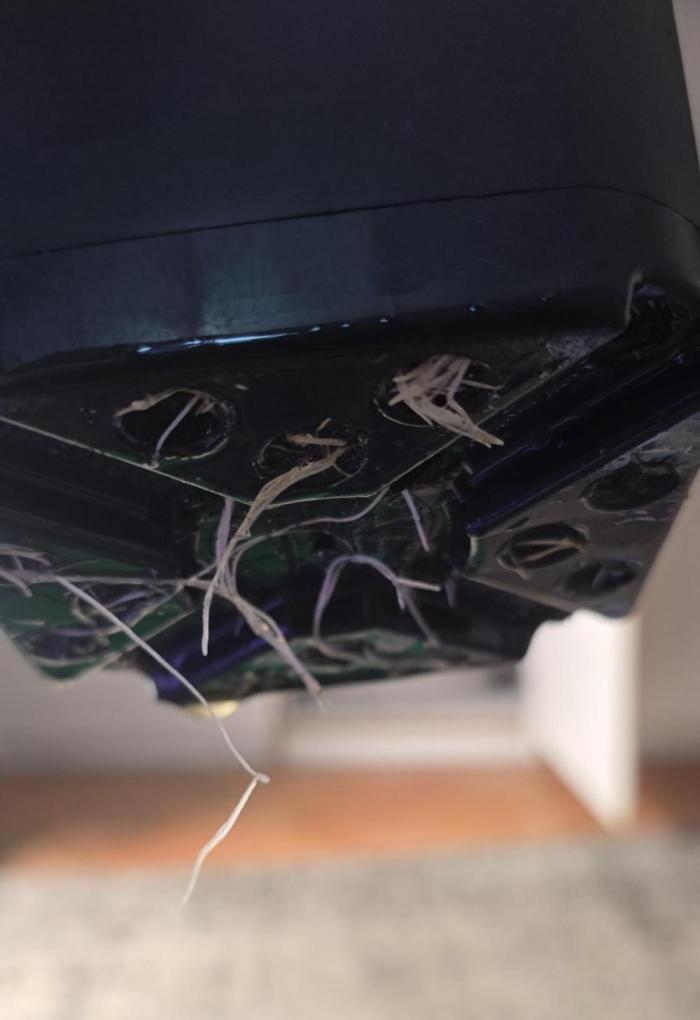
More leaves were appearing, and the roots had spread through the small containers. The first root tips were beginning to emerge from the drainage holes, indicating that the seedlings would soon require more space.
The plants remained compact, but their development was consistent and healthy.
Week 3: Preparing for Transplanting
In week three, the seedlings reached approximately 11 cm.
They were beginning to outgrow their starter pots, and transplanting was becoming necessary. Some of the lower leaves still displayed minor damage, but the new upper growth looked healthy.
The grower therefore continued monitoring the plants while preparing their larger final containers.
Week 4: Moving into the Final Pots
During week four, the plants were transplanted into their final containers.
The grower expected the fresh BioBizz soil and additional root space to improve the overall appearance of the plants. At this stage, they measured approximately 14 cm.
They remained in the vegetative section of the growing area while waiting for enough space to become available in the flowering section.
Week 5: A Strong Response to Transplanting
The plants responded positively to their new containers and stronger lighting.
By week five, they had reached approximately 17 cm. The foliage looked healthy and vigorous, with no clear signs of nutrient deficiency.
Some large fan leaves were selectively removed to improve light penetration and allow the lower side branches to develop more effectively.
Humidity was reduced slightly to around 60%, while daytime temperature was maintained at approximately 26°C.
Week 6: Healthy and Increasingly Bushy
By week six, the plants had grown to approximately 30 cm.
The grower was pleased with the decision to retain all three plants instead of reducing the test to two. Each plant looked strong and healthy, and the canopy was becoming increasingly dense.
Additional selective defoliation was performed to expose the side branches and distribute light more evenly through the canopy.
Week 7: Training the Canopy
Week seven was used to shape the plants before the transition to flowering.
Low-stress training was applied to all three plants, while only one was topped. The topped plant developed a round, symmetrical structure with several similarly sized leading branches.
The plant that had initially been the smallest had now caught up with the others and had even overtaken them in certain aspects of growth.
The grower reported that all three plants had healthy foliage and appeared strong enough to recover from the training without difficulty.
Week 8: Three Phenotypes Begin to Emerge
By week eight, the plants had reached approximately 40 cm.
Although all three belonged to the same strain and had received the same general treatment, their structures were already noticeably different. Topping explained part of the variation, but the two untopped plants also displayed contrasting growth patterns.
One plant remained compact, another became more vigorous and upright, and the topped plant developed a broader, more evenly distributed canopy.
After eight full weeks of vegetative development, the grower changed the light cycle to 12/12 and initiated flowering.
Week 9: The Flowering Stretch Begins
During the first flowering week, the plants reached approximately 45 cm.
The switch to 12/12 triggered the beginning of the stretch. The grower expected the main vertical growth period to continue for approximately three weeks.
No heavy pruning was performed at this point. The plan was to allow the plants to stretch before completing the final defoliation and lower-canopy clean-up.
Humidity was reduced to approximately 55%.
Week 10: Major Differences in Height
The second week of flowering produced rapid vertical and lateral growth.
The two untopped plants created the greatest contrast. The tallest reached approximately 74 cm, while the shortest measured only about 45 cm. The topped plant remained between them at approximately 58 cm and distributed its growth among several main flower sites.
The leaves became slightly lighter during the stretch. The grower interpreted this as increased nutrient demand and adjusted the feeding programme accordingly.
Because the nutrients were biologically based, the grower expected the plants’ response to become visible gradually rather than immediately.
Week 11: Final Defoliation and Lollipopping
Three weeks after the transition to 12/12, the grower completed the last major planned canopy intervention.
Lower branches, shaded growth and selected leaves were removed. However, the plants were not stripped aggressively because they had remained relatively moderate in size.
The dense leaf mass was opened to improve airflow and reduce the risk of excessive humidity around the developing flowers.
This was intended to redirect more of the plants’ energy towards the main flower sites while leaving enough healthy foliage to support continued development.
Week 12: Strong Recovery and Early Flower Formation
One week after lollipopping, all three plants appeared healthy and vigorous.
They showed no obvious signs of stress or interrupted growth. Instead, their energy was increasingly concentrated on flower formation across the upper canopy.
Differences between the phenotypes were now visible not only in height and structure but also in flower shape and early resin coverage.
The plants had reached an average recorded height of approximately 70 cm.
Week 13: Resin Production Accelerates
By the fifth flowering week, trichome development had become considerably more visible.
The flower sites were increasing in density, and the plants maintained a healthy, vigorous canopy despite their different structures.
The grower reported strong nutrient uptake, rich green foliage and rapidly increasing resin production. The aroma had also become noticeably stronger.
Humidity was lowered again to approximately 50%.
Week 14: Flowers Gain Volume
During the sixth flowering week, the flowers gained significant volume and firmness.
The plants were no longer concentrating on vertical growth. Most of their energy was now directed towards developing flower mass and trichome coverage.
Resin production continued to intensify, and the grower described nutrient uptake as stable. The plants were now clearly approaching the final ripening stage.
Week 15: Purple Colours and Distinct Terpene Profiles
As the plants entered the closing part of flowering, the differences between the three phenotypes became even more pronounced.
The tallest plant developed attractive purple tones, while the shorter and medium-sized plants maintained their individual shapes and flower structures.
The terpene profiles were now fully developed, and trichome coverage had reached a high level.
Because the three plants were not maturing at exactly the same speed, the grower decided to harvest them individually rather than cutting all three on the same day.
Week 16: A Staggered Harvest
The medium-sized and tallest plants were harvested first.
The smallest, most compact phenotype remained under the light for an additional three days. Interestingly, this plant required the longest time to reach the desired trichome maturity despite having the smallest overall structure.
During those final days, it improved noticeably in flower density and resin coverage.
Feeding was discontinued as the plants completed their final ripening period.
Week 17: Harvest
The entire grow was completed after 114 days.
At harvest, all three plants displayed a thick, sticky layer of resin. The medium and tall phenotypes stood out for their purple colouring and substantial flower structures.
The compact phenotype benefited from its three additional days and finished with improved density and trichome coverage.
The grower reported that trimming the heavily resinous flowers was demanding on the scissors. The harvested plants were then placed into a controlled drying environment to preserve their individual terpene profiles.
No final dry flower weight was included in the journal, so a verified grams-per-plant or grams-per-square-metre result cannot be provided.
Plant Training and Stress Resistance
The grow used several canopy-management techniques:
- Low-stress training was applied to all three plants.
- One plant was topped.
- Selective defoliation was performed during vegetative growth.
- Additional canopy management was used during the flowering stretch.
- Lollipopping was completed approximately three weeks after the switch to 12/12.
The plants reportedly tolerated these interventions very well. Even after the relatively substantial flowering-stage clean-up, the grower did not observe a clear interruption in growth.
This stress resistance was one of the main reasons the genetics received such a positive final assessment.
Phenotype Differences
One of the most interesting results of the grow was the development of three different phenotypes.
Tall phenotype
The tallest plant displayed the strongest vertical growth and eventually developed prominent purple colouring. It also produced large, visually impressive flower structures.
Balanced phenotype
The topped plant remained in the middle in terms of height. It developed several evenly distributed main branches and produced the most symmetrical canopy of the three.
Compact phenotype
The smallest plant stayed relatively short and compact. However, it required the longest ripening time and benefited considerably from three extra days before harvest.
These differences appeared even though the plants shared the same genetics and were grown under the same general environmental conditions.
Aroma and Flavour
The final journal described the principal flavour and aroma notes as:
- Citrus
- Pine
- Earth
- Spice
- Light floral sweetness
The different phenotypes reportedly expressed these notes in slightly different ways. Some leaned towards a classic spicy Amnesia profile, while others displayed sweeter and more floral accents.
Reported Effects
The grower recorded the following subjective effects:
- Creative
- Euphoric
- Relaxed
The journal also selected stress and depression under its user-reported medical-effect categories. These entries reflect the grower’s personal experience and should not be interpreted as clinical or medical claims.
Final Verdict
The grower rated Amnesia Haze by Ganja Farmer 9 out of 10.
The strain was praised for its healthy vegetative development, manageable flowering stretch, ability to tolerate training, substantial resin production and visually appealing flowers.
The grow also demonstrated that plants from the same genetic line can express noticeably different structures, colours, terpene profiles and ripening times.
The tall plant delivered the most dramatic purple appearance, the topped plant created the most balanced canopy, and the compact plant rewarded additional patience with improved density and trichome production.
Overall, this was described as an easy and successful indoor grow, producing three distinctive but consistently resinous Amnesia Haze phenotypes.

 USA
USA
 Česko
Česko Deutschland
 España
 France
 Italia
 Nederland
 Polska
 Europe